Proudly serving Phoenix, Mesa, Chandler, Scottsdale, Gilbert, Tempe & surrounding areasCall or Text 24/7: +1 (480) 916-7433

Rubber Flooring Installation in Tempe, AZ for Apartment Fitness Centers and Weight Rooms

Phoenix Rubber Flooring installs gym and home gym rubber flooring throughout Tempe, Arizona, for residential garages, spare rooms, apartment and condo fitness rooms, and commercial facilities. Our crews fit rolled rubber, interlocking rubber tiles, and strength-area stall mats around squat racks, treadmills, dumbbell zones, and cardio equipment. We also build higher-density CrossFit and weightlifting surfaces and handle repairs or full replacement when an existing rubber floor fails. Each recommendation is based on the room, equipment loads, subfloor condition, and expected traffic.

Tempe concrete slabs can climb well past 140 degrees during summer, putting extra stress on low-grade rubber and the wrong adhesive. Daily heat cycles can contribute to shrinking, curling, and stronger odors, while monsoon humidity can expose moisture problems beneath an unprepared floor. We measure the space, test the concrete, and choose thickness and density for the equipment and impact level. That preparation helps protect the slab, stabilize equipment, and create a surface that is easier to maintain.

Tempe's 180,587 residents support a wide mix of home gyms, training studios, university athletic spaces, rehabilitation clinics, and shared fitness rooms. Call for an on-site measurement and a material recommendation before choosing a floor for your equipment and concrete.

5-star rating4.9/5 Average Rating - 20+ Years of Experience - Tempe Rubber Flooring Specialists - Residential & Commercial
Rubber Flooring Services

Rubber Flooring Services in Tempe, AZ

Our Tempe coverage includes Downtown and Mill Avenue, districts around Arizona State University, South Tempe near Kyrene, and properties along Rural Road and McClintock Drive. We also travel to Chandler, Mesa, Scottsdale, Guadalupe, and the broader Phoenix metro for residential and commercial projects. Residential and commercial growth across Maricopa County over the past decade has increased the variety of fitness spaces that need durable flooring. Customers planning work elsewhere in the Valley can also review our Glendale, AZ service-area information.

Gym and Home Gym Rubber Flooring

Technician installing heavy-duty rubber gym flooring on concrete in a Tempe, AZ training facility.

We plan rubber gym floors around the room, subfloor, traffic, and equipment. A home gym using dumbbells up to 50 pounds needs different impact protection than a CrossFit box with Olympic lifting platforms, so thickness and density are selected for the actual load. Typical installed rubber flooring in this market ranges from $2 to $12 per square foot. Explore Service

Explore Service

Garage Rubber Flooring Installation

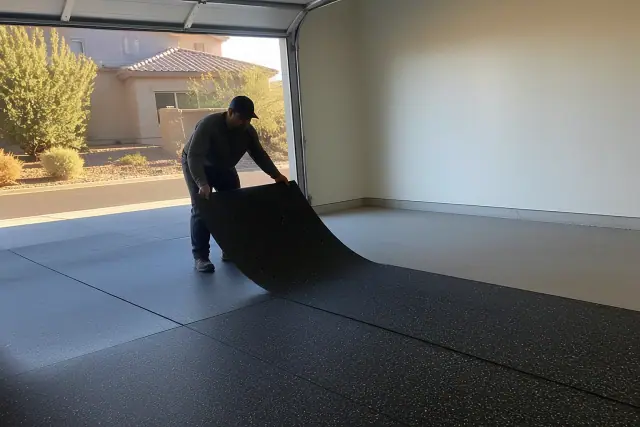
Worker installing recycled rubber flooring on a concrete garage floor in Tempe, AZ.

Garage gyms need rubber suited to rapid temperature changes, strong summer heat, and concrete that may hold moisture below a dry-looking surface. We measure standard two-car and three-car garage layouts, test the slab, plan equipment zones, and fit higher-density material where heat and dropped weights place more demand on the floor. Explore Service

Explore Service

Basement Rubber Flooring Installation

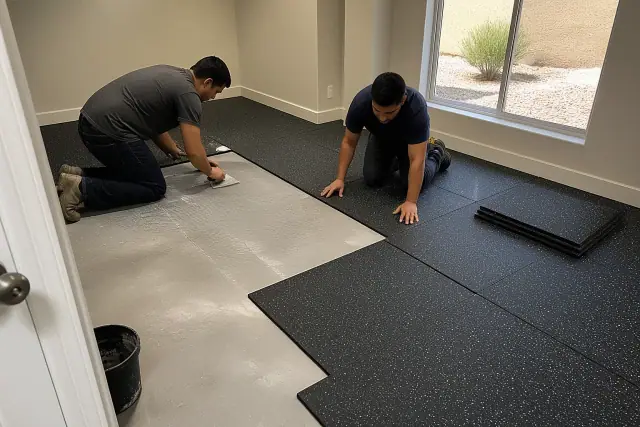
Workers installing rubber flooring on a concrete basement floor in Tempe, AZ.

For basement gyms and converted lower-level rooms, we begin with the concrete condition, moisture level, room layout, and equipment footprint. Rolled rubber or interlocking tiles can then be selected for the required stability, impact control, and future access to the floor. Explore Service

Explore Service

Rolled Rubber Flooring Installation

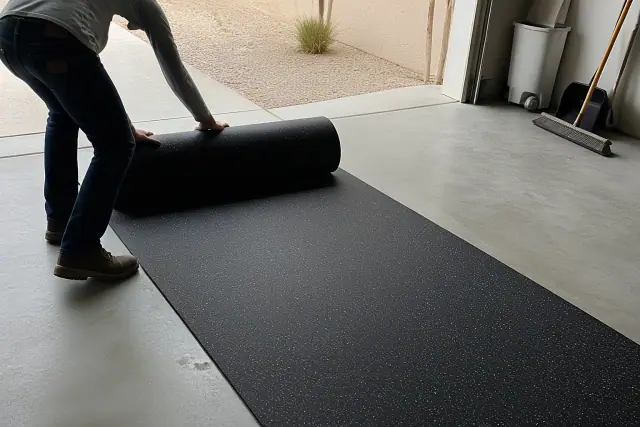
Worker unrolling recycled rubber flooring on a concrete garage floor in Tempe, AZ.

Rolled rubber creates a continuous weight-room surface with fewer seams where dirt, moisture, or bacteria can collect. Available rolls can reach widths of up to 4 feet and lengths of up to 50 feet, allowing the material to be trimmed around walls, doorways, platforms, and equipment footprints.

Rubber Floor Tile Installation

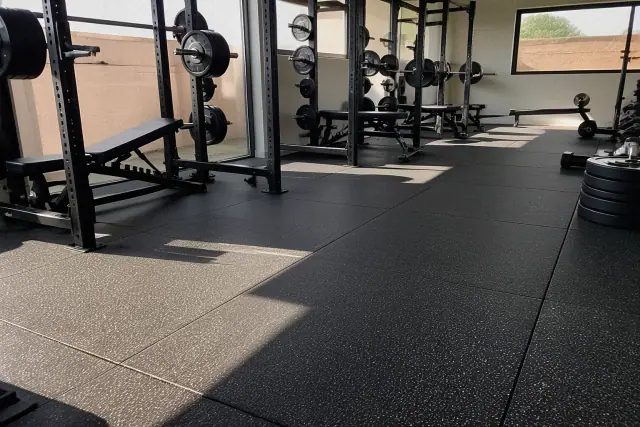
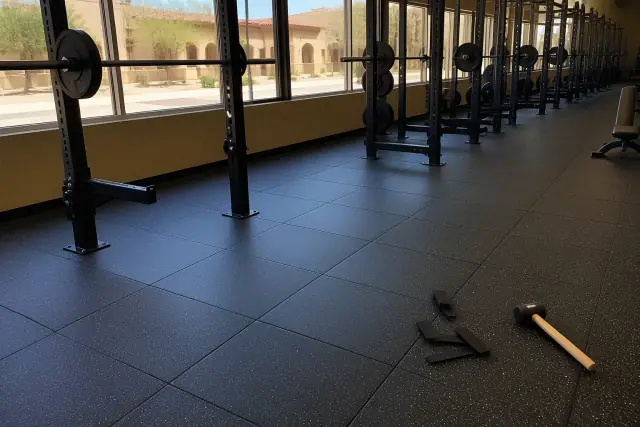
Rubber floor tiles installed in a Tempe, AZ commercial fitness center with squat racks and precise seam work.

Interlocking rubber tiles commonly use a 2-by-2-foot format and can create a floating floor without adhesive. Tile products generally range from roughly $2.20 to $4.30 per square foot depending on density and thickness, and a damaged tile can be replaced without removing a complete rolled surface.

Commercial Rubber Flooring

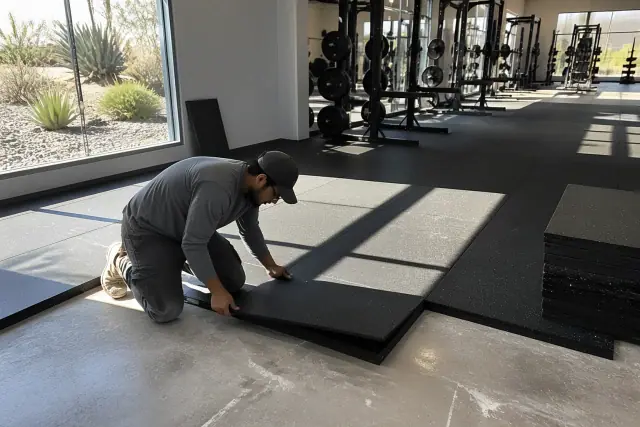
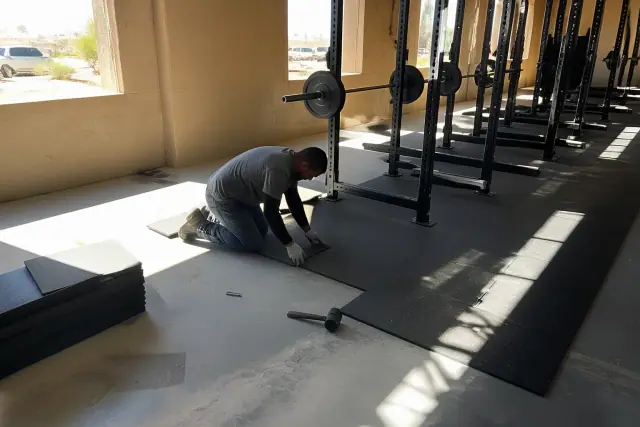
Technician installing heavy-duty rubber floor tiles in a Tempe, AZ gym with xeriscaping visible through the window.

Commercial gyms, training studios, rehabilitation centers, and shared fitness rooms need surfaces planned for daily traffic, rolling equipment, transitions, and slip resistance. Many facility owners land in the $4-$8-per-square-foot range for 3/8-inch to 1/2-inch commercial-grade product, with installation coordinated around operating hours to limit downtime.

Playground Rubber Surfacing

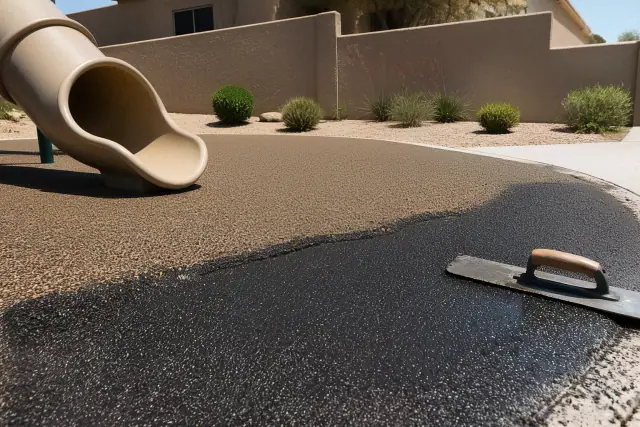
Technician troweling rubber playground surfacing at a job site in Tempe, AZ.

Playground rubber surfacing starts with a review of the intended use, existing base, site conditions, and suitable rubber surface type. We recommend a project approach only after evaluating the area rather than treating every outdoor or recreation surface like an indoor gym floor.

Industrial Rubber Flooring

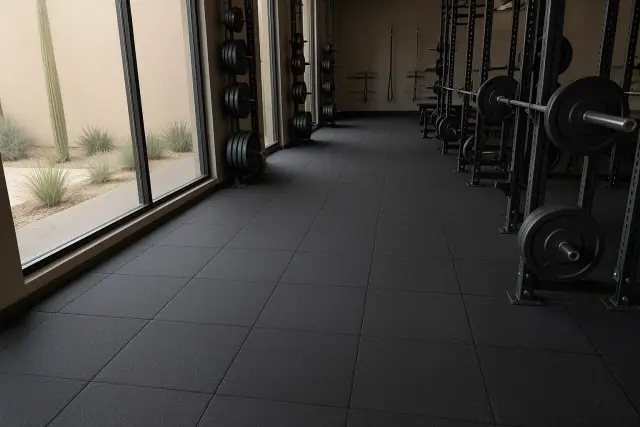
Technician installing heavy-duty rubber floor tiles in a Tempe, AZ fitness center free weight zone.

Industrial rubber flooring requires a clear understanding of traffic, equipment movement, slab condition, and the way each work area will be used. Material and installation recommendations are matched to those conditions after an on-site assessment.

Anti-Fatigue Rubber Flooring

Technician installing heavy-duty rubber floor tiles in a Tempe, AZ gym.

Anti-fatigue rubber flooring can be evaluated for standing work areas that need a resilient surface. We review the space, traffic pattern, floor condition, and required transitions before recommending a material or layout.

Rubber Flooring Repair and Replacement

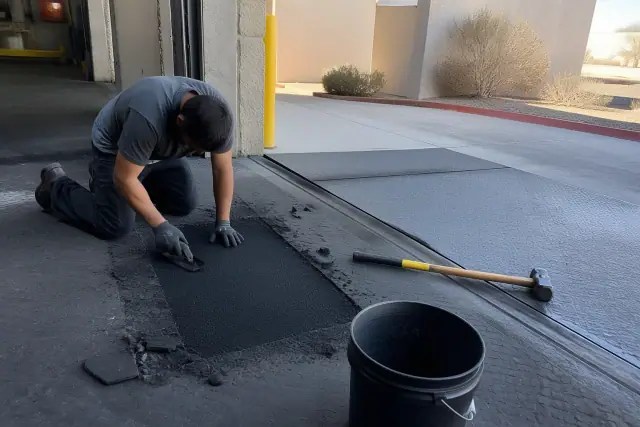
Technician repairing industrial rubber flooring near a loading dock in Tempe, AZ.

When rubber flooring curls, separates at seams, delaminates, or develops worn spots under equipment, we assess reseaming, patching, and re-adhering before recommending replacement. Properly installed rubber flooring can last 20 years or more with routine care, but inadequate prep or the wrong adhesive can shorten that service life.

Floor Selection

How to Choose Rubber Flooring for a Tempe Gym

The right rubber floor depends on what will happen above it and what is happening in the concrete below it. Equipment weight, drop zones, moisture, heat exposure, noise, seam layout, and the need to remove or replace individual pieces all influence the final recommendation.

Intended Use and Equipment Loads

A room used for yoga, cardio, and light strength work does not need the same floor as a free-weight area. CrossFit and Olympic lifting zones typically call for 3/4 inch to 1.5 inches or thicker under repeated drop areas, while lighter zones can use a thinner specification.

Thickness and Rubber Density

Thickness controls part of the impact protection, but density also affects compression and equipment stability. We compare both factors against squat racks, treadmills, dumbbells, rolling equipment, and the way each zone is used.

Concrete and Moisture Conditions

A dry Arizona surface can still conceal moisture from irrigation or plumbing beneath a slab. Testing, cleaning, patching, and priming the concrete before installation reduces the risk of trapped moisture and adhesive failure.

Seams and Installation Method

Rolled rubber minimizes seams and creates consistent surface tension, while interlocking tiles create a removable floating floor. Adhesive choice, room geometry, doorways, and equipment footprints determine how each option should be fitted.

Heat, UV, and Initial Odor

Uncooled garages and west-facing windows expose rubber to heat and UV conditions that can accelerate fading, movement, or odor in lower-grade products. Climate-appropriate material and ventilation are important parts of the selection plan.

Cleaning and Future Repairs

Rolled surfaces reduce the number of joints that collect grit, while modular tiles make isolated damage easier to replace. The best choice balances daily cleaning, long-term maintenance, and whether the room may change uses later.

Tempe Gym Floor Issues

Common Rubber Flooring Problems in Tempe Gyms

Heat, hidden slab moisture, heavy impacts, dust, and incorrect installation can turn a promising rubber floor into a maintenance problem. An on-site assessment helps separate a product issue from a subfloor, adhesive, thickness, or seam-layout problem before repair or replacement begins.

Request Floor Assessment

Heat-Driven Curling and Odor

Daily temperature cycling in an uncooled garage can make lower-grade rubber soften, shrink, curl, or release stronger odors, and cheap products may break down within a couple of seasons. The wrong adhesive may also lose its hold as the slab repeatedly heats and cools.

Moisture and Adhesive Failure

Monsoon humidity or moisture moving through concrete can become trapped beneath an improperly prepared floor. Mold, bubbling, or adhesive failure can appear within a single season when testing and sealing are skipped.

Impact Noise Between Floors

Dropped weights and moving equipment can transmit noise into rooms or units below. Proper rubber thickness and underlayment can reduce impact transmission in apartments, condos, and second-floor training spaces.

Loose, Lifted, or Separated Seams

Poor fitting, insufficient adhesive, or repeated movement can open seams and lift edges. Those gaps collect grit and moisture, create a trip concern, and may require reseaming, patching, or re-adhering.

Under-Protected Drop Zones

A floor that is too thin or low in density can leave the slab and equipment exposed to repeated free-weight impact. Under-specifying dedicated lifting areas can contribute to cracked concrete or equipment-warranty problems within a year or two.

Dust and Grit at Floor Joints

Tempe dust and monsoon grit can settle into seams and along poorly finished edges. A fitted rolled surface or well-connected tile layout is easier to sweep and damp mop without debris collecting beneath loose sections.

Why Choose Us

Why Choose Phoenix Rubber Flooring in Tempe?

Our recommendations start with the property and use case rather than a one-size material list. Tempe's mix of older garages, new construction, university-area fitness rooms, commercial suites, and rehabilitation spaces calls for different prep, thickness, access, and scheduling decisions.

Local Slab and Climate Experience

A 1970s garage near Tempe's older neighborhoods may need a different prep plan than a newly poured South Tempe foundation. We account for slab condition, summer heat, monsoon moisture, and UV exposure when planning the floor.

Use-Specific Material Recommendations

We measure the room and review equipment, traffic, noise concerns, and whether the floor needs to remain removable. That information guides the product type, thickness, density, and zone layout.

Coordinated Professional Installation

Commercial work can be planned around class times, athletic schedules, freight access, and building-management requirements. Where applicable, thresholds, slip resistance, and Maricopa County permitting requirements are considered as part of the installation plan.

Installation Process

Our Tempe Rubber Flooring Installation Process

The installation sequence moves from measurement and slab evaluation to material selection, preparation, fitting, and final care guidance. Each step is adjusted for the room, equipment, traffic level, existing floor, and access schedule.

01.

Measure the Room and Equipment

We record room dimensions, doorways, equipment footprints, drop zones, traffic paths, and transition points during an in-home or on-site visit.

02.

Evaluate the Concrete Slab

The crew checks existing floor condition and concrete moisture, then identifies cracks, residue, low spots, or other prep needs before material is ordered or installed.

03.

Select Product and Thickness

Rolled rubber, interlocking tiles, stall mats, or a layered lifting platform are matched to the use case, impact level, stability needs, and budget.

04.

Clean, Patch, and Prime

The subfloor is cleaned and prepared, with patching and priming performed where needed so adhesive or a floating layout starts on a suitable base.

05.

Fit, Seam, and Finish the Floor

Rolls or tiles are trimmed around walls, doorways, and equipment areas, then seams, edges, transition strips, and trim are completed for a stable layout.

06.

Clean Up and Review Care

Old material is removed when included, the finished area is cleaned, and care instructions are reviewed. Most residential garage gyms finish in a single day, while larger commercial fitness facilities or CrossFit boxes typically take two to four days depending on size and removal needs.

Project Outcomes

Rubber Flooring Outcomes for Tempe Fitness Spaces

Case Study 1: A garage gym can combine a stable general-training surface with thicker protection under a rack or dedicated drop zone. Zone-specific planning avoids paying for maximum thickness where lighter cardio or bodyweight work does not require it.

Case Study 2: A commercial weight room can use low-seam rolled rubber for continuous traffic while coordinating transitions, equipment movement, and installation around operating hours. The result is a floor planned for daily facility use rather than a residential load.

Case Study 3: A multipurpose studio, apartment fitness room, or rehabilitation space can use modular tiles where layout flexibility and isolated replacement matter. Slip resistance, lower-impact use, cleaning, and noise are considered alongside equipment stability.

Plan Your Floor

Schedule a Tempe
Rubber Flooring
Consultation

Request an on-site measurement for a home gym, garage, studio, fitness facility, or existing floor that needs repair. We will review the concrete, equipment, traffic, and material options before providing a project-specific recommendation.

Rubber Flooring Help

FAQs About Rubber Gym Flooring in Tempe, AZ

These answers cover material choice, cost, thickness, heat, installation, repairs, and maintenance for Tempe gym floors. A site measurement is still the best way to match a recommendation to your concrete and equipment.

Call for Flooring Guidance

For many Tempe home gyms, 3/8-inch to 1/2-inch rolled rubber works for general strength and cardio use. Interlocking tiles are useful when the floor should remain removable, while heavier drop zones may need 3/4 inch or thicker. Density, equipment, and the concrete condition matter as much as product format.

Installed rubber flooring in this market generally ranges from $2 to $12 per square foot. Standard tile or rolled products commonly fall between $2.20 and $4.30 per square foot, while a modest confetti-style rolled section may total about $230 to $380 and a full three-car conversion can cost several thousand dollars. Thickness, density, and square footage are the three biggest product cost drivers, while slab preparation can also affect the final quote.

New rubber can have a noticeable odor, especially lower-grade recycled material, and ventilation may be needed while that odor fades over several weeks. Rubber is also heavy to handle, and low-grade products can soften or shift in an uncooled Tempe garage. Appropriate material selection and installation reduce those drawbacks.

A 3/8-inch floor is often sufficient for bodyweight training, cardio equipment, and lighter dumbbell use. Heavy free weights, deadlifts, or Olympic lifting may call for 3/4 inch to 1 inch or thicker in the drop zone. We recommend zone-specific thickness after reviewing the equipment list.

Properly installed rubber flooring commonly lasts 20 years or more with routine cleaning and maintenance. Early failure is more often tied to inadequate subfloor prep, moisture, poor seaming, or an unsuitable adhesive than to normal use alone. Tempe heat makes those installation details especially important.

Yes, when the product and installation are selected for the conditions. Tempe garage slabs can reach 130-140 degrees in summer, so lower-quality rubber may soften, move, or emit stronger odors. Higher-density commercial-grade rubber, correct slab prep, and ventilation help the floor handle those temperature swings.

Rolled rubber creates a more continuous surface with fewer seams, making it a strong fit for weight rooms and repeated traffic. Interlocking tiles create a removable floating floor and make isolated replacement easier. Room size, rental status, moisture, equipment, and cleaning preferences guide the choice.

Horse stall mats can be repurposed for strength zones when their thickness, density, fit, and odor are appropriate for the room. They may be used around lifting platforms or functional-training areas, but the slab and seams still need careful planning. We evaluate them against rolled rubber and tile alternatives for the specific layout.

Many problems can be addressed by reseaming, patching, or re-adhering lifted sections. Full replacement may make more sense when failure is widespread, the floor was under-specified, or subfloor preparation was inadequate. An inspection identifies whether the problem is local or systemic.

Most residential garage gym installations are completed in a single day. Larger commercial fitness facilities and CrossFit boxes typically take two to four days, depending on square footage, access, and whether old flooring must be removed. The schedule is confirmed after measurement and site review.

Arizona concrete can hold moisture from irrigation or plumbing even when the surface climate feels dry. If that moisture is trapped beneath rubber, it can contribute to bubbling, mold, or adhesive failure. Testing helps determine the needed cleaning, patching, priming, or moisture preparation.

Commercial flooring must accommodate continuous foot traffic, rolling equipment, thresholds, cleaning, and the facility's operating schedule. Public-facing spaces may also need attention to slip resistance and ADA-compliant transitions. Product thickness and installation are planned around the actual facility use.

Routine sweeping removes Tempe dust and monsoon grit before it works into seams. Occasional damp mopping is typically sufficient for a properly installed floor, using care guidance suited to the selected rubber. Loose edges, open seams, or isolated damage should be evaluated before they spread.

Rubber thickness and a suitable underlayment can reduce impact noise from dropped weights and moving equipment. That matters in apartments, condos, and second-floor commercial spaces with occupied rooms below. The layout should still be matched to the lifting load and building conditions.

Service covers Tempe neighborhoods and commercial districts, including Downtown, Mill Avenue, the Arizona State University area, South Tempe, Rural Road, and McClintock Drive. We also serve Chandler, Mesa, Scottsdale, Guadalupe, and the broader Phoenix metro. Project scheduling depends on location and scope.