Proudly serving Phoenix, Mesa, Chandler, Scottsdale, Gilbert, Tempe & surrounding areasCall or Text 24/7: +1 (480) 916-7433

Anti Fatigue Rubber Flooring Installation in Phoenix, AZ for Industrial and Commercial Workstations

Phoenix Rubber Flooring installs anti fatigue rubber flooring, rolled rubber flooring, commercial gym floors, training area flooring, and cushioned work surfaces for facilities across Phoenix and the Salt River Valley. We work with rolled rubber, poured-in-place rubber surfacing, interlocking rubber tile, and beveled-edge mats. Projects range from single-station comfort mats to full-facility installations for gyms, healthcare buildings, schools, kitchens, warehouses, and industrial plants.

Employees at manufacturing lines, warehouse stations, commercial kitchens, and service counters may spend eight to twelve hours a day on bare concrete. We match the flooring to the workstation footprint, load, foot traffic, chemical exposure, and moisture conditions instead of relying on a one-size-fits-all mat. Our installation planning also accounts for Arizona slab moisture and the thermal swings found around bay doors and loading docks.

Textured rubber surfaces can support safer footing where oil, water, or cleaning solution reaches the floor. Product selection can account for ADA-referenced static coefficient of friction guidance of 0.5 or higher, with higher-traction profiles considered for wet-process areas.

Phoenix Rubber Flooring installs anti fatigue rubber flooring in Phoenix and the surrounding metro, including Scottsdale, Tempe, Mesa, Chandler, Glendale, and Gilbert.

★ ★ ★ ★ ★4.9/5 Average Rating · 20+ Years of Experience · Thousands of Customers Helped · Licensed & Insured · Residential & Commercial

Anti Fatigue Rubber Flooring Options & Benefits

What Is Anti Fatigue Rubber Flooring?

Anti fatigue rubber flooring compresses slightly under body weight and rebounds as a person shifts position. That response encourages small calf-muscle movements, keeps circulation active, and absorbs impact before it reaches the knees, hips, and lower back.

The same bounce-back principle used in athletic flooring can serve assembly lines, cashier stations, commercial kitchens, reception areas, and standing desks. A dense rubber compound can recover its shape after thousands of load cycles instead of permanently compressing like foam matting.

The right format depends on the facility. Rolled material suits broad coverage, interlocking tile supports quick installation and removal, poured rubber creates a monolithic surface, and beveled-edge mats focus cushioning at individual workstations.

Benefits of Anti Fatigue Rubber Flooring

A properly selected rubber surface combines standing comfort, impact absorption, traction, and long-term durability. These benefits are most useful when cushioning, texture, edge treatment, and material density are matched to the actual space.

  • Encourages micro-movement that keeps leg circulation active
  • Absorbs impact before it reaches the knees, hips, and lower back
  • Reduces the static load on feet during extended standing
  • Adds texture where water, oil, grease, or cleaning solution may spill
  • Cushions repeated impact in free-weight and training zones
  • Handles the thermal swings found near Phoenix bay doors and docks
  • Supports custom cuts around equipment and irregular floor plans
  • Helps workers maintain steadier comfort through the last two hours of a shift
Commercial Rubber Flooring Services

Anti Fatigue Rubber Flooring Services

Our installation work covers focused comfort stations and continuous commercial surfaces for facilities such as warehouses near Sky Harbor, manufacturing lines in the Deer Valley industrial corridor, and commercial gyms off Camelback Road. We plan rubber flooring around foot traffic, rolling loads, dropped equipment, cleaning needs, chemical exposure, drainage, and the condition of the concrete beneath it.

Anti Fatigue Workstation Mats

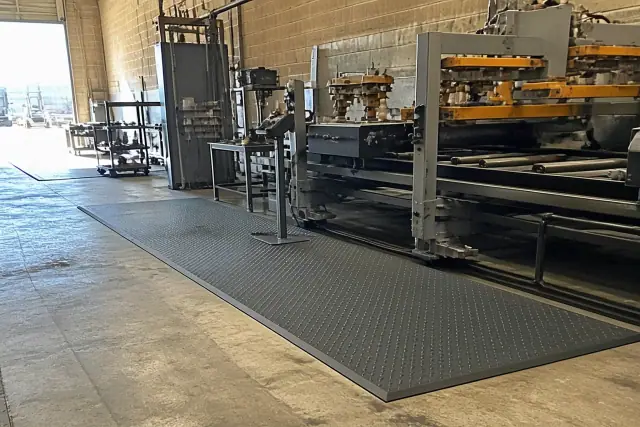
Textured rubber anti-fatigue mats installed on a concrete floor at an industrial facility in Phoenix, AZ.

We size cushioned rubber mats to the actual footprint of assembly stations, cashier positions, kitchen prep areas, standing desks, and reception counters. Beveled edges create a cleaner transition at the perimeter and help keep liquid from pooling along the border.

Request Estimate

Rolled Rubber Flooring

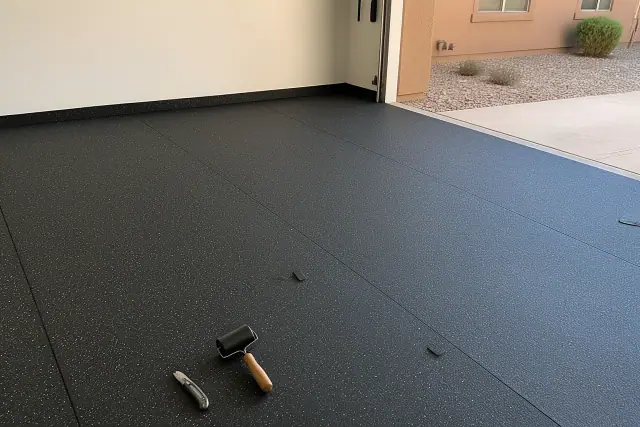
Rolled rubber flooring installed in a residential garage workshop in Phoenix, AZ.

Rolled rubber provides broad, durable coverage for gyms, warehouses, retail floors, and other high-traffic facilities. Depending on traffic and use, the material can be seamed and adhered or installed as a loose-laid surface.

Request Estimate

Poured-in-Place Rubber Surfacing

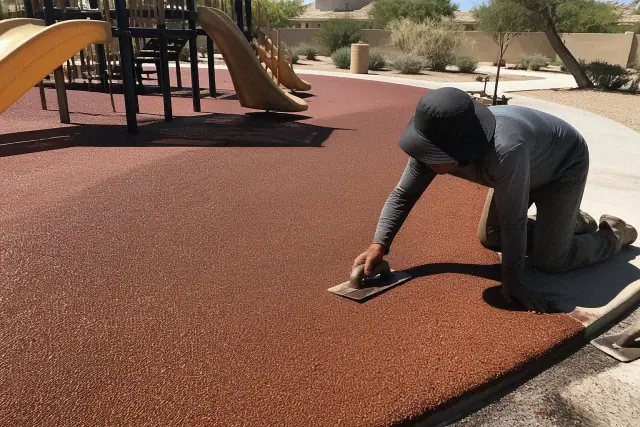
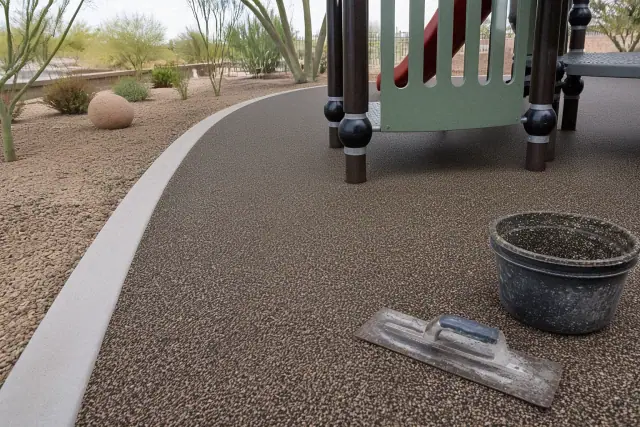
Technician troweling poured-in-place rubber safety surfacing around playground equipment in Phoenix, AZ.

Poured rubber is mixed and troweled on-site to create a monolithic surface. It is suited to commercial and healthcare spaces that need seamless coverage around transitions, drains, or washdown areas.

Request Estimate

Interlocking Rubber Tile

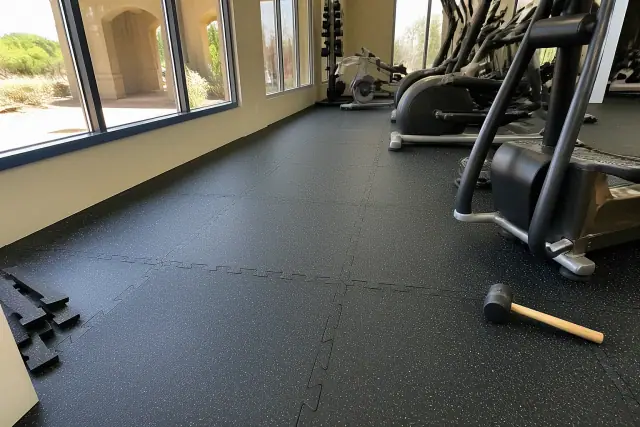
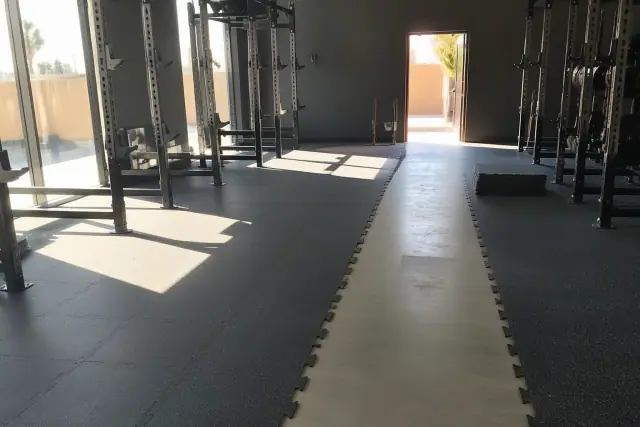
Interlocking rubber floor tiles installed in a Phoenix, AZ commercial office gym with cardio equipment.

Interlocking rubber tile fits training areas and other facilities that value a quick installation or future removal. Its modular format can cover active spaces while retaining the impact resistance and standing comfort of rubber.

Request Estimate

Commercial Gym and Training Flooring

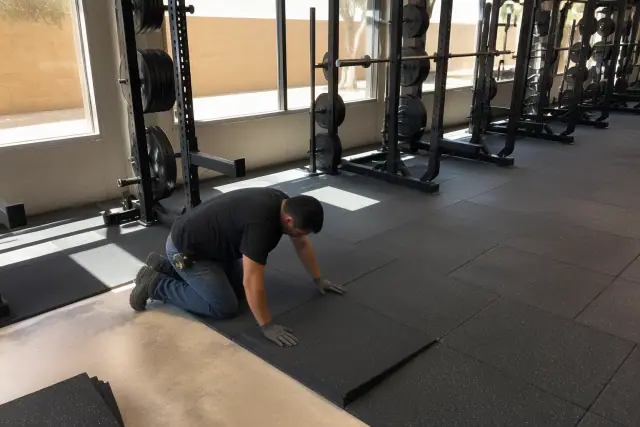
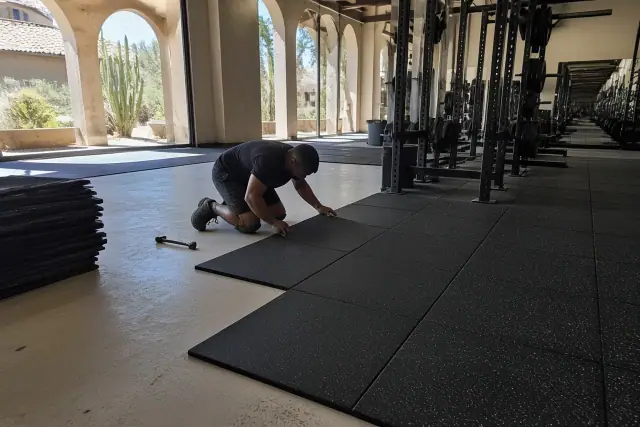
Technician installing heavy-duty rubber gym flooring onto a concrete slab in Phoenix, AZ.

Professional gym floors must withstand dropped plates, rack feet, rolling equipment, and daily foot traffic without denting or delaminating. We install rubber surfaces for free-weight zones, training areas, turf lanes, school gyms, and multipurpose activity spaces, including the kinds of active floors found across Phoenix Union and Deer Valley Unified campuses.

Request Estimate

Industrial and Workplace Flooring

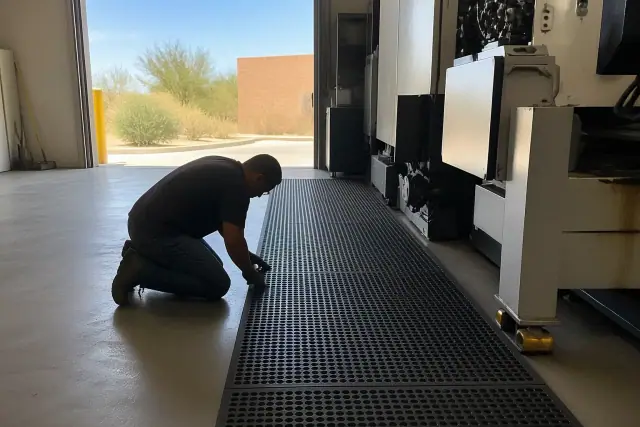
Worker installing anti-fatigue rubber mats near machinery on a warehouse floor in Phoenix, AZ.

Industrial rubber flooring can protect warehouse and manufacturing work zones exposed to forklift traffic, chemical spills, and constant movement at assembly stations. Surface density, texture, and placement are chosen for heavy rolling loads and heat-cycled dock conditions.

Request Estimate
Rubber Flooring Formats

Types of Anti Fatigue Rubber Flooring Options

Material format affects coverage, installation, cleaning, traction, and cost. Comparing beveled mats, rolls, tiles, poured surfacing, and rubber compounds against facility conditions makes the selection more practical.

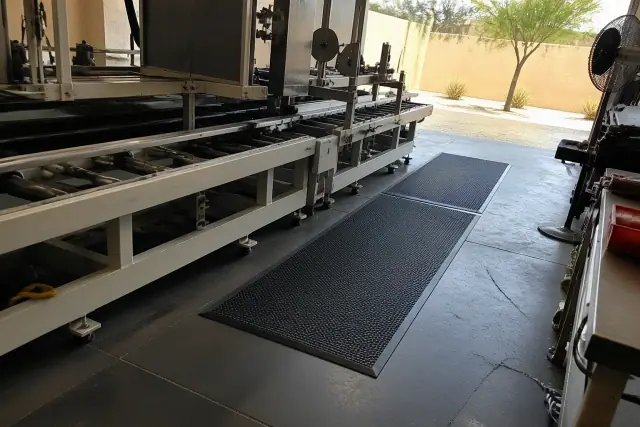
Beveled-edge anti-fatigue rubber flooring mats at an industrial assembly station in Phoenix, AZ.

Beveled-Edge Anti Fatigue Mats

Beveled mats target cushioning where employees stand in one place for hours. We can plan custom cuts for irregular footprints, equipment bases, and multi-mat layouts so the surface reads as a continuous work zone.

  • Focused coverage for individual workstations
  • Beveled perimeter helps reduce trip hazards
  • Closed-cell surfaces shed oil, grease, and cleaning chemicals
  • Grease-resistant composites suit commercial kitchens
  • Thinner textured rubber balances office comfort and stability
Request Estimate
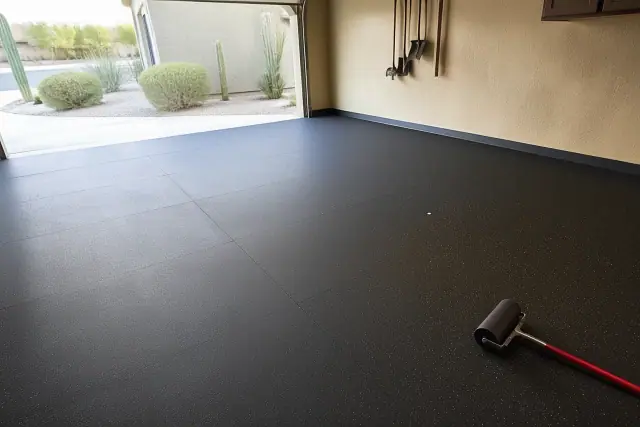
Black rubber anti-fatigue flooring rolls installed on a residential garage floor in Phoenix, AZ.

Rolled Rubber

Rolled rubber is designed for larger gym, warehouse, and retail floor areas. Material commonly runs $2 to $4 per square foot before installation, with final cost also shaped by thickness and slab preparation.

  • Broad coverage for full-facility projects
  • Suitable for gyms, warehouses, and retail floors
  • Can be seamed and adhered for demanding traffic
  • May be loose-laid where the traffic plan allows
  • Dense rubber resists repeated impact and rolling loads
Request Estimate
Interlocking rubber floor tiles installed around squat racks in a fitness center in Phoenix, AZ.

Interlocking Rubber Tile

Interlocking tile creates a modular rubber surface for training areas and other active rooms. Typical installed pricing is around $3 to $6 per square foot, depending on the tile and project conditions.

  • Designed for quick installation and removal
  • Useful in training and multipurpose areas
  • Provides cushioned support under repeated foot traffic
  • Handles rack feet and rolling exercise equipment
  • Offers a practical alternative to continuous rolls
Request Estimate
Technician troweling a poured-in-place rubber safety surface at an outdoor playground in Phoenix, AZ.

Poured-in-Place Rubber

Poured-in-place rubber is mixed and troweled at the facility for seamless coverage. Installed pricing runs roughly $10 to $15 per square foot depending on depth and bonding agent.

  • Creates a monolithic surface without tile joints
  • Works around drains, transitions, and equipment anchors
  • Supports washdown and drainage-oriented layouts
  • Fits seamless healthcare and commercial floors
  • Depth and bonding agent influence final cost
Request Estimate
Technician installing heavy-duty rubber floor tiles in a fitness center weight room in Phoenix, AZ.

Recycled and Virgin Rubber

Rubber flooring may use recycled rubber, virgin rubber, or a blend selected for the application. The compound is compressed under heat and pressure into a dense closed-cell structure that rebounds after repeated loads.

  • Virgin rubber generally holds tighter tolerances
  • Virgin material offers greater color stability over time
  • Recycled content can divert scrap tire material from landfill
  • Certified reclamation processes support recycled rubber content
  • Material density and thickness should match the traffic level
Request Estimate
Finding Your Right Fit

Choosing the Right Anti Fatigue Flooring Approach

Choosing between mats, rolled rubber, interlocking tile, and poured surfacing comes down to traffic type, budget, workstation layout, chemical exposure, cleaning needs, and whether the floor needs seamless coverage. A site-specific assessment brings those variables together before material and adhesive are selected.

Facility-Specific Flooring Plan

We plan the floor around the loads, traffic, workstation footprint, surface contaminants, and cleaning routine the facility actually has. That approach avoids treating a full manufacturing line, a kitchen prep station, and a standing desk as the same application.

Phoenix Slab Preparation

A dry climate does not eliminate moisture vapor in Arizona concrete. We evaluate the slab, test moisture conditions, and identify cracks, spalling, or uneven grade before choosing adhesive and installing rubber.

On-Site Commercial Quote

Every commercial flooring quote follows an on-site walk-through rather than a phone estimate. Measurements, slab condition, transitions, drains, equipment anchors, material thickness, and total coverage all shape the written scope.

What Sets Us Apart

Why Choose Us for Anti Fatigue Rubber Flooring Installation?

Phoenix Rubber Flooring connects material selection to subfloor preparation, facility traffic, maintenance, and safety needs. Our planning considers slip-resistant walking-working surfaces referenced in OSHA guidance under 29 CFR 1910 Subpart D, along with transition heights and traction appropriate to the space.

Request an On-Site Assessment

Standing Fatigue and Joint Strain

Bare concrete compresses joints and can contribute to lower-back, foot, shin, and plantar fascia complaints among employees who stand for most of a shift. Cushioned rubber reduces the impact load under each step and the muscular effort needed to balance on a rigid surface.

Slips Around Workplace Spills

Oil, water, grease, and cleaning solution can create daily slip hazards in kitchens, healthcare corridors, and manufacturing areas. Textured rubber and deeper wet-area profiles improve traction, while beveled mat edges help prevent liquid from collecting at the perimeter.

Moisture and Damaged Concrete

Residual moisture vapor, cracks, spalling, and uneven grade can undermine an installation. If those conditions are not treated first, flexible rubber can telegraph the slab's flaws within months.

Heat-Cycled Dock Areas

Concrete slab temperatures can climb above 100°F around Phoenix bay doors and loading docks exposed to summer sun, then cool through a Sonoran Desert winter night. Rubber compounds and properly selected adhesives accommodate those thermal swings more effectively than materials that may warp, curl, or crack after a year or two.

Heavy Rolling and Impact Loads

Forklifts, rolling carts, rack feet, dropped plates, and PE equipment concentrate force in small areas. Rubber density and thickness must be matched to those loads to resist cracking, denting, and delamination in high-use zones.

Premature Surface Wear

Citrus-based or solvent cleaners can break down rubber, while repeated cart paths and fixed heavy equipment can create localized compression wear. Neutral pH cleaning, floor protectors, and periodic equipment rotation help the surface reach its intended service life.

How it works

Our Anti Fatigue Rubber Flooring Process

A durable rubber floor starts with the facility, not the product catalog. Our process moves from site measurement and slab evaluation through material selection, preparation, installation, and practical care guidance.

01.

On-Site Walk-Through

We walk the facility to understand how employees, customers, carts, forklifts, and equipment use the floor. This establishes the real traffic, load, spill, and comfort requirements before a quote is prepared.

02.

Measure and Map Conditions

We measure square footage and note transitions, drains, equipment anchors, workstation footprints, bay doors, and areas exposed to chemicals or cleaning solution. These details determine coverage and where special cuts or edge treatments are needed.

03.

Test and Prepare Concrete

The concrete is tested for moisture vapor and checked for cracks, spalling, and unevenness. Required patching and leveling are completed before adhesive or rubber is placed so slab flaws do not show through later.

04.

Match Rubber to the Use

We compare rolled rubber, interlocking tile, poured surfacing, and beveled mats against traffic, load, chemical exposure, drainage, budget, and desired cushioning. Texture, density, thickness, rubber composition, and adhesive are selected from those conditions.

05.

Install and Finish

Rolled rubber is seamed and adhered or loose-laid as the plan requires, tiles are fitted into the layout, and poured material is mixed and troweled on-site. Edges, transitions, drains, and equipment cutouts are finished for a continuous, functional surface.

06.

Plan Routine Floor Care

Routine care begins with dry dust mopping or an auto-scrubber pass, plus deeper cleaning with a neutral pH product. We also account for protectors beneath rolling carts and equipment placement that could otherwise create concentrated wear.

Get Better Flooring

Schedule an Anti Fatigue Rubber Flooring
Consultation

Request an on-site assessment for a Phoenix facility, whether you need one cushioned workstation or a full commercial rubber floor. We will evaluate the space and prepare a quote based on its measured coverage and actual installation conditions.

Flooring Help

Anti Fatigue Rubber Flooring FAQs

These answers cover rubber flooring cost, lifespan, odor, traction, heat, preparation, cleaning, and material selection for Phoenix commercial facilities.

Call Our Flooring Team

Rolled rubber material generally runs $2 to $4 per square foot before installation, interlocking tile around $3 to $6 per square foot installed, and poured-in-place rubber roughly $10 to $15 per square foot installed. Larger full-facility gym or warehouse projects often fall in the $16,000 to $50,000-plus range, depending on coverage, thickness, material grade, slab condition, and drainage needs.

Properly installed and maintained rubber flooring commonly lasts 10 to 30 years. Virgin rubber gym flooring is commonly rated for 10 to 15 years of heavy daily use, while well-maintained commercial systems can approach the upper end; alternatives in high-traffic zones may need replacement every 3 to 5 years.

Run fans and increase fresh-air exchange for the first 48 to 72 hours after installation. Keeping the space above 65°F helps the process move faster, while lower-VOC virgin or recycled rubber products with certified low-emission ratings can reduce odor intensity and duration.

The environment determines the right mat. Closed-cell rubber with beveled edges suits dry industrial stations, grease-resistant rubber composites fit commercial kitchens, and a thinner textured rubber surface balances comfort and stability around standing desks.

Textured commercial rubber is designed to improve traction over bare concrete or vinyl. Many commercial-grade products meet or exceed ADA-referenced static coefficient of friction guidance of 0.5 or higher, while wet-area products use deeper textures for kitchens, locker rooms, healthcare settings, and other spaces where water is common.

Rubber compounds tolerate thermal cycling better than PVC or vinyl matting, which can warp or curl as Phoenix slab temperatures climb past 100°F. Proper adhesive selection helps the floor account for thermal expansion around loading bays, dock areas, and other spaces exposed to direct heat.

Concrete should be tested for moisture vapor and checked for cracks, spalling, and unevenness before installation. Surface irregularities are patched and leveled first because flexible rubber can telegraph uncorrected slab flaws over time.

Rolled rubber suits broad gym, warehouse, and retail coverage; interlocking tile fits training areas that value quick installation or removal; and poured rubber creates seamless coverage for commercial or healthcare floors. Beveled mats are useful when cushioning is needed only at individual workstations.

Use a dry dust mop or auto-scrubber pass for daily care and a neutral pH cleaner for deeper cleaning weekly. Avoid citrus-based and solvent cleaners because they can break down the rubber compound.

Closed-cell stain-resistant rubber surfaces can shed oil, grease, and cleaning chemicals instead of allowing them to soak into the material. Texture improves traction, and beveled edges help prevent liquid from pooling along mat borders near prep stations and machine bases.

Applications include manufacturing lines, warehouses, commercial kitchens, gyms, training zones, healthcare buildings, schools, retail counters, reception areas, and standing desks. The material, texture, thickness, and edge treatment should be matched to each space's load, traffic, cleaning, and spill conditions.

Cushioning can reduce the impact and muscular effort associated with standing on rigid concrete, while textured surfaces can improve traction in spill-prone areas. OSHA guidance under 29 CFR 1910 Subpart D addresses walking-working surfaces, so facilities should pair suitable flooring with their broader slip-and-fall controls.

The quote follows an on-site walk-through rather than a phone estimate. Measured square footage, slab condition, transitions, drains, equipment anchors, traffic, material thickness, drainage needs, and the selected rubber format all affect the final scope.