Proudly serving Phoenix, Mesa, Chandler, Scottsdale, Gilbert, Tempe & surrounding areasCall or Text 24/7: +1 (480) 916-7433

Rubber Flooring Installation in Goodyear, AZ for Weight Rooms and Commercial Training Facilities

Phoenix Rubber Flooring installs and repairs rubber gym flooring for home gyms, garage gyms, basement gyms, CrossFit boxes, commercial training facilities, and studio spaces throughout Goodyear. We work with rolled rubber, interlocking rubber tiles, strength-training tiles, stall mats, weightlifting platforms, and gym mats for equipment rooms, turf lanes, and free-weight areas. Each project begins with material selection and subfloor planning based on how the space will be used.

Exposed concrete in Goodyear can exceed 140 degrees during summer, putting ordinary adhesives and low-grade tiles under severe stress. Dry heat, dust, direct sun, and brief monsoon moisture can also affect seams, UV stability, traction, and cleaning demands. Our licensed and insured crew checks slab moisture and leveling before recommending installation, repair, or replacement.

Goodyear grew from 95,294 residents at the 2020 census to an estimated 118,186 in 2024, with new home-gym projects appearing across Estrella Mountain Ranch, Palm Valley, PebbleCreek, and the Canyon Trails corridor. Request a walkthrough for a clear recommendation on material, thickness, subfloor preparation, and cost.

5-star rating4.9/5 Average Rating - 20+ Years of Experience - Goodyear Rubber Flooring Specialists - Residential & Commercial
Gym Flooring Services

Rubber Flooring Services in Goodyear, AZ

Choose installation, repair, maintenance, replacement, inspection, residential, or commercial support according to the floor's condition and the demands of the training space. Material format, impact load, heat exposure, and subfloor condition all shape the right recommendation; those same factors are useful when comparing a project in Mesa AZ.

Gym and Home Gym Rubber Flooring

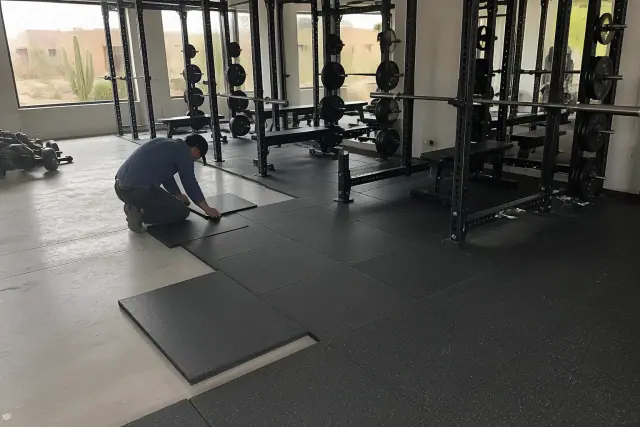
Technician installing heavy-duty rubber gym tiles on a concrete floor in Goodyear, AZ.

Consultation, material selection, subfloor preparation, installation, and maintenance guidance can cover rolled rubber, interlocking tiles, stall mats, turf lanes, and 3/4-inch-or-greater tiles for concentrated drop zones.

Explore Service

Garage Rubber Flooring Installation

Worker installing rubber flooring on a garage concrete floor in Goodyear, AZ.

Installation starts with measurement and slab checks, followed by tight-seam placement of rolled rubber, glued tile, or dry-laid interlocking systems trimmed around walls, columns, and equipment footprints.

Explore Service

Basement Rubber Flooring Installation

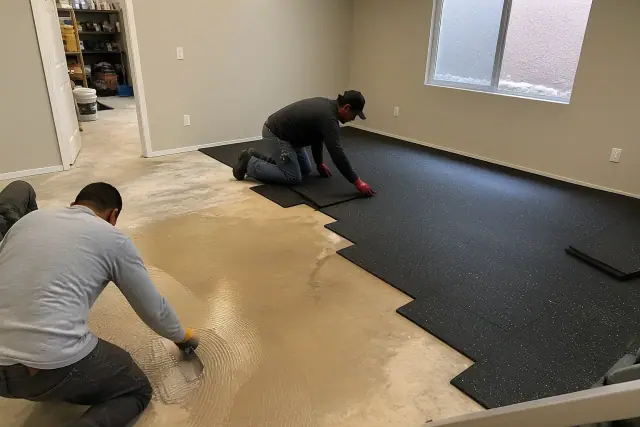
Crew members installing rubber flooring on a concrete basement floor in Goodyear, AZ.

Repair options include re-gluing lifted or curling seams, replacing damaged tiles, and patching material worn thin by repeated barbell drops or equipment movement.

Explore Service

Rolled Rubber Flooring Installation

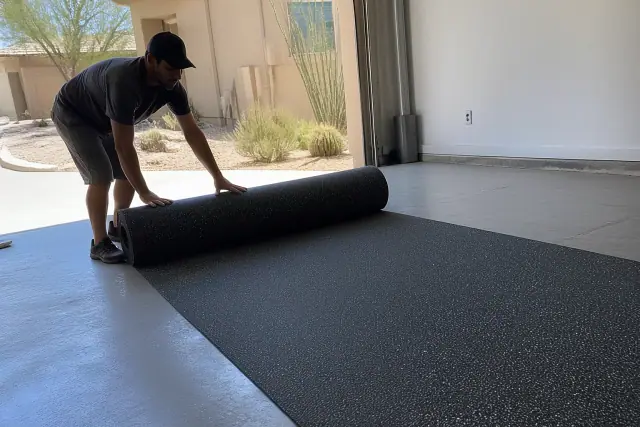
Worker installing recycled rubber flooring in a residential garage in Goodyear, AZ.

Maintenance planning accounts for fine West Valley dust, daily sanitation needs, surface porosity, and the balance between smoother easy-clean rubber and heavier texture in lifting zones.

Rubber Floor Tile Installation

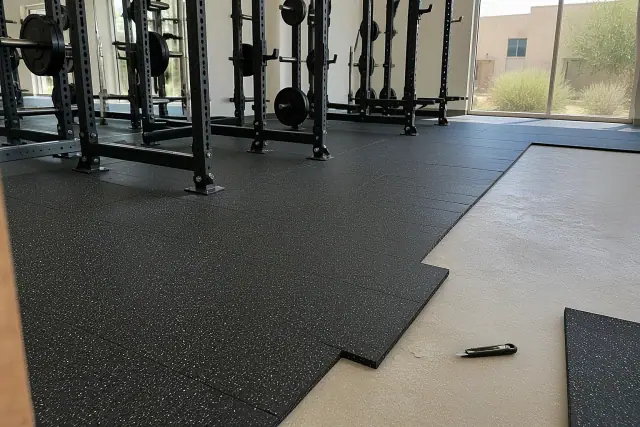
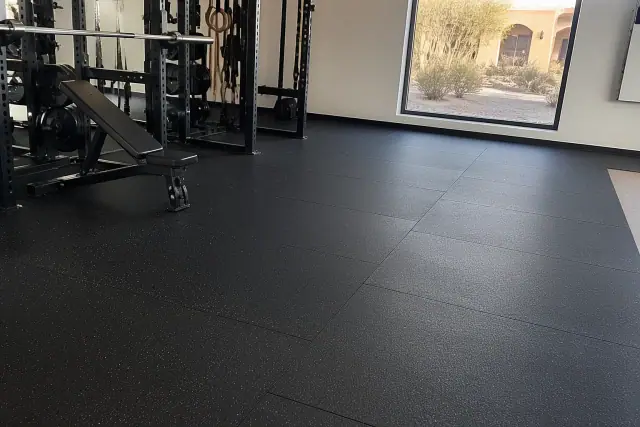
Heavy-duty rubber tile flooring installed on a concrete slab in a gym in Goodyear, AZ.

Wear-pattern assessment helps determine whether a section repair, partial re-tile, or full replacement makes the most financial sense when the existing floor has lost traction or structural performance.

Commercial Rubber Flooring

Technician installing heavy-duty rubber floor tiles in a Goodyear, AZ gym with squat racks.

A subfloor inspection checks slab moisture, cracks, unevenness, and existing coatings that could interfere with adhesion before any flooring material is ordered or installed.

Playground Rubber Surfacing

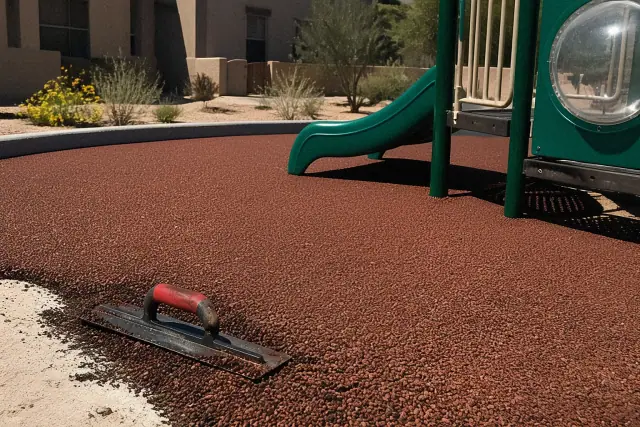
Technician troweling rubber granules around playground equipment for a safety surfacing project in Goodyear, AZ.

Home and garage gyms often use 3/8-inch to 1/2-inch rolled rubber or interlocking tile sized for a two-car garage or spare bedroom, with added thickness where heavier impact demands it.

Industrial Rubber Flooring

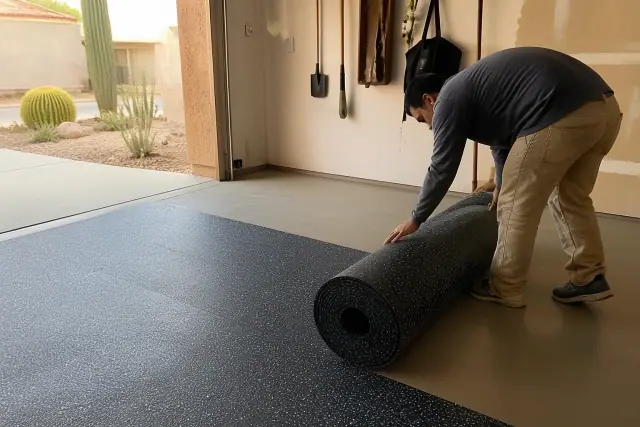
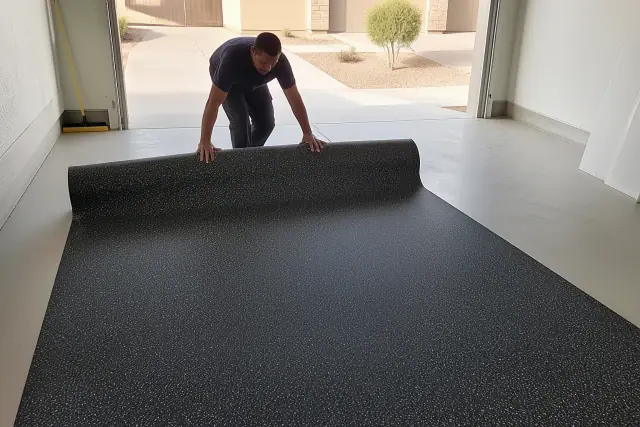
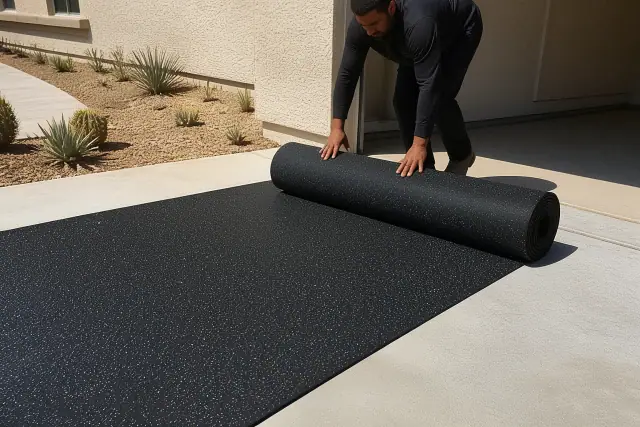
Worker unrolling recycled rubber flooring on a concrete garage floor in Goodyear, AZ.

Commercial gyms, CrossFit boxes, physical therapy clinics, school weight rooms, and studios can use glued-down rolls or heavy-duty tiles designed for continuous traffic, equipment movement, and daily sanitation.

Anti-Fatigue Rubber Flooring

Worker unrolling recycled rubber flooring on a garage concrete floor in Goodyear, AZ.

Anti-fatigue rubber flooring can support standing workstations, service counters, workshops, and fitness support spaces in Goodyear. Density, thickness, texture, edge transitions, cleaning needs, and equipment clearances are evaluated together.

Rubber Flooring Repair and Replacement

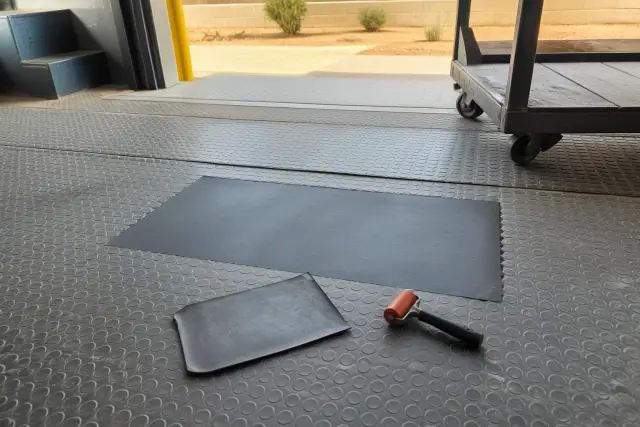
A flush rubber patch repair on warehouse loading dock flooring in Goodyear, AZ with a hand roller nearby.

We evaluate loose seams, curling edges, torn rolls, damaged tiles, and adhesive failure before choosing localized repair, partial replacement, or a complete new floor. The recommendation accounts for slab moisture, heat exposure, traffic, and the condition of adjacent material.

Material Selection

How to Choose Gym Flooring in Goodyear

The right rubber floor depends on training load, slab condition, sun and heat exposure, cleaning demands, and whether the surface may need to move later. Compare these factors before choosing thickness, format, texture, or adhesive.

Training Load and Thickness

Bodyweight training and cardio need less impact protection than barbells, dumbbells, and Olympic lifts. Match the rubber thickness and density to the heaviest concentrated loads and expected drop zones.

Subfloor Moisture and Leveling

Check moisture, cracks, uneven areas, and coatings before installation. Grinding, patching, or a vapor barrier may be needed to create a stable surface and protect adhesive performance.

Heat and UV Exposure

Garage slabs can remain well above 100 degrees from spring through fall, while direct sun can fade or dry lower-grade compounds. High-heat adhesive and UV-stabilized rubber are important for exposed spaces.

Rolled or Interlocking Format

Rolled rubber minimizes seams across large rooms, while adhesive-free interlocking tiles install quickly and can be removed for renters or multi-purpose spaces. The room layout and future plans should guide the format.

Traction, Odor, and Cleaning

Textured rubber supports wet traction, but deeper grooves can hold West Valley dust. Enclosed garages also benefit from low-odor, low-VOC compounds and a finish that fits the cleaning schedule.

Cost and Expected Service Life

Correctly specified durable rubber can last two decades or more with routine cleaning, while lower-grade products may need replacement every 3 to 5 years under heavy commercial use. Compare long-term performance with the upfront square-foot price.

Goodyear Flooring Issues

Common Gym Flooring Problems in Goodyear

Heat, UV exposure, dust, moisture, and repeated impact can expose weak material choices or poor subfloor preparation. Early assessment can distinguish a repairable seam or tile from a floor that needs broader replacement.

Request Flooring Estimate

Heat-Softened Adhesive

Adhesive designed for moderate climates can soften on hot Arizona slabs, allowing rubber tiles or rolls to shift before the material itself is worn out.

Curling, Bubbling, and Shifted Seams

Poor adhesion, uneven slabs, or trapped moisture can create raised edges, bubbles, and gaps that interrupt movement and introduce trip hazards.

Cracked Slabs in Drop Zones

Repeated heavy barbell drops over under-specified flooring can transmit impact into the concrete and contribute to stress fractures beneath lifting areas.

UV Fading and Brittle Rubber

Sunlight through south- or west-facing doors and windows can fade, dry, or embrittle rubber that was not stabilized for prolonged UV exposure.

Dust and Salt Residue

Fine desert dust can settle into aggressive texture, while salt left as sweat evaporates can make smoother surfaces slick. Texture and cleaning routines need to work together.

Moisture Beneath the Flooring

Monsoon humidity spikes in July and August can expose poorly sealed slabs. Below-grade rooms and other moisture-prone spaces may need a vapor barrier to protect adhesive bonds.

Why Choose Us

Why Choose Phoenix Rubber Flooring in Goodyear?

Phoenix Rubber Flooring is a licensed, insured, locally owned, family-run gym flooring contractor with more than 20 years of combined installation experience. The crew follows manufacturer specifications, provides written estimates that separate material, labor, and subfloor preparation, and checks the finished floor before closing the project.

Local, Family-Run Crew

The people who quote the project are the people who install it, without handing the work to an outside franchise call center or unrelated subcontracting team.

Manufacturer-Spec Installation

Each roll and tile is matched to manufacturer requirements for durometer, density, thickness, impact absorption, and slip resistance, with applicable ASTM testing information kept in view.

Clear Estimates and Follow-Through

Written estimates itemize material, labor, and subfloor work. The final walkthrough checks seams, transitions, and overall fit, and needed adjustments are handled before the job is considered complete.

Installation Process

Our Gym Flooring Installation Process

Each project moves from inspection and material selection through slab preparation, installation, and a final walkthrough. Most home-gym installations finish in a single day, while commercial schedules depend on square footage and are coordinated to reduce disruption.

01.

Measure and Inspect

Measure the room and check the slab for moisture, cracks, unevenness, and coatings that could affect adhesion or final fit.

02.

Match Flooring to Training

Review cardio, strength training, turf work, mixed use, equipment loads, ventilation, and sunlight before selecting material and thickness.

03.

Prepare the Slab

Grind, patch, level, or apply a moisture barrier as conditions require so the flooring is not placed over a compromised surface.

04.

Install the Chosen Format

Glue rolled rubber or tile with high-heat-rated commercial adhesive, or dry-lay interlocking systems and trim them to the room and equipment layout.

05.

Finish Seams and Transitions

Fit seams tightly and complete doorway transitions for safe movement, including applicable ADA transition requirements on commercial projects.

06.

Clean and Walk the Floor

Clean the work area, inspect seams and transitions with the customer, confirm the overall fit, and complete any adjustments before sign-off.

Flooring Outcomes

Practical Flooring Results for Fitness Spaces

Case Study 1: Home Gym Layout: A tightly fitted rolled or interlocking surface can support cardio and strength zones in a spare room or two-car garage, with added protection where weights are dropped.

Case Study 2: Commercial Zone Planning: Glued-down rubber or heavy-duty tile can handle high traffic, while 3/4-inch to 1-inch material or stacked mats protect concentrated lifting zones.

Case Study 3: Repair and Expansion: Some upgrades begin about two years after a one-bay stall-mat setup, extending coverage into a second bay or adding platform-rated tile as lifting needs grow.

Plan Your Project

Plan Your Goodyear
Gym Flooring
Project

Request an on-site walkthrough for a practical recommendation on rubber format, thickness, subfloor preparation, repair scope, and written project cost. Phoenix Rubber Flooring can plan around home equipment, commercial operating hours, and the local heat and dust conditions that affect long-term performance.

Goodyear Flooring Help

FAQs About Gym Flooring in Goodyear, AZ

These answers cover material selection, thickness, pricing, installation, repair, climate exposure, and service coverage for Goodyear gym flooring projects.

Call Our Flooring Team

For most Goodyear home gyms, 1/2-inch to 3/4-inch rolled rubber or interlocking tile made from virgin or high-grade recycled rubber provides a useful balance of impact protection and stability. Cardio and bodyweight areas may need less protection, but barbells, dumbbells, and dropped weights generally call for at least 1/2-inch material. Equipment, ceiling height, ventilation, and sunlight exposure should guide the final choice.

Rubber costs more upfront than basic carpet or leaving concrete bare. Lower-grade products may smell noticeably for several weeks, and material without UV stabilization can fade or become brittle in Arizona sun. Low-odor, low-VOC, UV-rated options reduce those tradeoffs in enclosed or sun-exposed rooms.

For bodyweight training, light dumbbells, and cardio equipment, 3/8-inch flooring is typically sufficient. Serious strength training usually calls for 1/2-inch to 3/4-inch material, while Olympic lifting platforms may need 1 inch or a stacked-mat system. The heaviest impact zone should determine the specification.

Rubber flooring generally runs $2 to $12 per square foot installed, depending on thickness and grade. Foam alternatives for light-use yoga or stretching areas generally run $1 to $4 per square foot. A written estimate should also identify labor and any grinding, patching, leveling, or moisture-barrier work.

A correctly specified durable rubber floor can last 20 years or more with routine cleaning and no major resurfacing. By contrast, lower-grade flooring under heavy commercial use may need replacement within 3 to 5 years. Impact load, UV exposure, cleaning, and installation quality all affect service life.

It can when both the rubber compound and the installation method are selected for high-heat exposure. UV-stabilized material helps in sunlit garages, and commercial-grade adhesive rated for Arizona slab temperatures helps prevent shifting, bubbles, and curling seams. A correctly specified floor can last 20 years, while an unsuitable installation may need replacement in two.

Rolled rubber has fewer seams, making it useful across large weight rooms, open training floors, and turf lanes. Interlocking tiles install without adhesive and can be removed or relocated, which suits renters and multi-purpose rooms. Room size, traffic, moisture conditions, and future plans should guide the choice.

CrossFit and Olympic lifting zones typically need 3/4-inch to 1-inch rolled rubber or stacked mats where barbells are dropped. Thinner tile can transition into functional-fitness and turf-pull areas. The surface must remain firm enough for stable lifts while absorbing enough impact to protect the slab.

Often, yes. Lifted seams can be re-glued, damaged tiles replaced, and areas worn by barbell drops or equipment dragging patched when the underlying material remains structurally sound. An on-site wear assessment determines whether repair, partial re-tiling, or full replacement makes better financial sense.

The slab should be checked for moisture, cracks, unevenness, and existing coatings that could interfere with adhesion. Preparation may include grinding, patching, leveling, or installing a moisture barrier. Skipping those checks is a common cause of early seam and adhesive failure.

Most home gym installations are completed in a single day after the material and subfloor plan are settled. Additional slab repair, moisture work, complex transitions, or a larger footprint can affect the schedule. Commercial timelines depend on square footage and operating constraints.

Commercial installations are coordinated around operating hours to keep downtime as limited as the project allows. Planning also covers load-bearing zones for racks and platforms, daily sanitation, and safe transitions at doors and thresholds. Where applicable, transitions are finished to meet ADA requirements.

Use a routine suited to the surface texture and the amount of fine desert dust entering the room. Smoother, low-porosity rubber is easier to clean in high-dust zones, while heavier texture can be reserved for lifting platforms where traction is more important. Sweat residue should also be removed so salt does not make the surface slick.

A moisture barrier may be needed when slab testing finds moisture or when the room is below grade or otherwise prone to trapped moisture. Brief monsoon humidity alone does not determine the answer; the actual slab and existing seal should be assessed first. The barrier protects the adhesive bond from moisture beneath the flooring.

Phoenix Rubber Flooring serves Goodyear, including Estrella Mountain Ranch, Palm Valley, PebbleCreek, Canyon Trails, Sedella, the Goodyear Ballpark area, and commercial corridors along Van Buren Street and McDowell Road. Nearby coverage includes Avondale, Litchfield Park, Buckeye, Tolleson, and other Maricopa County and West Valley locations depending on project scope.