Proudly serving Phoenix, Mesa, Chandler, Scottsdale, Gilbert, Tempe & surrounding areasCall or Text 24/7: +1 (480) 916-7433

Industrial Rubber Flooring Installation in Phoenix, AZ for Warehouses and Heavy-Duty Facilities

Phoenix Rubber Flooring installs industrial rubber flooring in Phoenix, Arizona, for warehouses, manufacturing floors, fitness facilities, and home garages. We build gym, CrossFit, weightlifting, warehouse, and garage flooring with rolled rubber, interlocking tiles, or poured-in-place surfaces. Material options include vulcanized rubber compounds, SBR granule composites, and EPDM color-fleck finishes. Each layout is matched to the traffic, load, impact, and flexibility needs of the space.

Phoenix heat cycling can push concrete slab temperatures past 140 degrees, while dusty air, heavy equipment, and repeated drops add daily stress. Our licensed Arizona Registrar of Contractors flooring team accounts for the valley's low humidity when selecting adhesives, planning open time, and completing seams. Before installation, we test subfloor moisture, check slab flatness and cracks, and determine whether moisture mitigation is needed. Call for a walkthrough and a square-footage quote before remodeling or new construction begins.

Commercial and athletic products rated to ASTM F1861 and ASTM F2772 are available, along with FloorScore-certified low-VOC materials. Depending on the load and impact requirements, common systems range from 3/8 inch up to 3/4 inch, with thicker assemblies used in dedicated lifting zones.

Phoenix Rubber Flooring installs industrial rubber flooring throughout Phoenix and the surrounding metro, including Scottsdale, Tempe, Mesa, Glendale, Chandler, Peoria, and Gilbert.

★ ★ ★ ★ ★4.9/5 Average Rating · 20+ Years of Experience · Thousands of Customers Helped · Licensed & Insured · Residential & Commercial

Industrial Rubber Flooring Options & Benefits

What Is Industrial Rubber Flooring?

Industrial rubber flooring is a resilient surface designed for repeated foot traffic, rolling loads, dropped weights, and equipment zones. It can be installed as rolled rubber, interlocking tiles, or a poured-in-place surface in warehouses, training centers, athletic facilities, and garages.

Commercial and athletic products can be selected to ASTM F1861 resilient-flooring and ASTM F2772 athletic-performance standards. Slip resistance can also be evaluated against ADA-referenced coefficient-of-friction thresholds for wet and dry use.

The right surface depends on the slab, building use, expected point loads, cleaning needs, and whether the layout may change. Phoenix Rubber Flooring plans each zone separately so cardio areas, traffic aisles, equipment rows, and lifting platforms receive an appropriate material and thickness.

Benefits of Industrial Rubber Flooring

A properly specified rubber floor combines impact control, traction, durability, and layout flexibility. The material and installation method can be adjusted for the demands of each part of a facility.

  • Absorbs repeated impact from weights and athletic activity
  • Rebounds under pallet jacks, rolling carts, racks, and equipment
  • Provides dependable traction in dry or sweat-covered training areas
  • Reduces impact noise and vibration in shared-wall or multi-story spaces
  • Limits dust- and moisture-catching seams when rolled goods are used
  • Allows training layouts to change with modular interlocking tiles
  • Supports indoor-air-quality goals with available FloorScore low-VOC products
  • Extends service life through replaceable sections and prompt seam repair
Industrial Rubber Flooring Services

Industrial Rubber Flooring Services

We install, replace, and repair rubber flooring for Phoenix-area commercial, athletic, industrial, and residential spaces. Each service is planned around the substrate, activity zones, static loads, drop impact, and long-term maintenance needs.

Gym Flooring Installation

Technician installing heavy-duty rubber gym flooring on a concrete slab in Phoenix, AZ.

We build complete gym surfaces for weight rooms, cardio rows, and open training space. Cardio areas commonly use 8mm to 10mm rolled stock for fewer seams, while higher-impact zones receive denser and thicker material.

Request Estimate

CrossFit and Weightlifting Flooring

Technician installing heavy-duty rubber gym flooring on a concrete slab at a CrossFit facility in Phoenix, AZ.

CrossFit and strength-training areas need flooring that manages dropped Olympic plates, sled pushes, racks, and rigs. General lifting zones often use 3/4 inch material, while dedicated platform assemblies may build up to 1.5 inches for repeated drop impact.

Request Estimate

Warehouse and Commercial Flooring

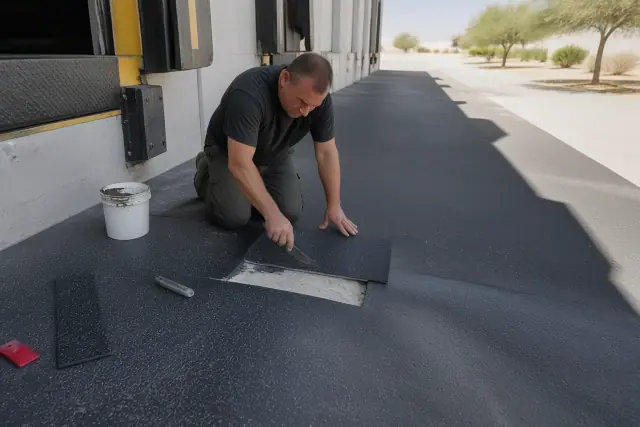
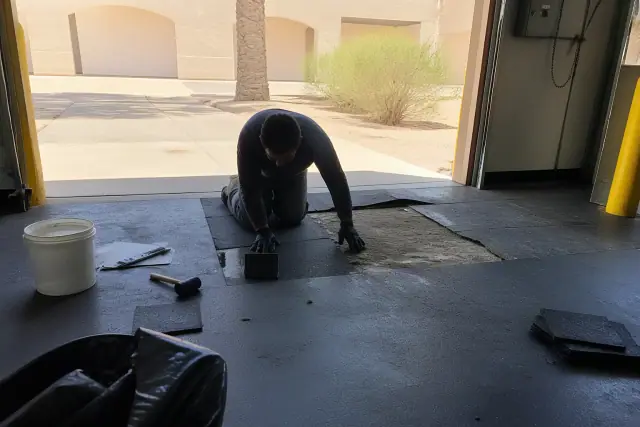
Contractor repairing damaged industrial rubber flooring near a loading dock in Phoenix, AZ.

Warehouse and commercial flooring is selected for constant foot traffic, pallet jacks, rolling carts, racking, and other point loads. Higher-density compounds help the surface rebound instead of remaining compressed under equipment.

Request Estimate

Garage and Home Gym Flooring

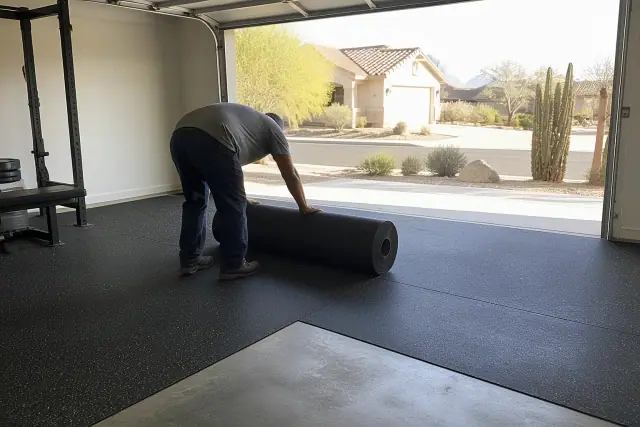
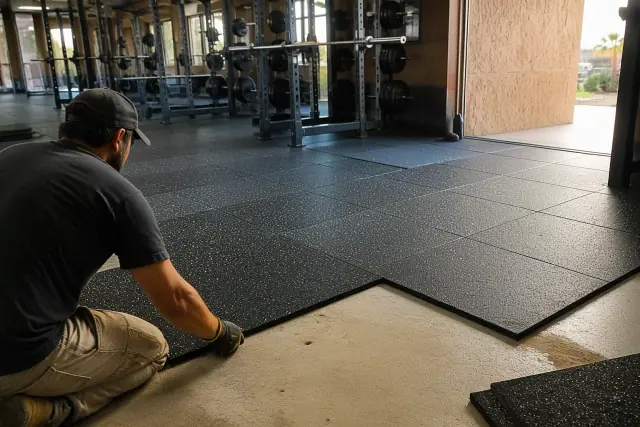
Worker installing rubber flooring in a garage with Phoenix, AZ desert views visible through the open door.

Home gyms and garages in neighborhoods such as Ahwatukee and Arcadia often use 3/8 inch to 1/2 inch interlocking tiles, moving to 3/4 inch where free weights are dropped. Removable tiles also tolerate layouts that change as the room is repurposed.

Request Estimate

Rubber Flooring Replacement

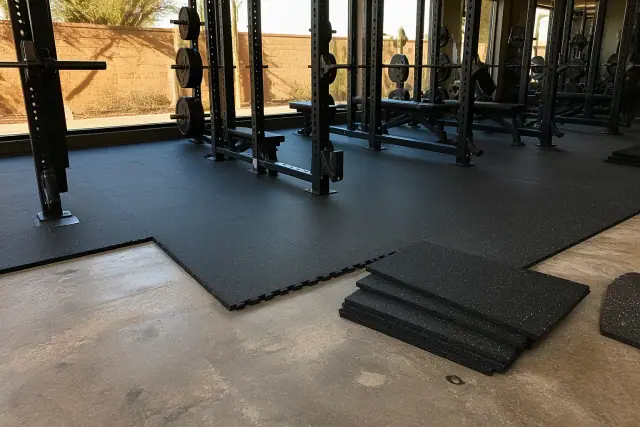
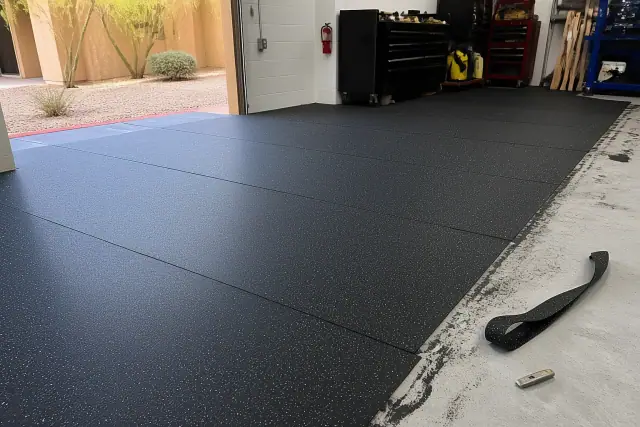
Newly installed black rubber flooring in a commercial garage workshop in Phoenix, AZ.

Replacement work includes removing old mats or rolled goods, clearing adhesive residue, grinding and preparing the slab, and installing the new surface to manufacturer specifications. Proper prep prevents the new bond from repeating a failure within a year or two.

Request Estimate

Rubber Flooring Repairs and Maintenance

Contractor repairing industrial rubber flooring near a loading dock in Phoenix, AZ.

Targeted patches, re-welded seams, and section replacement can correct localized gouges, curling, or compression set without removing an otherwise serviceable floor. With pH-neutral cleaning, no oil-based sealants, and prompt repairs, commercial rubber flooring can last 20 years or more.

Request Estimate
Rubber Flooring Materials

Types of Industrial Rubber Flooring Options

Material format affects seams, installation speed, flexibility, cure requirements, impact performance, and project cost. We compare the following options against each facility's traffic, equipment, air-quality goals, and maintenance plan.

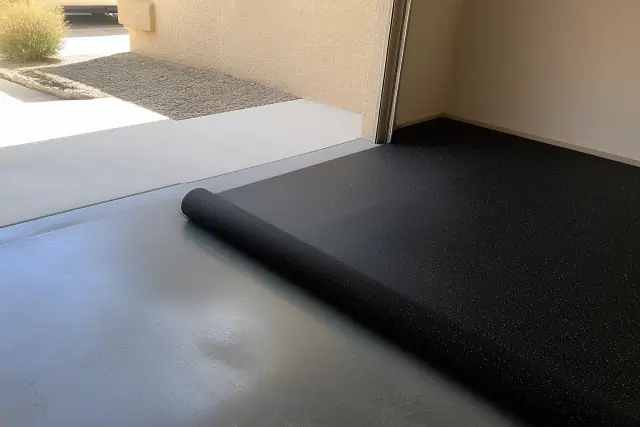
Worker installing rolled recycled rubber flooring on a concrete garage floor in Phoenix, AZ.

Rolled Rubber Flooring

Rolled rubber covers large cardio, training, and traffic zones with fewer seams than individual tiles. It is a practical choice when a continuous field and straightforward cleaning are priorities.

  • Commonly specified at 8mm to 10mm for cardio rows
  • Creates fewer joints that can collect dust and moisture
  • Covers broad open areas efficiently
  • Uses adhesive selected for slab and indoor conditions
  • Basic rolled rubber options start around $2 to $3 per square foot
Request Estimate
Technician installing interlocking rubber flooring tiles in a Phoenix, AZ fitness center free weight zone.

Interlocking Rubber Tiles

Interlocking tiles create a modular floor that can be reconfigured without recutting an entire room. Many systems snap together dry over suitable substrates, supporting fast tenant-improvement and home-gym installations.

  • Dry-laid installation is available over many prepared substrates
  • Individual tiles can be moved or replaced
  • 3/8 inch to 1/2 inch suits many home and general training areas
  • 3/4 inch to 1 inch supports repeated weightlifting impact
  • Modular sections adapt when equipment layouts change
Request Estimate
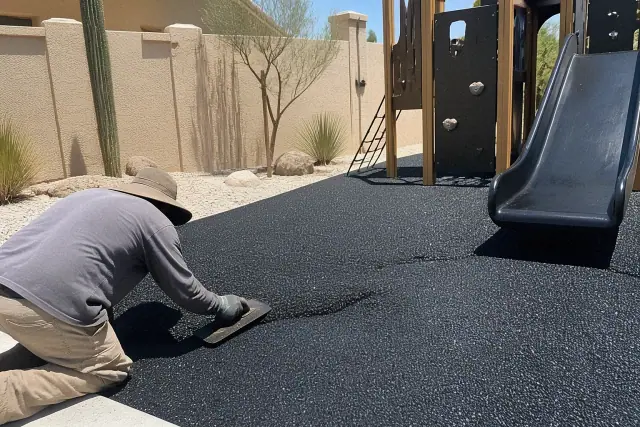
Technician troweling poured-in-place rubber flooring for an outdoor play area in Phoenix, AZ.

Poured-in-Place Rubber

Poured-in-place rubber requires specialized placement and a cure schedule suited to the jobsite. Phoenix's dry air can change working and cure times, so installation conditions must be planned rather than assumed from a national guide.

  • Placed and cured on site by application zone
  • Uses a different installation method than tiles or rolled goods
  • Requires controlled mixing, working time, and curing
  • Runs closer to $16 per square foot installed
  • Costs roughly $2,300 for a standard-size room
Request Estimate
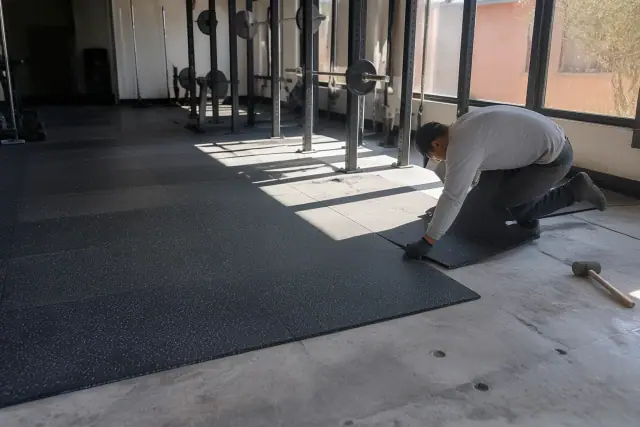
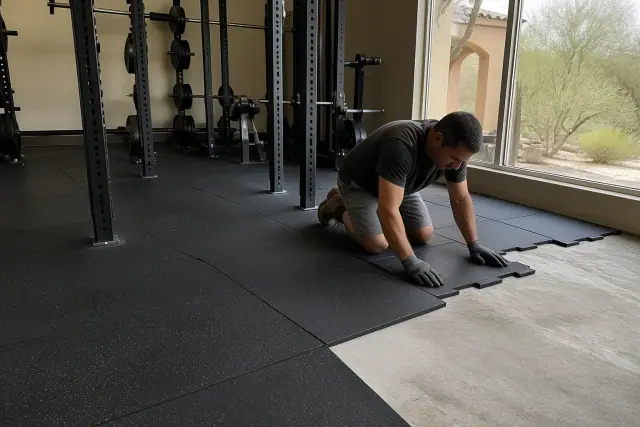
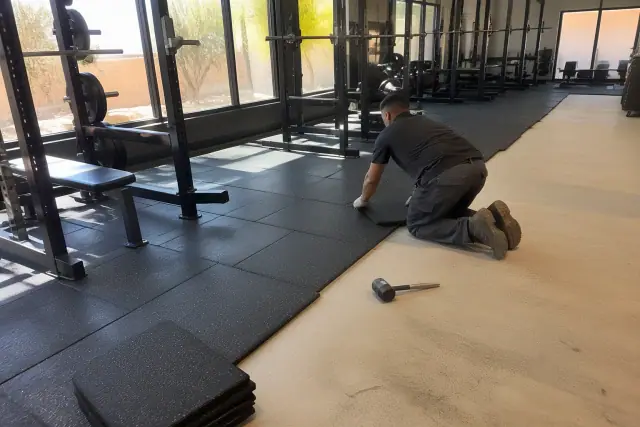
Technician installing rubber flooring tiles in a Phoenix, AZ gym with concrete floors and sunlight through windows.

Vulcanized and SBR Rubber

Vulcanized rubber compounds and SBR granule composites provide durable options for commercial and athletic installations. Density can be increased in equipment zones where point loads and rolling traffic would permanently dent a softer surface.

  • Vulcanized compounds support resilient commercial surfaces
  • SBR granules are used in composite rubber flooring
  • Higher density helps flooring rebound under point loads
  • Reclaimed tire rubber can reduce landfill-bound material
  • Material selection is matched to traffic and impact
Request Estimate
Technician installing speckled rubber gym tiles onto a concrete slab in a Phoenix, AZ fitness center.

EPDM Color-Fleck and Low-VOC Options

EPDM color-fleck surfaces add a finished visual option without giving up commercial durability. FloorScore-certified low-VOC and RFCI-compliant products are available for projects with indoor-air-quality or LEED-seeking goals.

  • Color-fleck surfacing supports customized interior palettes
  • FloorScore options address low-VOC material selection
  • RFCI-compliant products are available
  • Suitable options can support LEED-seeking project decisions
  • Many commercial products include post-consumer recycled content
Request Estimate
Finding the Right Fit

Choosing the Right Industrial Rubber Flooring Approach

The best approach is based on the building, slab condition, equipment footprint, static load, drop impact, cleaning plan, and expected layout changes. A walkthrough lets us divide the floor into zones and avoid overbuilding low-impact areas or underspecifying platforms and equipment rows.

Phoenix Climate-Aware Installation

Adhesive open time, seam work, expansion planning, and cure schedules are adjusted for Phoenix's high heat and low humidity. This helps reduce failures caused by treating a desert jobsite like a coastal installation.

Slab Testing and Preparation

Every project begins with concrete moisture testing, a flatness check, and crack assessment. We address moisture, pH, cracks, and low spots before selecting the final adhesive or laying rubber.

Zone-Specific Thickness Planning

Cardio rows, traffic aisles, racks, and lifting platforms do not create the same loads. We coordinate thickness and density with the equipment footprint and static-load information supplied by the owner or equipment manufacturer.

What Sets Our Work Apart

Why Choose Us for Industrial Rubber Flooring Installation?

Phoenix Rubber Flooring is a licensed Arizona Registrar of Contractors flooring contractor serving Phoenix and the surrounding metro. Our planning covers moisture and vapor-barrier decisions, surface preparation, adhesive selection, seam welding, thickness, and material format before installation begins.

Request a Project Walkthrough

Heat-Driven Cracking and Delamination

Phoenix slab temperatures can rise past 140 degrees, creating heat cycles that stress flooring and adhesives. Material, expansion allowance, and bond method must account for those conditions to reduce cracking, shifting, and delamination.

Moisture and Adhesive Failure

Older slabs and concrete near irrigated landscaping can hold enough moisture to weaken an adhesive bond. Calcium chloride or relative-humidity probe testing helps determine whether a vapor barrier or moisture-mitigation coating is needed.

Curled Seams and Tile Edges

Seams and edges can curl when adhesive breaks down, working time is missed, or the slab was not prepared correctly. Localized re-bonding and seam repair may stop the problem before it spreads across the floor.

Impact Gouges and Compression Set

Dropped equipment can gouge a surface, while static loads may leave compressed areas that no longer rebound. We assess the damaged zone and replace worn sections where impact protection has declined.

Noise and Vibration Transfer

Training centers in multi-story buildings or shared-wall suites can transmit impact noise to neighboring tenants. Rubber underlayment and appropriately dense flooring help damp vibration between the activity surface and structure.

UV Fading Near Windows and Loading Docks

Intense Phoenix sun can fade some rubber compounds near large windows and loading-dock doors. Product selection and targeted section replacement address exposed areas without automatically replacing the full floor.

How It Works

Our Industrial Rubber Flooring Process

The installation process moves from facility use and slab conditions to material selection, preparation, placement, and care guidance. Each step is documented around the actual zones and conditions of the property.

01.

Facility Walkthrough and Zone Planning

We review the floor plan, access, traffic, equipment, drop zones, cleaning needs, and remodeling schedule. The walkthrough creates the square-footage scope and separates general-use areas from higher-impact zones.

02.

Concrete Moisture and Slab Testing

We test concrete moisture, inspect pH, check flatness, and assess cracks or movement that could telegraph through the new floor. Results guide vapor-barrier and moisture-mitigation decisions.

03.

Surface Preparation and Repairs

Old material and adhesive residue are removed before the slab is scraped, ground, patched, and leveled as needed. Cracks and low spots are corrected so the new rubber has a sound installation surface.

04.

Material, Thickness, and Adhesive Selection

Rolled goods, tiles, or poured rubber are matched to each activity zone. We also select density, thickness, adhesive, and expansion allowance for the equipment loads and Phoenix jobsite conditions.

05.

Flooring Installation and Seam Work

The layout is established before material is cut, placed, bonded, or interlocked. Adhesive open time, seam welding, and cure conditions are managed for the valley's low humidity and high heat.

06.

Cure Review and Maintenance Guidance

After installation, we review the finished seams and surface before outlining cleaning and repair practices. pH-neutral cleaners, avoidance of oil-based sealants, and prompt seam attention help protect long-term performance.

Project Planning

Plan Your Industrial
Rubber Flooring
Installation

Request a walkthrough for a square-footage quote based on your slab, facility layout, traffic, and impact zones. We plan industrial rubber flooring for remodels, tenant improvements, new builds, gyms, warehouses, athletic facilities, and garages across the Phoenix metro.

Flooring Help

Industrial Rubber Flooring FAQs

These answers cover material tradeoffs, slab preparation, thickness, cost, maintenance, and project planning for Phoenix-area rubber flooring.

Call Our Flooring Team

Rubber flooring can have a noticeable odor when first installed, especially with lower-grade or non-FloorScore products, although it commonly fades within a couple of weeks. It is heavier and harder to remove than some flooring types, and its upfront cost can exceed basic vinyl or carpet tile. Some compounds can also discolor under prolonged UV exposure near large window walls or loading docks. Its 20-plus-year service life can offset the higher initial cost when it is maintained correctly.

A vapor barrier depends on slab moisture and the installation method. Older Phoenix slabs and concrete near irrigated landscaping may need a barrier or moisture-mitigation coating, but the decision should follow a calcium chloride or relative-humidity probe test. Skipping that evaluation can contribute to adhesive failure and curled tiles.

Basic rolled rubber starts around $2 to $3 per square foot, while rubber tile averages around $10 per square foot installed with installation labor near $2 per square foot. A standard 144-square-foot room may total $800 to $1,500, and poured-in-place rubber is closer to $16 per square foot or roughly $2,300 for a standard-size room. Large gym buildouts may range from roughly $16,000 to $50,000, while broader large-scale projects using cut rolled rubber can range from $28,500 to $67,000 depending on square footage, thickness, substrate condition, and access.

Commercial rubber flooring commonly lasts 20 years or more with proper care. Load type, cleaning products, traffic, and prompt repair of damaged seams all affect longevity. Heavy lifting or equipment zones may need localized section replacement before the rest of the floor reaches the end of its service life.

Many Phoenix home gyms use 3/8 inch to 1/2 inch interlocking rubber tiles, increasing to 3/4 inch where heavy free weights are dropped. Interlocking tiles can be installed without adhesive over a suitable prepared substrate and removed if the room changes use. Garage products must also tolerate temperature swings from near-freezing winter mornings to well over 100 degrees on summer afternoons.

CrossFit and weightlifting areas generally need a 3/4 inch minimum, while Olympic-lifting platforms may build up to 1.5 inches with layered rubber or stall mats below a rubber top layer. General training and cardio zones can often use 3/8 inch to 1/2 inch because their impact loads are lower. The final selection should be made by zone rather than applying one thickness across the entire facility.

Yes. A denser rubber compound can provide traction, shock absorption, and suitable ball-bounce consistency for indoor basketball, volleyball, and multi-purpose athletic use. Facilities can combine a rubber court with separately specified weightlifting zones in the same building.

Phoenix Rubber Flooring installs rolled rubber, interlocking tiles, and poured-in-place surfaces. Material options include vulcanized rubber compounds, SBR granule composites, recycled-content products, and EPDM color-fleck finishes. FloorScore-certified low-VOC and RFCI-compliant products are also available.

Preparation begins with moisture testing, a pH check, a slab-flatness review, and crack assessment. Existing flooring and adhesive residue are removed before the surface is scraped, ground, patched, or leveled as needed. Expansion allowance, adhesive trowel notching, and cure time are then planned for the selected system and Phoenix's dry climate.

Localized curling, gouges, failed seams, UV fading, and compression set can often be repaired by patching, re-welding, or replacing individual sections. A full replacement is more appropriate when adhesive failure or wear affects a broad area. An inspection determines whether the remaining floor still provides the required traction and impact protection.

Yes. Reclaimed tire rubber can be used in commercial-grade rolled and tile products, and many options include post-consumer recycled content. FloorScore-certified low-VOC and RFCI-compliant products are available for indoor-air-quality and LEED-seeking project goals. The rubber fitness flooring market was valued near $2.78 billion in 2024 and is projected to grow past $4.6 billion by 2032 as demand for durable commercial and residential gym surfaces increases.

Rubber flooring and underlayment can reduce impact-noise transmission and damp vibration in shared-wall suites and multi-story buildings. The result depends on the rubber density, thickness, subfloor, building assembly, and source of the impact. These factors should be reviewed separately for cardio equipment, weights, platforms, and rolling loads.

Phoenix Rubber Flooring serves Phoenix and the surrounding metro, including Scottsdale, Tempe, Mesa, Glendale, Chandler, Peoria, and Gilbert. Project types include West Valley warehouses, facilities near Sky Harbor, Deer Valley and South Phoenix training spaces, and properties throughout Maricopa County and the Salt River Valley.