Proudly serving Phoenix, Mesa, Chandler, Scottsdale, Gilbert, Tempe & surrounding areasCall or Text 24/7: +1 (480) 916-7433

Garage Rubber Flooring Installation in Phoenix, AZ for Residential and Industrial Applications

Phoenix Rubber Flooring installs garage rubber flooring for homeowners in Phoenix, Arizona. We also provide residential rubber flooring and gym flooring installation. For offices and warehouses, our crews install commercial rubber surfaces. We handle industrial rubber flooring for facilities that need a surface built for demanding use.

Phoenix garage slabs can reach well past 140°F, and repeated heat cycling can make rigid epoxy coatings bubble, peel, or develop hairline cracks within a few years. Monsoon downpours can also bring wet tires onto a slick garage floor. Rubber flexes with slab movement while maintaining natural traction wet or dry. We begin with moisture testing and subfloor preparation so the selected surface has a sound foundation.

We install interlocking rubber floor tiles and poured-in-place systems, with virgin rubber compounds for high-traffic or gym use and recycled content for standard residential garages where budget matters more than color consistency. Every crew installer is trained in rubber-specific moisture testing, subfloor preparation, and seam work. Our commercial installations are built to meet ASTM F970 static load standards and relevant slip-resistance benchmarks, and Phoenix Rubber Flooring is licensed through the Arizona Registrar of Contractors and carries insurance coverage.

Phoenix Rubber Flooring provides garage rubber flooring installation in Phoenix and throughout Scottsdale, Tempe, Mesa, Chandler, Glendale, and the greater Phoenix metro area.

★ ★ ★ ★ ★4.9/5 Average Rating · 20+ Years of Experience · Thousands of Customers Helped · Licensed & Insured · Residential & Commercial

Garage Rubber Flooring Options & Benefits

What Is Garage Rubber Flooring?

Garage rubber flooring is a flexible protective surface installed over a prepared concrete slab. It can be assembled from interlocking tiles, rolled out as sheet goods, or poured in place for a seamless finish.

Unlike a rigid bonded coating, rubber absorbs daily slab movement instead of transferring that stress through a brittle surface layer. It also provides grip, impact absorption, noise reduction, and greater comfort underfoot for long garage projects.

The material can be selected for single-car garages, two-car garages, or large multi-bay spaces. Thickness, format, rubber compound, drainage needs, and slab condition all influence the right installation approach.

Benefits of Rubber Garage Flooring

A properly selected rubber surface addresses the heat, traffic, moisture, and day-to-day use found in Phoenix garages without the brittle behavior of a rigid coating.

  • Flexes as the concrete slab expands and contracts
  • Maintains natural traction in wet or dry conditions
  • Reduces noise near bedrooms and shared walls
  • Adds shock absorption and comfort underfoot
  • Handles homes exposed to 300+ days of sun each year
  • Avoids chipping and UV yellowing associated with rigid finishes
  • Eliminates routine recoat cycles required by many coatings
  • Allows damaged interlocking tiles to be replaced individually
Garage Flooring Services

Rubber Flooring Services

We match the installation method and rubber compound to the garage, room, or facility rather than forcing every property into the same product. Our work covers residential, fitness, commercial, and demanding industrial settings.

Garage Rubber Flooring Installation

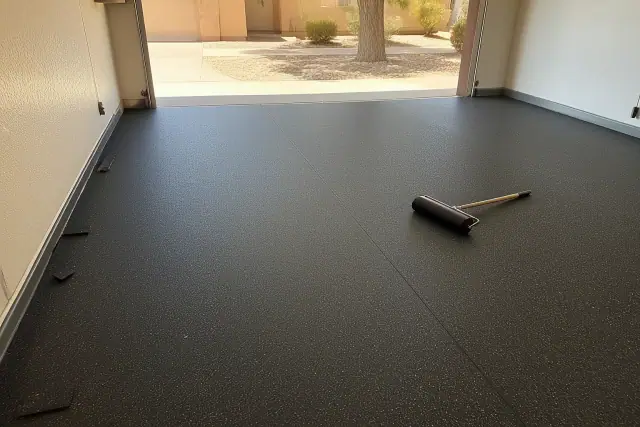
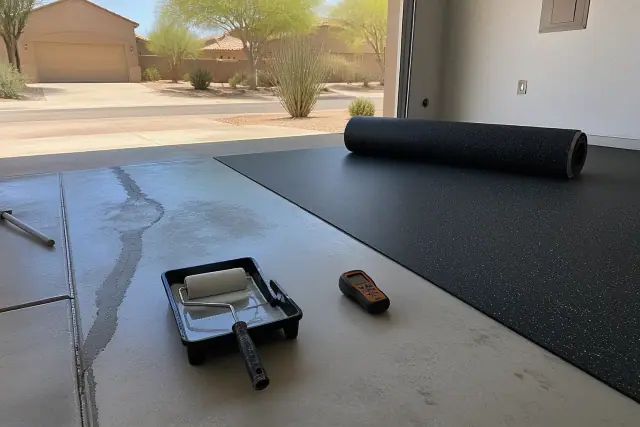
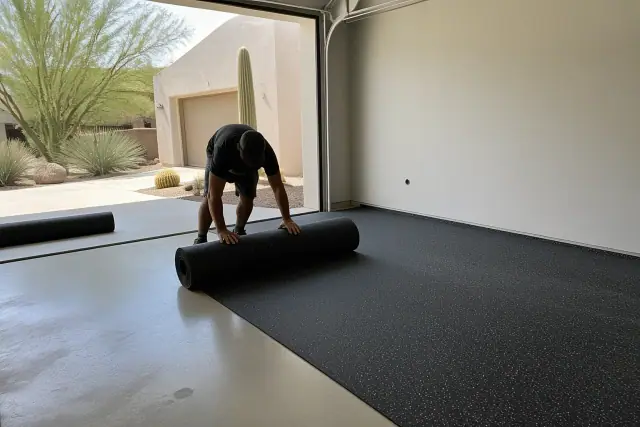
Black rubber flooring installed on a garage floor in Phoenix, AZ, with a hand roller nearby.

We install interlocking tiles, rubber rolls, and poured surfaces for Phoenix garages. The recommendation accounts for vehicle traffic, project work, moisture history, desired appearance, and the condition of the concrete slab.

Request Estimate

Residential Rubber Flooring Installation

A worker installs recycled rubber flooring on a garage concrete floor in Phoenix, AZ.

Residential installations add traction, comfort, and impact protection in garages and other hard-working home spaces. Recycled rubber can suit budget-focused projects, while virgin rubber offers more consistent color for premium finishes.

Request Estimate

Gym Flooring Installation

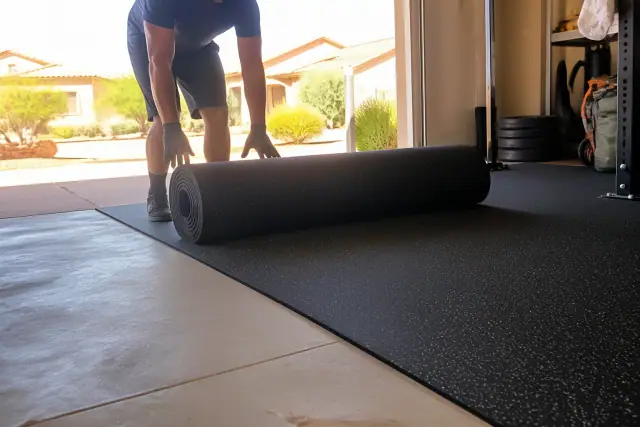
Worker installing black rubber gym flooring in a residential garage in Phoenix, AZ.

Garage gyms and dedicated fitness areas benefit from shock absorption, noise control, and a more comfortable surface under weight equipment. Virgin rubber compounds are available for high-traffic gym applications.

Request Estimate

Commercial Rubber Flooring

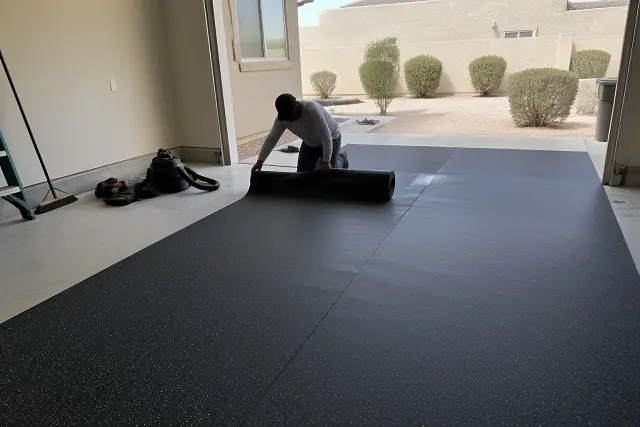
Worker installing commercial rubber flooring on a garage concrete floor in Phoenix, AZ.

We install commercial rubber flooring for offices and warehouses where load performance and slip resistance affect daily operations. Commercial work is planned around ASTM F970 static load standards and the installation requirements of commercial-grade material.

Request Estimate

Industrial Rubber Flooring

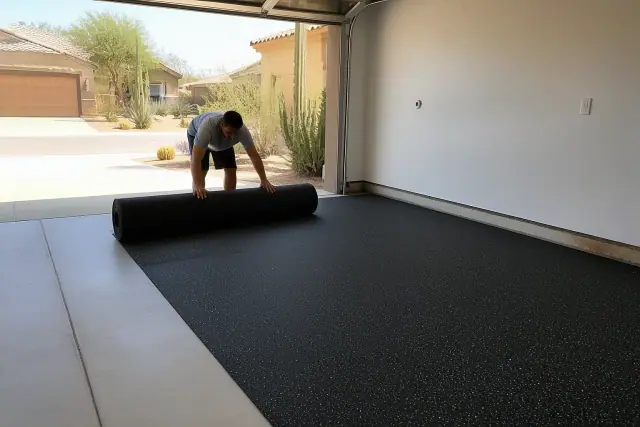
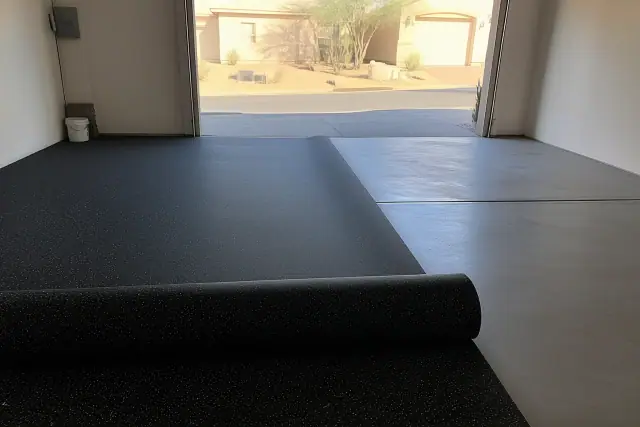
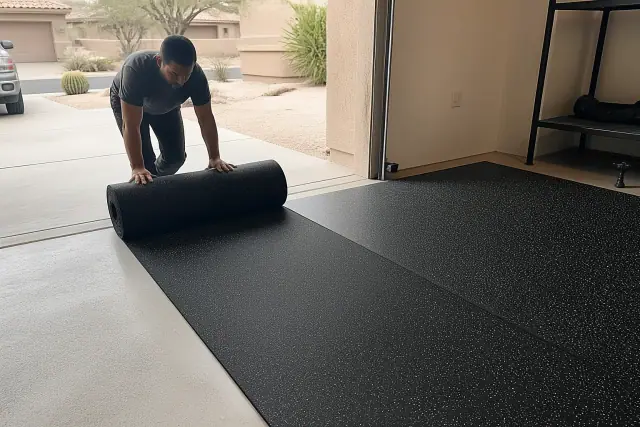
Worker unrolling industrial rubber flooring in a Phoenix, AZ garage with desert landscaping visible outside.

Industrial rubber surfaces are intended for facilities that need flooring built to take demanding use. Heavier-gauge selections can support vehicle traffic, weight equipment, and jack stands better than thin garage mats.

Request Estimate

Subfloor Preparation and Moisture Protection

Worker installing recycled rubber flooring over prepared concrete in a residential garage in Phoenix, AZ.

Our preparation work includes moisture readings, inspection for cracks and spalling, removal of coating residue, and correction of high or low spots. Where irrigation lines, pool equipment, or monsoon flooding create moisture concerns, we can include an appropriate barrier or drainage-focused tile approach.

Request Estimate
Materials and Formats

Garage Rubber Flooring Options

The right format depends on how the garage is used, whether the installation should be permanent, how much moisture reaches the slab, and the preferred balance of budget, appearance, and performance.

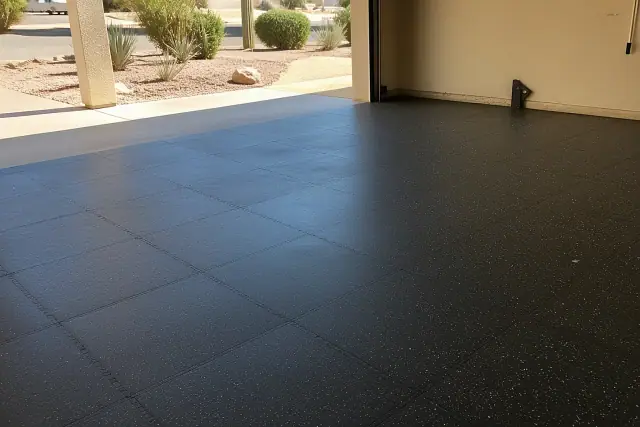
Interlocking rubber floor tiles installed in a residential garage in Phoenix, AZ.

Interlocking Rubber Floor Tiles

Interlocking tiles are our most common residential garage format because installation is efficient and individual pieces can be replaced after localized damage.

  • Quick dry-layout and assembly
  • Replaceable individual tiles
  • Black, gray, or color-flecked patterns
  • Custom borders and field designs
  • Suitable for regular residential garage use
Request Estimate
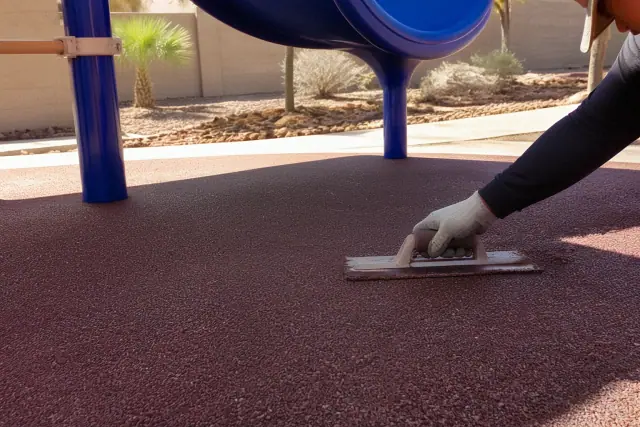
Technician troweling EPDM rubber flooring around play equipment at a job site in Phoenix, AZ.

Poured-in-Place Rubber Flooring

Poured rubber creates a seamless, monolithic finish that is especially useful when a garage also serves as a home gym.

  • No seams to collect dirt
  • No joints that trap surface moisture
  • Smooth, unified appearance
  • Well suited to garage gym layouts
  • Troweled and poured over prepared concrete
Request Estimate
A worker installing rubber garage flooring rolls on a concrete floor in Phoenix, AZ.

Rubber Rolls and Sheet Goods

Rubber rolls cover broad areas with fewer joints than tile and can be secured with seam adhesive selected for Phoenix heat.

  • Recycled options for budget-focused garages
  • Standard black rubber availability
  • Gray and premium virgin-rubber choices
  • Fewer seams across larger areas
  • Requires careful handling because of material weight
Request Estimate
A worker unrolling rubber floor mats on a concrete garage floor at a jobsite in Phoenix, AZ.

Rubber Garage Mats

Thin rubber mats provide removable protection for renters or light-use garages without committing to a permanent floor.

  • Removable rather than permanent
  • Useful for focused parking or work zones
  • Budget-conscious surface protection
  • Simpler option for light use
  • Less shock absorption than full tile or poured systems
Request Estimate
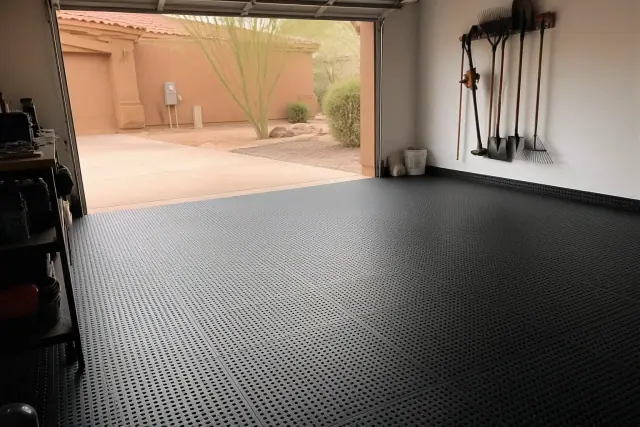
Perforated rubber floor tiles installed in a residential garage in Phoenix, AZ.

Perforated Rubber Tiles

Perforated tiles are a practical option for garages with a history of dampness because their open format helps manage drainage beneath the walking surface.

  • Useful where drainage is a concern
  • Considered after moisture testing
  • Appropriate near irrigation-related moisture
  • Helpful around pool equipment rooms
  • Reduces the risk of trapping dampness under solid rubber
Request Estimate
Finding Your Right Fit

Choosing the Right Garage Flooring Approach

We compare vehicle and equipment loads, moisture history, slab condition, desired design, and whether the floor needs to be permanent or removable. Square footage, color customization, and the choice between virgin and recycled rubber also shape the final budget and recommendation.

Phoenix Heat-Aware Installation

Rubber flooring is chosen for flexibility in a climate where concrete moves through intense daily heat cycles. Our recommendations also account for sudden monsoon humidity and the demands placed on garage slabs throughout the Salt River Valley.

Moisture Testing and Subfloor Prep

Every job starts with a moisture reading and an inspection for cracks, spalling, oil, and old coating residue. Leveling and seam preparation help prevent slab imperfections or trapped debris from causing early failures.

Licensed, Insured, and Standards-Aware

Phoenix Rubber Flooring is licensed through the Arizona Registrar of Contractors and carries insurance coverage. Our installers are trained for rubber-specific prep and seam work, while commercial projects account for relevant load and slip-resistance benchmarks.

What Sets Us Apart

Why Choose Us for Garage Rubber Flooring Installation?

Our crews work with residential and commercial-grade rubber, prepare the slab before installation, and select adhesives, seams, or barriers for Phoenix conditions. You receive a recommendation based on the property and intended use, including an honest discussion of material weight, initial odor, moisture risk, and budget.

Request an Estimate

Heat-Damaged Rigid Coatings

Daily slab expansion and contraction can make rigid coatings bubble, peel, or develop hairline cracks. Flexible rubber absorbs movement rather than forcing that stress through a bonded surface layer.

Moisture and Mold Risk

Moisture trapped beneath solid rubber can encourage mold or mildew. Testing identifies damp slabs, while perforated tiles or a polyethylene barrier can address garages affected by irrigation, pool equipment, or monsoon flooding.

Cracked or Uneven Concrete

Cracks, spalling, low spots, and high spots can show through the finished surface or weaken seams. We inspect, patch, and grind the slab so the rubber rests on a flat, dry, structurally sound base.

Wet-Tire Slip Risk

Monsoon downpours can carry water into a garage on tires and shoes. Rubber provides natural traction wet or dry, reducing the slick-floor concern associated with some coated surfaces.

Garage Noise and Impact

Garages next to bedrooms or shared walls can transmit tool, vehicle, and workout noise. Rubber helps absorb impact and reduce sound while providing a more comfortable surface for long projects.

Premature Seam Failure

Oil residue, old coating flakes, trapped debris, incorrect adhesive, or skipped leveling can cause seams to lift early. Thorough preparation and rubber-specific seam treatment address the conditions behind many failures.

How It Works

Our Garage Rubber Flooring Process

A durable installation starts below the visible surface. We evaluate moisture and slab defects, prepare the concrete, plan the layout and moisture control, then install the selected rubber format with the correct seam or curing method.

01.

Test Moisture and Inspect the Slab

We take a moisture reading and visually inspect the garage for cracks, spalling, oil stains, old flakes, and prior coating residue.

02.

Remove Residue and Contamination

Oil-stained areas and leftover coating material are ground down so debris is not trapped beneath the rubber or along a seam.

03.

Level and Repair the Subfloor

We fill low spots with a cementitious patching compound and grind high spots until the slab is flat, dry, and structurally sound.

04.

Plan Moisture Control

Most Phoenix garages do not need a vapor barrier, but damp slabs near irrigation, pool equipment, or monsoon flooding may call for polyethylene protection or perforated tiles.

05.

Dry-Lay the Material

Before final placement, we dry-lay the selected material to verify pattern direction, edge fit, and seam alignment across the garage.

06.

Install, Finish Seams, and Cure

We interlock tiles, secure sheet goods with seam adhesive, or trowel and pour liquid rubber for a monolithic finish. Poured installations cure for 24 to 48 hours before the garage returns to use.

Plan Your Garage Floor

Schedule a Garage
Flooring
Consultation

Tell us how you use the garage, the condition of the slab, and the look you want. We can compare tile, roll, mat, and poured rubber options and prepare an estimate for the installation.

Garage Flooring Help

Garage Rubber Flooring FAQs

Get practical answers about rubber garage flooring costs, material choices, preparation, durability, moisture, and maintenance in Phoenix.

Call About Garage Flooring

Rubber is heavier than vinyl, foam, or laminate, so shipping and DIY handling can be more difficult. Some virgin rubber products have a noticeable odor for the first few weeks. Moisture trapped underneath can also support mold or mildew when the slab is not tested and the installation does not account for drainage.

Rubber tile installation typically averages around $10 per square foot total, including materials and labor; the labor portion averages around $2 per square foot. A standard 144-square-foot section generally runs between $800 and $1,500 for a tile system. Poured-in-place rubber is around $16 per square foot, or roughly $2,300 for a standard-size garage bay.

Properly installed rubber garage flooring typically lasts 20 to 30 years with normal residential use. By comparison, coatings in the Phoenix climate may need recoating every 5 to 10 years.

Interlocking tiles offer efficient installation, custom patterns, and individual replacement if one tile is damaged. Poured rubber creates a seamless, monolithic finish with no joints for dirt or moisture to collect. The better choice depends on slab condition, moisture, appearance, budget, and whether the garage doubles as a gym.

Yes, when the material thickness matches the load. Heavy-duty rubber that is generally 3/8 inch or thicker holds up under vehicle traffic, jack stands, and weight equipment better than thin mats.

No. The arid climate generally keeps vapor drive lower than in humid regions, so many garages do not need one. A polyethylene barrier may be appropriate for slabs near irrigation lines, pool equipment rooms, or garages that flood during monsoon storms.

The timing depends on the selected format and installation method. Poured liquid rubber needs to cure for 24 to 48 hours before the garage goes back into use, while interlocking tiles do not rely on the same monolithic curing process.

Use a shop vacuum for loose debris and mop occasionally with a neutral pH cleaner. Avoid petroleum-based degreasers because they can break down rubber compounds over time.

Rubber has natural traction in wet and dry conditions, which is useful when monsoon rain enters on tires or shoes. Proper material selection and a clean surface still matter for dependable footing.

Some products, especially virgin rubber, can have a noticeable odor for the first few weeks as the material off-gasses. Product choice and honest planning help homeowners account for that initial period.

DIY rolls or mats can work for light use, but larger rubber products are heavy and difficult to handle. Professional installation adds moisture testing, slab leveling, heat-appropriate adhesive selection, and proper seam sealing that many DIY projects skip.

Phoenix Rubber Flooring serves homeowners and businesses in Phoenix, Scottsdale, Tempe, Mesa, Chandler, Glendale, and the greater Phoenix metro area. It also installs garage rubber flooring in Phoenix neighborhoods including Ahwatukee, Desert Ridge, Arcadia, and Sun City.

The slab should be flat, dry, and structurally sound. Cracks, spalling, low spots, high spots, oil stains, old flakes, and coating residue should be addressed before rubber is installed so imperfections do not telegraph through the floor or weaken seams.