Proudly serving Phoenix, Mesa, Chandler, Scottsdale, Gilbert, Tempe & surrounding areasCall or Text 24/7: +1 (480) 916-7433

Rubber Flooring Installation in Mesa, AZ for Home Gyms, Clinics, and Fitness Centers

Phoenix Rubber Flooring installs, repairs, and maintains rubber gym flooring throughout Mesa, AZ. We build surfaces for garage gyms, spare rooms, CrossFit boxes, physical therapy clinics, and commercial fitness centers. Options include interlocking gym tiles, rolled rubber, heavy-duty lifting platforms, recycled rubber matting, and custom rubber tile systems. Each layout is matched to the equipment load, activity, and need for a permanent or relocatable surface.

Mesa summers can push concrete slab temperatures well past 140 degrees, stressing foam tiles and adhesive-backed mats that were not engineered for Sonoran Desert conditions. Dry heat drives expansion and contraction, while monsoon moisture can become trapped beneath a loose or poorly bonded surface. Dust, UV exposure, slab pitch, and hard-water content add more variables in garages and commercial facilities. We assess the slab and intended use before recommending rubber thickness, format, adhesive, or underlayment.

Mesa has more than 504,000 residents and is the largest municipality in the East Valley of the Phoenix metropolitan area. We serve residential and commercial properties across the city and the broader East Valley coverage described below.

5-star rating4.9/5 Average Rating - 20+ Years of Experience - Mesa Rubber Flooring Specialists - Residential & Commercial
Rubber Flooring Services

Rubber Flooring Services in Mesa, AZ

Projects range from garages and dedicated exercise rooms to free-weight areas, group fitness rooms, and multi-tenant facilities. We serve Downtown Mesa, Dobson Ranch, Red Mountain, Las Sendas, Eastmark, Superstition Springs, Signal Butte, Riverview, and nearby East Valley communities, including Chandler, AZ.

Gym and Home Gym Rubber Flooring

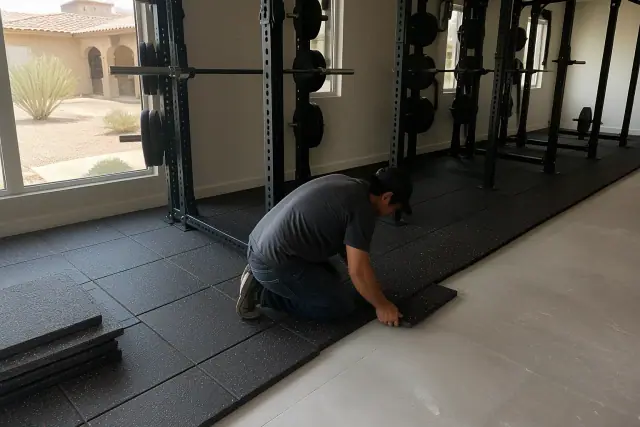
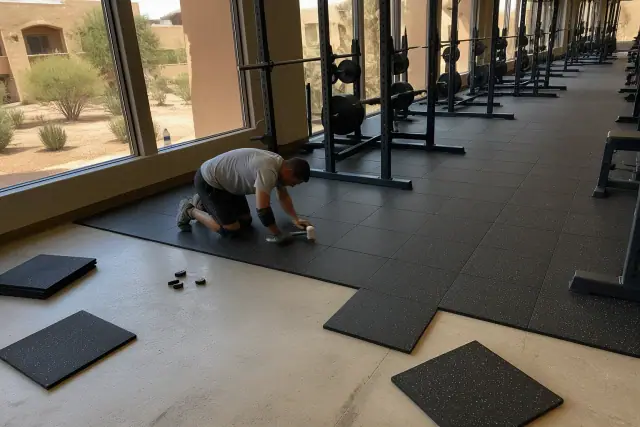
Technician installing rubber gym tiles over a concrete slab in a Mesa, AZ home gym.

High-density rubber mats, tiles, and lifting platforms protect Mesa workout spaces from equipment loads and repeated impact. General fitness surfaces commonly start at 3/8 inch, while free-weight stations may call for 3/4 inch or greater thickness. Explore Service

Explore Service

Garage Rubber Flooring Installation

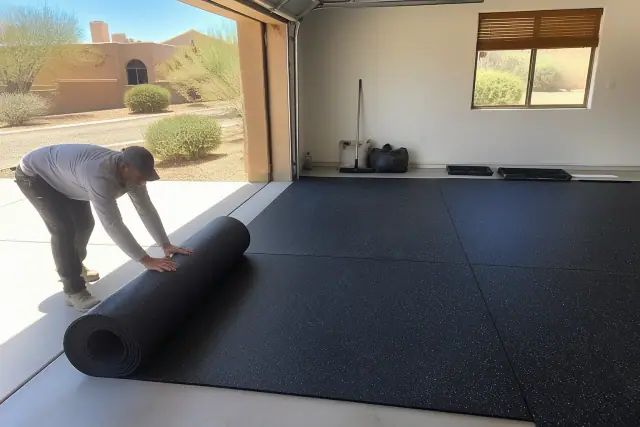
Worker installing rubber flooring on a concrete garage floor in Mesa, AZ.

Garage installations account for slab pitch, oil or chemical staining, roll-up-door dust, and temperature extremes in uninsulated spaces. Full-coverage rolls suit permanent layouts, while removable tiles support garages that still store a vehicle part-time or may expand in phases. Explore Service

Explore Service

Basement Rubber Flooring Installation

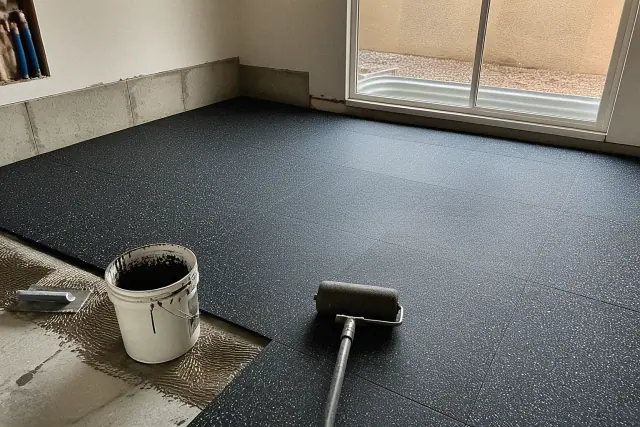
Rubber flooring installation with adhesive and a weighted roller on a residential basement floor in Mesa, AZ.

Rubber can often be installed over a flat, clean, structurally sound basement slab after moisture and surface conditions are checked. Existing damage or unevenness may require preparation or removal of the old finish before the new surface goes down. Explore Service

Explore Service

Rolled Rubber Flooring Installation

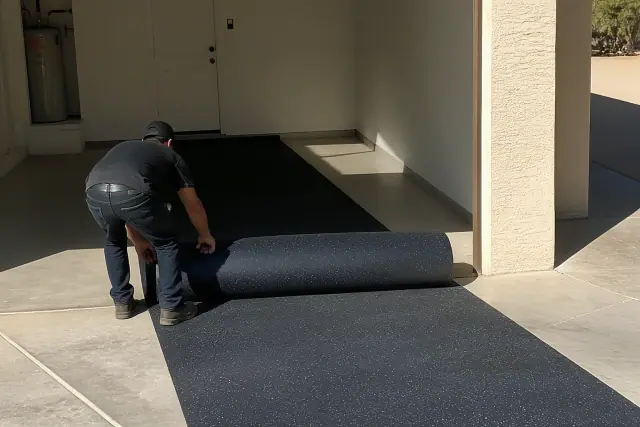
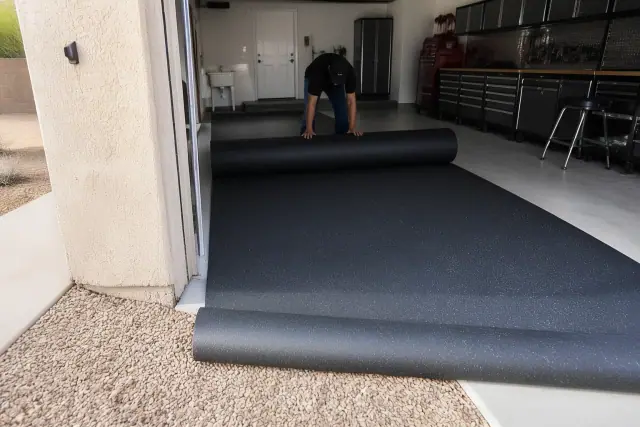
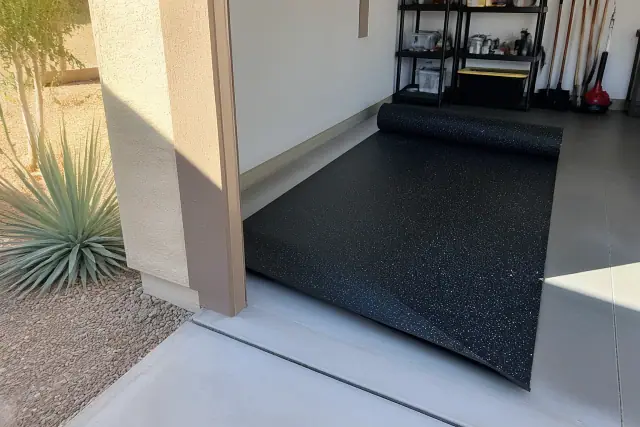
Worker unrolling recycled rubber flooring on a concrete garage floor in Mesa, AZ.

Rolled rubber creates fast, seam-minimized coverage for large studios and dedicated home gyms. We dry-lay the rolls, cut around walls and obstacles, and use a suitable adhesive when a permanent installation is preferred.

Rubber Floor Tile Installation

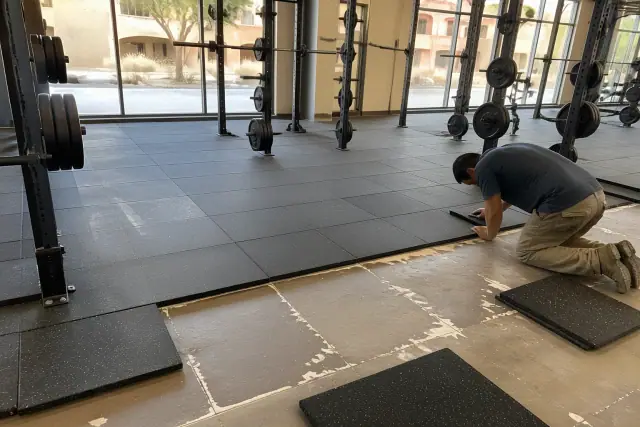
Technician installing heavy-duty rubber floor tiles in a fitness center in Mesa, AZ.

Puzzle-style interlocking tiles are available in thicknesses from 3/8 inch to 1 inch, with beveled edges for a finished perimeter. They need no adhesive, can be relocated, and often install in one day for standard home-gym square footage.

Commercial Rubber Flooring

Technician installing heavy-duty rubber floor tiles in a commercial gym in Mesa, AZ.

Fitness centers, physical therapy clinics, and shared facilities need moisture testing, adhesives selected for high traffic, and clean doorway transitions. Installation can be coordinated around operating hours, including overnight or slow-period work, to reduce disruption to member access.

Playground Rubber Surfacing

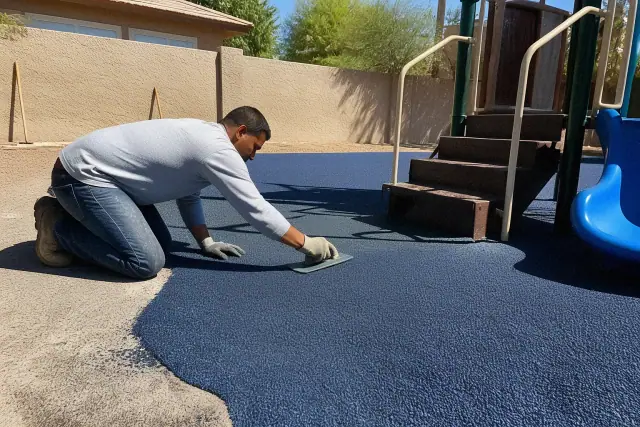
A contractor installing rubber playground surfacing near a stucco wall in Mesa, AZ.

Rubber surfacing for active play areas depends on the expected traffic, impact demands, substrate condition, and edge transitions. Material and layout decisions should be based on the property's actual use rather than a one-size-fits-all surface.

Industrial Rubber Flooring

Worker installing recycled rubber flooring in a residential garage workshop in Mesa, AZ.

Dense rubber surfaces can be evaluated for equipment loads, sustained compression, foot traffic, and the condition of the supporting slab. Density and compression-set performance matter wherever machines or heavy fixtures remain in place for long periods.

Anti-Fatigue Rubber Flooring

Worker unrolling recycled rubber flooring on a garage concrete floor in Mesa, AZ.

Anti-fatigue rubber choices should balance underfoot cushioning with density, traction, equipment stability, and ease of cleaning. The layout also needs flush edges and transitions that do not create a trip point in frequently used work or fitness areas.

Rubber Flooring Repair and Replacement

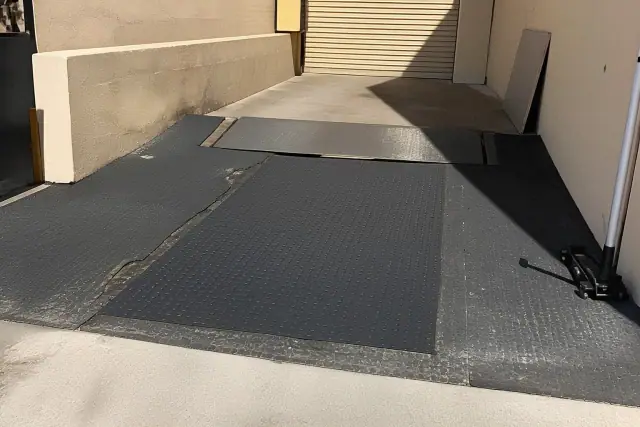
Contractor repairing damaged industrial rubber flooring at a loading dock in Mesa, AZ.

Seam separation, lifted edges, and localized damage from dropped weights can often be repaired without replacing the entire floor. Cracking, delamination, permanent odor, extensive adhesive failure, or broad UV damage may make tear-out and replacement the better path.

Flooring Selection

How to Choose Rubber Gym Flooring in Mesa

The right surface depends on training impact, equipment, room size, slab condition, exposure to heat or sun, and whether the floor needs to move later. These nine considerations help narrow the material, thickness, layout, and installation method before cutting begins.

Match Thickness to Activity

Cardio and general fitness have different impact demands than Olympic lifting or strongman training. Heavy-duty surfaces typically run from 3/4 inch to 1.5 inch and may be layered over plywood or horse-stall mats for added shock absorption.

Compare Tiles and Rolls

Tiles support relocation and simple spot replacement, while rolls provide fewer seams and efficient coverage across larger areas. Retail rubber alone averages $2.39 to $3.68 per square foot before installation labor, so layout and installation quality matter to the value of the finished floor.

Test the Concrete for Moisture

Irrigation and monsoon runoff can push moisture upward through Mesa slabs even in a dry climate. Checking moisture, cracks, and unevenness before installation helps prevent trapped dampness, telegraphed imperfections, and early seam failure.

Plan for Arizona Heat

An uncooled garage slab regularly exceeds 100 degrees in summer, causing rubber to expand by day and contract overnight or during winter cold snaps. Expansion gaps and adhesives rated for high-temperature environments help the surface move without lifting or opening seams.

Choose the Rubber Compound

Recycled rubber is the most requested residential option in Mesa because it combines shock absorption with a lower cost per square foot than virgin compounds. Density ratings measured in pounds per cubic foot, recycled-content ratio, color, odor, and compression performance under racks or machines all deserve consideration.

Finish Edges and Transitions

Clean cuts around door frames, outlets, HVAC returns, columns, and equipment anchors keep the surface flush. Beveled perimeter pieces and doorway transition strips reduce raw edges and support accessible thresholds in public facilities.

Mesa Flooring Issues

Common Rubber Flooring Problems in Mesa Gyms

Heat, moisture, sun, dust, slab defects, and concentrated weight impact can each shorten the useful life of a gym floor. Identifying the source of movement, odor, damage, or uneven wear helps determine whether preparation, repair, maintenance, or replacement is appropriate.

Request Flooring Assessment

Heat Expansion and Seam Movement

Rubber expands under daytime garage heat and contracts as temperatures fall. Without correct spacing or adhesive, edges can lift, tiles can curl, and seams can separate enough to catch equipment wheels and debris.

Moisture Trapped Beneath Flooring

Monsoon humidity or water entering below a garage door can remain beneath mats and create odor, adhesion trouble, or mold growth. Moisture assessment and, when conditions call for it, a moisture barrier help address the slab before it is covered.

UV Fading and Surface Hardening

Direct sun through windows, skylights, or an open garage door can fade rubber and harden its surface faster than in an enclosed room. A low-upfront-cost material exposed to those conditions may need replacement within two or three years, so UV exposure belongs in the selection decision.

Dust Collecting in Seams

Open desert and construction activity around growing Mesa neighborhoods send airborne particulate into garages. Tighter interlocks, properly bonded seams, and a regular sweep schedule keep grit from accumulating between floor sections.

Uneven or Contaminated Slabs

Cracks, uneven concrete, oil residue, and the drainage pitch common in garages can show through the finished surface or weaken adhesion. Cleaning, degreasing, repairing damage, and mapping the slope before layout reduces uneven wear and shifting.

Dropped-Weight Impact and Noise

Flooring under 3/4 inch can transmit lifting impact into the slab when barbells and bumper plates are dropped dozens of times per session. Platforms of 8 feet by 8 feet or larger, denser rubber, and sound-dampening underlayment can define lifting zones and reduce impact transfer in shared buildings.

Why Choose Us

Why Choose Phoenix Rubber Flooring in Mesa?

We apply the same slab assessment, material planning, clean cutting, and finish standards to spaces ranging from a 100-square-foot spare room to a 5,000-square-foot commercial facility. Local knowledge, operating-hour coordination, and ongoing repair and maintenance capability help each installation fit its Mesa property and actual use.

Mesa Slab and Climate Knowledge

Mesa homes from the 1970s and 1980s can have different slab curing histories than newer development around Eastmark and Signal Butte. We adjust moisture testing and preparation to the observed slab rather than assuming older and newer concrete will accept adhesive the same way.

Scheduling Around Facility Hours

Commercial installations can be planned overnight or during slower operating periods so a fitness facility does not lose more member access than necessary. The schedule also accounts for material placement, adhesive cure time, room size, and the number of areas involved.

Repairs and Maintenance Support

Localized patches, lifted-edge re-adhesion, seam work, deep cleaning, and seam resealing can extend a rubber floor's useful life. We recommend annual checks for home gyms and semi-annual checks for commercial facilities with heavy daily traffic.

Installation Process

Our Rubber Flooring Installation Process in Mesa

Each project moves from site assessment and material selection through slab preparation, dry layout, installation, and a final walkthrough. The sequence is adapted to the room, equipment, material format, and Mesa conditions found on site.

01.

Measure and Assess the Slab

We measure the room and inspect concrete for moisture, cracks, unevenness, stains, and drainage pitch. Equipment anchors, columns, doorways, outlets, and HVAC returns are recorded before layout begins.

02.

Select Material and Thickness

We compare recycled and virgin rubber, tiles and rolls, color, density, thickness, and underlayment based on the equipment and activity. The layout is sized around racks, rowers, circuits, lifting zones, and any future expansion plan.

03.

Prepare the Subfloor

The subfloor is swept, degreased, and corrected where damage or residue would interfere with the finish. A moisture barrier may be applied when assessment shows it is appropriate before adhesive or tile placement.

04.

Dry-Lay and Cut the Surface

Tiles or rolls are dry-laid to confirm pattern, seam position, perimeter spacing, and cut lines. Pieces are trimmed around walls, supports, openings, and equipment anchors so edges sit flush.

05.

Install, Bond, and Finish

Where adhesive is used, application follows the manufacturer's spread rate and cure time with Mesa heat in mind. Perimeter pieces, bonded seams, and transition strips are finished after the main surface is set.

06.

Walk Through Care and Cleanup

We remove offcuts and packaging, then point out seams, cleaning recommendations, and maintenance needs during the walkthrough. The team remains available to address a seam or adhesion issue that appears after installation.

Project Outcomes

Rubber Flooring Results for Mesa Homes & Businesses

Case Study 1: A residential layout can scale from a 150-square-foot spare room or single-car bay to a 600-square-foot converted three-car garage, with material and seams planned around the equipment footprint.

Case Study 2: A commercial floor can combine rolled rubber for broad studio coverage, denser sections beneath free weights, and doorway transitions that keep circulation routes usable.

Case Study 3: A lifting area can pair thick rubber with plywood, horse-stall mats, or sound-dampening underlayment to manage slab protection and impact transfer for the specific facility.

Plan Your Flooring

Plan Your Mesa Rubber Flooring Project

Request a measurement-based estimate for a Mesa garage gym, exercise room, lifting zone, fitness studio, repair, or replacement. We will review the space, intended activity, material options, preparation needs, and installation timing before work begins.

Rubber Flooring Help

FAQs About Rubber Gym Flooring in Mesa, AZ

These answers cover material selection, Mesa pricing ranges, installation conditions, maintenance, service areas, and the differences between home-gym and heavy-lifting surfaces. A site assessment can narrow the options for a specific slab, room, and equipment plan.

Call Our Flooring Team

For most Mesa home gyms, high-density rubber from 8mm to 3/4 inch works well, depending on the equipment and whether the room is used for general fitness or heavier free weights. Interlocking tiles suit renters or movable layouts, while rolled rubber creates a more seamless permanent surface. Recycled rubber offers strong shock absorption at a lower price point than virgin compounds.

Some recycled rubber has a noticeable odor after installation, although adequate ventilation usually reduces it within a few weeks. Rubber is also heavier and harder to remove than foam, can fade under prolonged UV exposure, and generally costs more per square foot than basic foam tiles. Its durability under equipment loads can offset that higher upfront cost for many gym spaces.

Home-gym flooring installation in Mesa typically runs $2 to $12 per square foot depending on material grade, density, thickness, preparation, and format. Rolled rubber generally runs $1.50 to $5 per square foot, while interlocking commercial tile runs $3 to $10 per square foot. A measurement-based quote accounts for material, labor, and the slab preparation the room actually needs.

Rubber can usually sit directly on a flat, clean concrete slab after moisture assessment. Heavy lifting platforms may benefit from plywood or horse-stall mats beneath the top layer for added shock absorption, while multi-tenant buildings may need sound-dampening underlayment. The subfloor and activity should determine whether an added layer is useful.

With proper installation and routine cleaning, rubber gym flooring in Mesa typically lasts 10 to 20 years. Direct UV exposure, uninsulated garage heat, poor ventilation, and uncorrected seam issues can shorten that range. Flooring in an enclosed, temperature-moderated room generally lasts toward the higher end.

In many cases, rubber can be installed over tile, hardwood, or concrete when the surface is flat, clean, sound, and free of unresolved moisture. Unevenness, loose material, or existing damage may require repair or removal first. That assessment helps prevent early seam failure and uneven wear.

Olympic lifting, CrossFit, and strongman areas typically use high-density rubber from 3/4 inch to 1.5 inch thick. The exact build depends on drop height, training volume, slab protection, and whether plywood, horse-stall mats, or another impact layer sits below. General fitness areas usually need less thickness than dedicated lifting zones.

Interlocking tiles work well when the surface must be relocated or sections may need spot replacement. Rolled rubber provides fewer seams and efficient full coverage for permanent studios and larger rooms. Room shape, slab condition, equipment, budget, and future use determine which format is the better fit.

Most residential garage or home-gym installations can be completed in one day. Larger commercial floors or multi-room facilities may take two to three days depending on square footage, preparation, material type, adhesive cure requirements, and access to the space. The installation schedule can also be coordinated around facility operating hours.

Yes, localized dropped-weight damage, seam separation, and lifted edges can often be patched or re-adhered. Full replacement is more appropriate when cracking, delamination, permanent odor, subfloor damage, or widespread UV deterioration affects a broad area. An inspection can separate a contained repair from a tear-out problem.

Routine sweeping and cleaning should match how much dust and traffic the room receives. We recommend a maintenance check annually for home gyms and semi-annually for commercial facilities with heavy daily traffic. Checking seams early can keep a small separation from becoming a larger repair.

Rubber expands as a hot garage or slab warms and contracts as temperatures fall. The installation should leave suitable perimeter movement space and use adhesive rated for the high-temperature environment when glue is required. Direct sun also increases fading and surface hardening, so windows and open garage doors matter to material selection.

Commercial work can often be scheduled overnight or during slower periods to limit lost member access. Timing depends on preparation, room size, material placement, transition work, and adhesive cure requirements. Multi-room facilities may need a phased plan to keep other areas usable.

Mesa coverage includes Downtown Mesa, Dobson Ranch, Red Mountain, Las Sendas, Eastmark, Superstition Springs, Signal Butte, and areas near Riverview and the Superstition foothills. The broader East Valley service area includes Tempe, Chandler, Gilbert, Queen Creek, and Apache Junction within Maricopa County. Customers near the edge of that area should confirm scheduling and travel considerations.

Recycled rubber is a common Mesa residential choice because it offers shock absorption at a lower cost per square foot than virgin rubber compounds. Virgin rubber may be considered when color, finish, or material preferences outweigh the lower-cost advantage. Equipment loads, odor sensitivity, density, appearance, and budget should all be compared before selection.