Proudly serving Phoenix, Mesa, Chandler, Scottsdale, Gilbert, Tempe & surrounding areasCall or Text 24/7: +1 (480) 916-7433

Rubber Flooring Installation in Glendale, AZ for Training Facilities and Home Gyms

Phoenix Rubber Flooring installs gym and home gym rubber flooring in Glendale, AZ, for residential and commercial fitness spaces. Our work includes rolled rubber, interlocking tiles, rubber mats, foam zones, and modular flooring for garages, weight rooms, CrossFit boxes, and training facilities. We also handle old-floor tear-out, subfloor preparation, moisture testing, repairs, and final seam sealing.

Summer slab temperatures near a hot garage door can climb past 140°F, while monsoon humidity can increase moisture vapor through concrete. Those conditions can make low-grade flooring bubble, curl, shift, or off-gas. We assess the slab, equipment load, activity type, and moisture exposure before recommending a product and thickness. Customers receive a written estimate that identifies material, labor, trim, and any needed subfloor preparation.

From a single-car garage conversion to a multi-station commercial fitness floor, we serve Glendale neighborhoods such as Arrowhead Ranch, Sahuaro Ranch, Historic Catlin Court, Thunderbird, and the Westgate Entertainment District.

5-star rating4.9/5 Average Rating - 20+ Years of Experience - Glendale Rubber Flooring Specialists - Residential & Commercial
Glendale Flooring Services

Gym and Home Gym Flooring in Glendale, AZ

We plan rubber flooring around the room, equipment, substrate, impact level, and moisture conditions rather than treating every gym alike. Projects also take us throughout the West Valley, including Peoria, AZ, Surprise, Sun City, Litchfield Park, Avondale, Tolleson, and central Phoenix in Maricopa County.

Gym and Home Gym Rubber Flooring

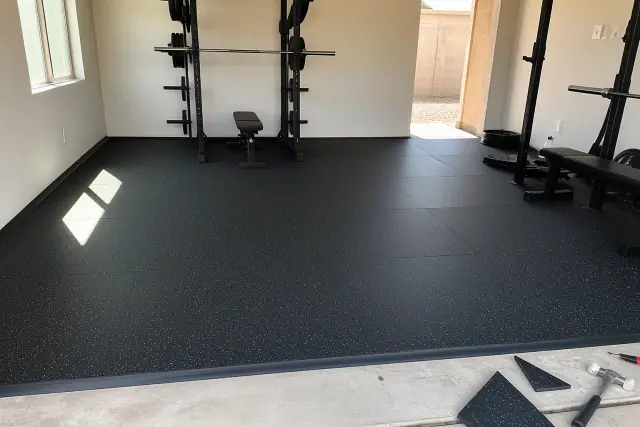
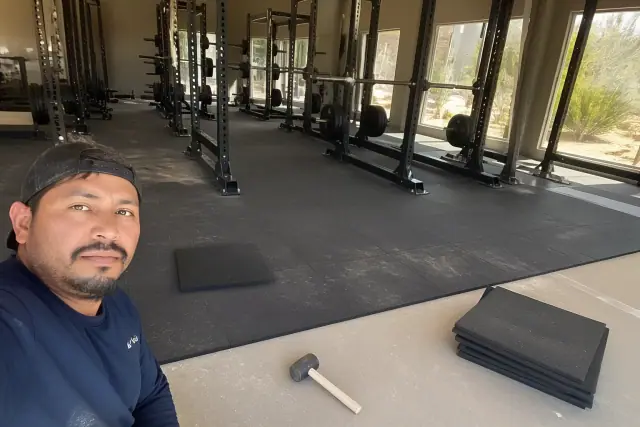
Technician installing rubber gym flooring on a concrete floor in a Glendale, AZ home gym.

Rolled rubber, interlocking tiles, mats, foam zones, and modular flooring can be matched to home gyms, weight rooms, and training floors. Rolled rubber is available in 4mm to 3/4-inch thicknesses based on activity and impact.

Explore Service

Garage Rubber Flooring Installation

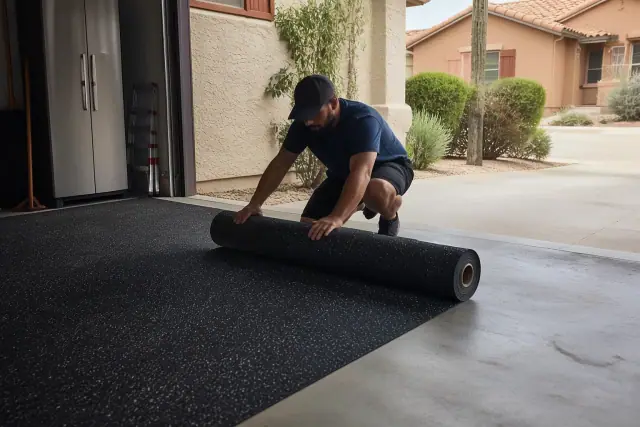
Contractor installing recycled rubber flooring in a residential garage in Glendale, AZ.

Garage gyms need flooring selected for concrete moisture, Arizona dust, and high slab temperatures. We install 8mm rolled rubber or interlocking tiles over prepared garage slabs and seal edges against dust and monsoon runoff.

Explore Service

Basement Rubber Flooring Installation

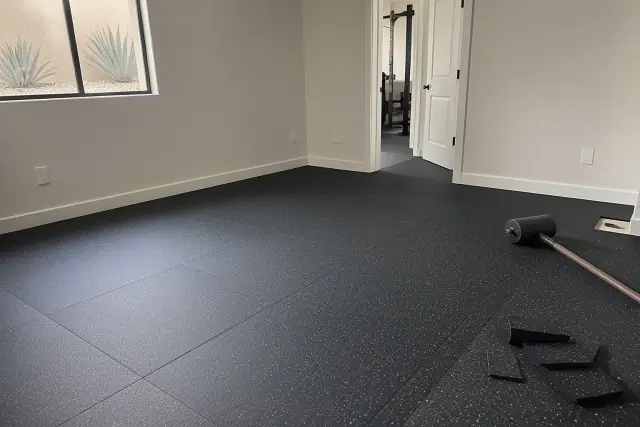
Rubber flooring installation in a residential basement in Glendale, AZ with visible floor seams and tools.

For below-grade fitness rooms, product selection starts with the subfloor condition, moisture exposure, equipment load, and desired coverage. The scope can include preparation, modular tile or rolled-rubber layout, trimming, and finished transitions.

Explore Service

Rolled Rubber Flooring Installation

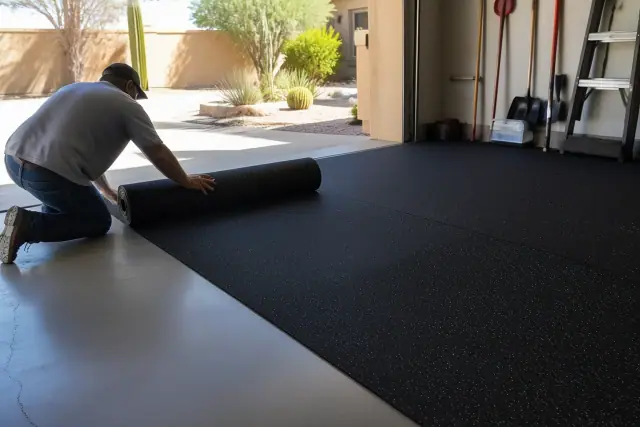
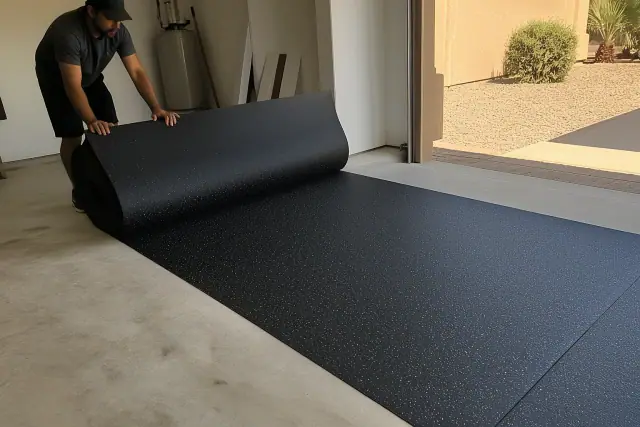
Worker installing rolled rubber flooring in a Glendale, AZ garage workshop.

Rolled rubber reduces the number of seams across large training areas and provides a continuous surface for daily foot traffic. We clean and prime the substrate, lay the rolls with the specified adhesive, trim the perimeter, and seal seams.

Rubber Floor Tile Installation

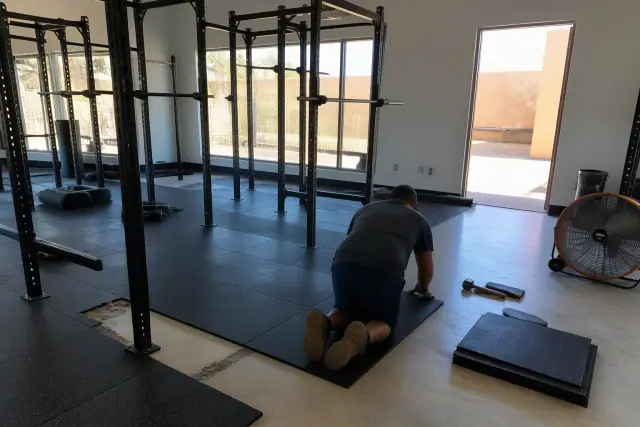
Technician installing heavy-duty rubber floor tiles in a gym in Glendale, AZ.

Interlocking rubber tiles offer modular coverage that can be removed when a room is reconfigured. Tile products typically run 20mm to 3/4-inch thick, and we help compare full-room coverage with targeted placement under racks and platforms.

Commercial Rubber Flooring

A technician installing rubber floor tiles in a Glendale, AZ fitness center free-weight zone.

Commercial fitness floors use higher-density rubber, ADA-compliant transitions, and products suited to continuous traffic. For a 10,000-square-foot training facility or other multi-station space, we coordinate zones, seams, inspections, and ASTM F2772 and ASTM E648 requirements where applicable.

Playground Rubber Surfacing

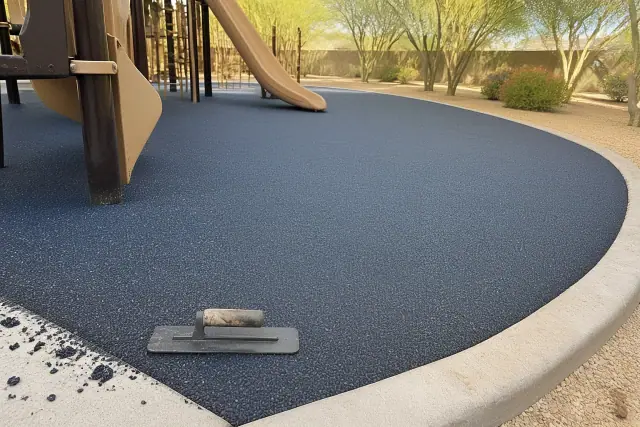
Technician installing seamless rubber playground surfacing next to gravel xeriscaping at a commercial site in Glendale, AZ.

Playground rubber surfacing projects begin with a review of the use area, substrate, site conditions, and required coverage. The written scope identifies the selected material, preparation, transitions, and installation work.

Industrial Rubber Flooring

Worker installing industrial rubber flooring in a garage in Glendale, AZ.

Industrial rubber flooring is evaluated around traffic, concentrated loads, slab condition, and transitions. We define preparation and material requirements before installation so the surface fits the actual work area.

Anti-Fatigue Rubber Flooring

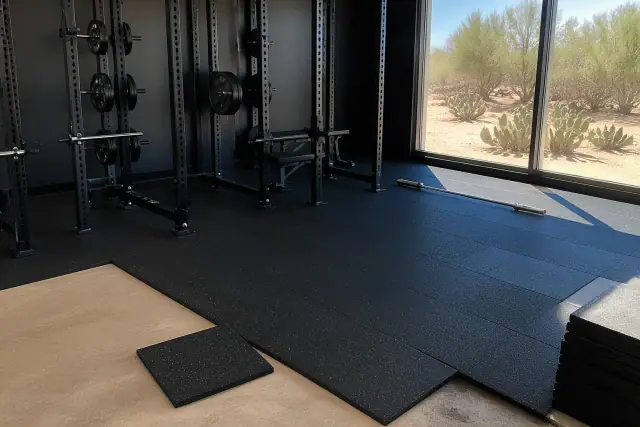
Technician installing heavy-duty rubber floor tiles in a Glendale, AZ gym with desert sunlight through a window.

Anti-fatigue rubber flooring can be planned for standing work zones where a resilient surface is appropriate. We review the area, traffic, equipment, edges, and cleaning needs before recommending coverage.

Rubber Flooring Repair and Replacement

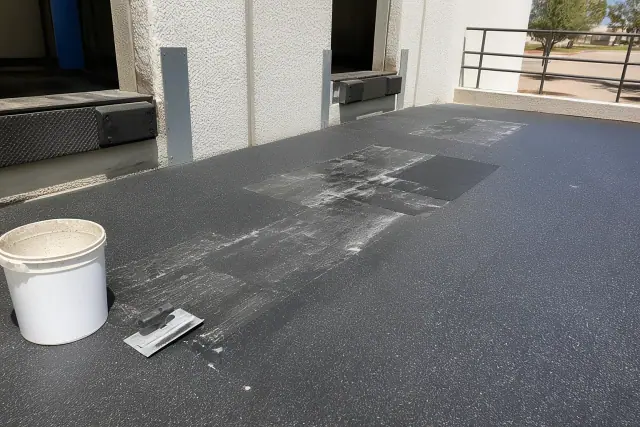
Technician repairing damaged industrial rubber flooring at a warehouse loading dock in Glendale, AZ.

We repair damaged rubber sections and replace worn gym flooring, including tear-out and disposal when required. The repair plan addresses failed seams, damaged tiles, transitions, and the underlying slab before new material is installed.

Choose the Right Surface

How to Choose Gym Flooring for Glendale Spaces

The right floor depends on equipment load, impact type, room use, moisture exposure, and the condition of the concrete below. Comparing these factors first helps narrow the choice between rolls, interlocking tiles, equipment mats, and softer foam zones.

Match Flooring to Activity

Bodyweight training, cardio, free weights, and Olympic lifting place different demands on a floor. We match surface density and format to the activity instead of specifying one product for every zone.

Check Concrete Moisture

Concrete slabs across the Valley vary in vapor emission by age and grade. Moisture readings guide whether the slab needs leveling, priming, mitigation, or a product that uses interlocking mechanical seams.

Plan for Arizona Heat

Outdoor temperatures past 110°F and direct heat near garage doors can soften or shift low-grade rubber and foam. Product choice, adhesive, and edge details should account for heat, UV exposure, and daily temperature swings.

Select the Right Thickness

Equipment and impact determine thickness: mats may run 3/8-inch to 3/4-inch, dedicated weight rooms start at a 1/2-inch minimum, and lifting-platform zones often use 3/4-inch to 1-inch rubber.

Choose Roll, Tile, or Mat

Rolled rubber limits seams across broad floors, interlocking tiles support room changes without adhesive, and thick mats protect targeted equipment zones. Mixed-use facilities may combine formats across training, cardio, and recovery areas.

Compare Full Project Cost

Material grade, thickness, square footage, trim, old-floor removal, and subfloor preparation all affect the total. A written estimate should separate those items so rolled rubber, tile, mat, and foam options can be compared fairly.

Glendale Flooring Challenges

Common Gym Flooring Problems in Glendale

Glendale's population of roughly 248,325 supports home gyms, boutique studios, and CrossFit boxes in spaces with very different slab and equipment conditions. Local heat, monsoon moisture, dust, impact, and poor preparation can shorten the life of low-grade flooring.

Request Flooring Assessment

Heat-Softened Flooring

Low-grade rubber and foam can soften, shift, or develop odor in unconditioned garages. Direct summer heat near a garage door makes product and adhesive selection especially important.

Moisture Vapor and Bubbling

Monsoon season from July through September can raise humidity and moisture moving through untreated concrete. Without testing and suitable preparation, flooring may bubble or lose adhesion.

Curling or Open Seams

Incorrect adhesive, an unprepared slab, or movement between sections can leave edges curled and seams open. Those gaps affect appearance and allow dust and moisture beneath the floor.

Impact Damage at Lifting Zones

Repeated dumbbell drops, barbells, kettlebells, and concentrated plate loads can tear thin material or damage the slab. Heavier training areas need enough thickness and reinforced platform zones.

Dust at Floor Edges

Arizona dust can work beneath unsealed perimeters and poorly finished transitions. Accurate trimming and sealed edges help keep the installed surface stable and easier to maintain.

Worn Foam Puzzle Tiles

Light foam puzzle tiles can compress, separate, or shift when used beneath heavy racks and free weights. Replacing them with rubber rolls, interlocking tiles, or targeted mats better matches equipment-heavy zones.

Why Choose Us

Why Glendale Clients Choose Phoenix Rubber Flooring

Phoenix Rubber Flooring provides residential and commercial installation, renovation, repair, and replacement with an emphasis on slab conditions and final fit. Our source-supported process includes Arizona contractor licensing, liability insurance, manufacturer specifications, written estimates, and a completion walkthrough.

Arizona-Licensed Contractor

We are licensed through the Arizona Registrar of Contractors and carry liability insurance for residential and commercial work. That foundation supports an accountable scope from assessment through completion.

Standards-Aware Commercial Work

Where required, commercial products and transitions are selected around ASTM F2772 performance, ASTM E648 critical radiant flux testing, ADA access, and applicable building inspections.

Written Scope and Final Walkthrough

The quote identifies material, labor, trim, disposal, and subfloor preparation. At completion, customers can inspect seams, transitions, and edge trim before final payment.

Six-Step Installation

Our Glendale Gym Flooring Installation Process

Each project moves from measurement and slab assessment to product selection, written scope, installation, and a final walkthrough. Commercial scheduling can also account for operating hours, permit requirements, and City of Glendale inspections when required.

01.

Measure the Space

We measure the room, calculate square footage, note walls and transitions, and document equipment anchors, mirrors, racks, and other areas that require custom cuts.

02.

Assess the Subfloor

The slab is checked for moisture, level changes, age-related conditions, and existing flooring. Those findings determine cleaning, leveling, priming, or moisture-mitigation needs.

03.

Select Flooring and Thickness

We match rolls, tiles, mats, or foam zones to activity, equipment load, impact, room temperature, and desired coverage. The recommendation also accounts for adhesive or interlocking installation.

04.

Review the Written Quote

The estimate lays out material, labor, trim, disposal, and subfloor preparation before work begins. Multiple price points can be compared without hiding what each option includes.

05.

Prepare and Install

Installation includes cleaning and priming as needed, laying rolls or tiles, trimming around walls and equipment, and sealing seams. Most residential jobs are completed in one to two days; commercial timelines depend on square footage.

06.

Inspect Seams and Care

We review seams, transitions, edge trim, and the finished layout with the customer. The final walkthrough also covers maintenance expectations for the selected surface.

Project Planning Outcomes

Rubber Flooring Outcomes for Gyms & Fitness Spaces

Case Study 1: Garage gym: A moisture-tested, edge-sealed 8mm layout can give a Glendale garage a finished training surface while addressing dust and monsoon runoff.

Case Study 2: Dedicated weight room: A 1/2-inch minimum surface with thicker matting beneath racks and lifting stations helps distribute point loads and protect the slab.

Case Study 3: Commercial training floor: Higher-density rolled rubber, reinforced seams, ADA-compliant transitions, and activity-specific zones support continuous use and a coordinated facility layout.

Start Your Project

Plan Your Glendale
Gym Flooring
Installation

Request an on-site walkthrough to discuss the room, equipment, moisture conditions, product format, thickness, and budget. Phoenix Rubber Flooring will prepare a written estimate for the recommended material, preparation, labor, trim, and removal scope.

Glendale Gym Flooring Help

FAQs About Gym Rubber Flooring in Glendale, AZ

These answers cover pricing, thickness, materials, installation, local slab conditions, and commercial requirements. Call to discuss the specific room, equipment, and substrate behind your Glendale flooring project.

Call Our Flooring Team

Rubber flooring installed typically ranges from $2 to $12 per square foot depending on thickness and product grade. Smaller DIY-style tile packages for a full garage conversion often fall between $230 and $380, while full commercial gym or weight room installations commonly range from $45,000 to $220,000. A written quote follows an on-site measurement and accounts for materials, labor, trim, and any subfloor preparation.

8mm is generally considered a balanced thickness for bodyweight and light-to-moderate training. Heavy barbell work or Olympic lifting often calls for 1/2-inch to 3/4-inch flooring or dedicated platform zones. Equipment, workout style, and the need to protect the subfloor determine the final recommendation.

Common terms include rubber gym flooring, weight room flooring, athletic flooring, resilient gym flooring, and gym matting. The main formats are rolled rubber, interlocking rubber tiles, and equipment-specific mats. A facility may combine more than one format across different activity zones.

Rubber floor tiles are a durable, water-resistant option for home gyms and can support racks and dumbbells without the movement associated with lighter foam. Rolled rubber provides fewer seams across a full room, while foam is better suited to stretching, yoga, or bodyweight-only areas. The best fit depends on equipment, impact, room conditions, and budget.

Most residential jobs are completed in one to two days. The timeline can change when the slab needs leveling, moisture mitigation, old-floor removal, or detailed cuts around fixed equipment. Commercial installations take longer based on square footage and scheduling.

Rolled rubber minimizes seams across larger training floors and is commonly installed with adhesive. Interlocking tiles can be installed without adhesive and lifted when the room is moved or reconfigured. Room size, moisture conditions, activity, and future flexibility help determine the better format.

The installation process begins with a subfloor moisture check because Valley concrete slabs can vary in vapor emission by age and grade. Readings help determine whether cleaning, leveling, priming, moisture mitigation, polyurethane adhesive, or an interlocking system is appropriate.

Arizona outdoor temperatures regularly rise past 110°F, and an unconditioned garage can become hotter. Low-grade rubber or foam may soften, shift, or develop odor under that exposure. Flooring grade, adhesive choice, UV exposure, and edge details should be planned for the room's conditions.

Where required, commercial gym flooring may need ASTM F2772 performance and ASTM E648 critical radiant flux documentation. ADA-compliant transitions, flame-spread requirements, and local buildout inspections can also affect the scope. We coordinate those items with facility managers and permit offices when applicable.

CrossFit and Olympic lifting zones often use 3/4-inch to 1-inch rubber in platforms because of repeated barbell and kettlebell impact. Reinforced seams and vibration-dampening layouts can also help protect the slab and reduce impact noise.

Yes. Thick mats can be installed beneath squat racks, dumbbell zones, and cardio equipment when full-room rolled flooring is unnecessary. These mats commonly run 3/8-inch to 3/4-inch thick and provide targeted protection against repeated impact.

Foam is lighter and softer than rubber, making it useful in stretching, yoga, recovery, or bodyweight-only areas. It is not intended for heavy equipment or repeated barbell impact. Installed foam flooring typically runs $1 to $4 per square foot.

After measurement and subfloor assessment, the slab is cleaned, leveled, and primed as needed. Crews lay rolls or tiles, trim around walls and equipment bases, finish transitions, and seal seams. The job ends with a walkthrough covering the finished details and maintenance expectations.

Phoenix Rubber Flooring serves Glendale neighborhoods including Arrowhead Ranch, Sahuaro Ranch, Historic Catlin Court, Thunderbird, and Westgate near State Farm Stadium. The service area also includes Peoria, Surprise, Sun City, Litchfield Park, Avondale, Tolleson, central Phoenix, and greater Phoenix based on project scope and scheduling.

Rubber flooring absorbs impact, resists tearing under training loads, and protects the substrate below equipment. Nationwide, the gym rubber flooring market was valued near $1.82 billion in 2025 and projected to reach $3.14 billion by 2034, reflecting broader investment in purpose-built fitness surfaces.