Gym and Home Gym Rubber Flooring
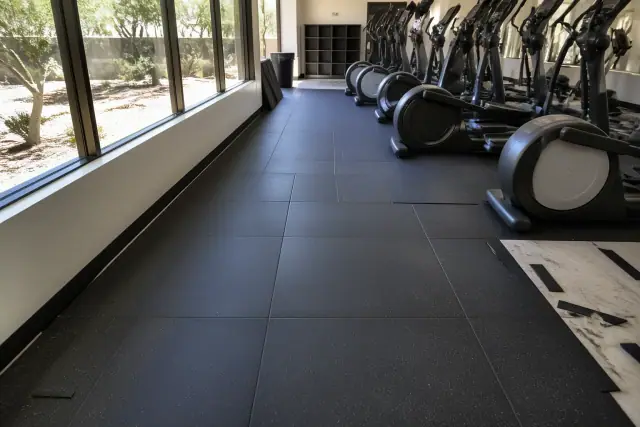
We install rolled rubber, tiles, and mats for home gyms, weight rooms, and fitness spaces. Subfloor preparation, moisture review, and equipment layout guide the finished surface.
Explore Service
Phoenix Rubber Flooring installs gym and home gym rubber flooring throughout Peoria, Arizona. We fit rolled rubber, interlocking rubber tiles, foam tiles, and mats to garages, spare rooms, dedicated fitness buildings, and commercial gyms. Our crews also handle athletic surfaces, weight-room zones, and localized rubber flooring repair or replacement. Each recommendation starts with how the room will be used and what lies beneath the finished floor.
Peoria garage slabs can climb well past 140 degrees, while monsoon moisture and daily heat cycling stress seams, edges, and low-grade foam. Caliche dust tracked in near desert washes can grind into softer surfaces, and poorly managed slab moisture can remain trapped below the floor. These conditions can leave cheap mats cracked or foam tiles curling within a year or two. We evaluate the slab, room exposure, equipment loads, and cleaning needs before recommending a material and thickness.
We serve both the Maricopa County and Yavapai County portions of Peoria, including Arrowhead, Fletcher Heights, Vistancia, the Lake Pleasant Parkway corridor, and areas near P83. In a single week, our crews may see projects ranging from 200-square-foot home gyms to 5,000-square-foot fitness centers, with each quote based on a site measurement and the selected material, thickness, and labor.
Choose a surface around the room, load, and permanence you need rather than a one-size-fits-all package. For clients just west of Peoria, Phoenix Rubber Flooring also provides these services in Surprise, AZ for residential and commercial projects.
We install rolled rubber, tiles, and mats for home gyms, weight rooms, and fitness spaces. Subfloor preparation, moisture review, and equipment layout guide the finished surface.
Explore Service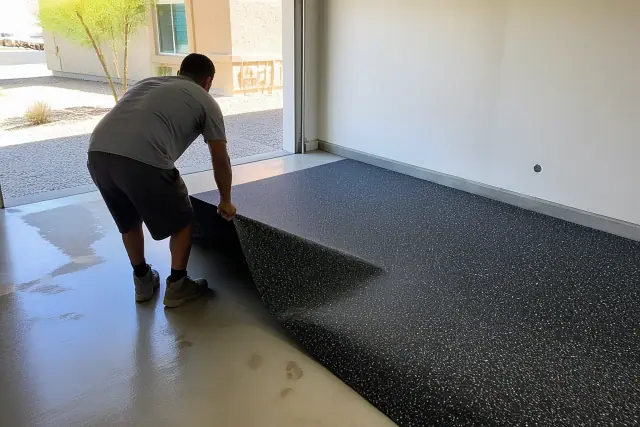
Garage installations account for slab-on-grade moisture, summer heat, monsoon humidity, and the need to reclaim the room for parking. A vapor barrier may be recommended beneath rolled rubber when conditions call for one.
Explore Service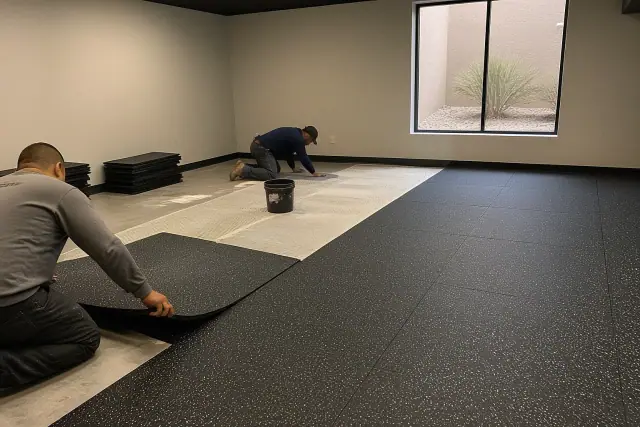
Some custom Peoria homes include basement training rooms, even though basements are less common in local block construction. We test for moisture and select rubber or foam around the room use before installation.
Explore Service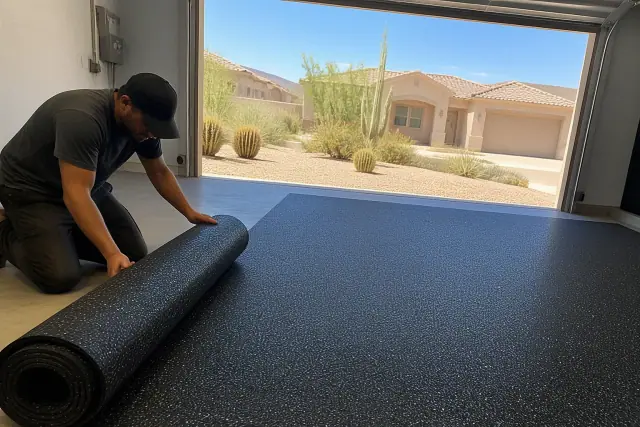
Rolled rubber creates a uniform surface with fewer seams, helping plates and equipment move smoothly across weight rooms. Rolls are matched to room dimensions, trimmed, seamed, and secured at edges.
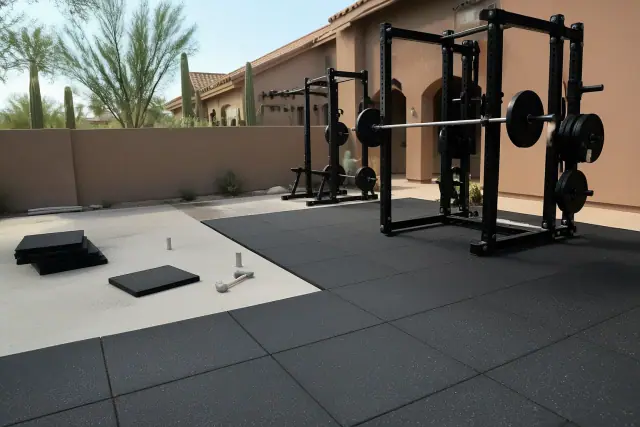
Interlocking rubber and foam tiles create modular floors that can be lifted or replaced section by section. Adhesive-free layouts suit rentals, yoga rooms, Pilates studios, and multi-use garages.
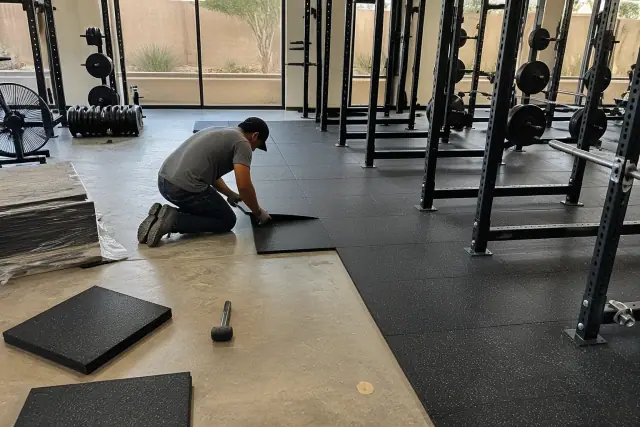
Commercial-grade rubber supports hundreds of daily users, dropped free weights, moving equipment, and routine cleaning in fitness centers, studios, and physical therapy clinics. Installation can be phased around business hours.
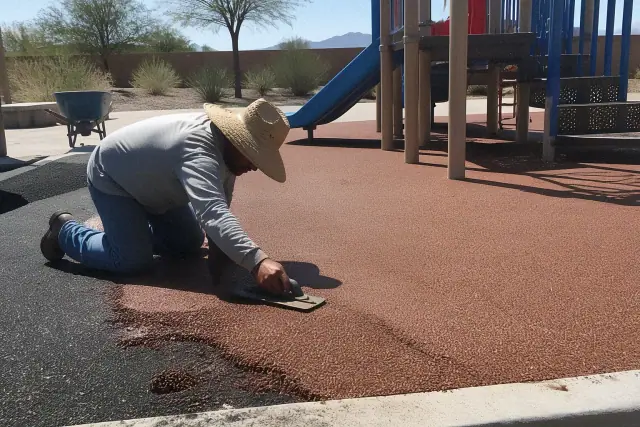
For school gymnasiums, multi-purpose rooms, and active recreation areas, resilient rubber surfacing can provide a slip-resistant, impact-aware base. Material selection depends on the activity and facility requirements.
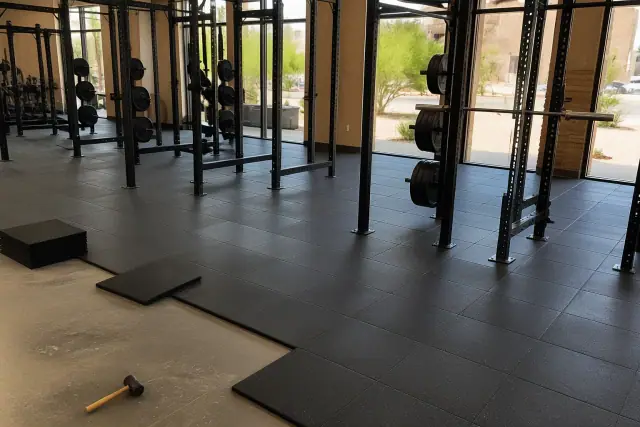
Industrial rubber flooring is suited to high-use work areas that need resilience under foot traffic and equipment movement. We plan transitions, edges, and cleaning exposure around facility operating needs.
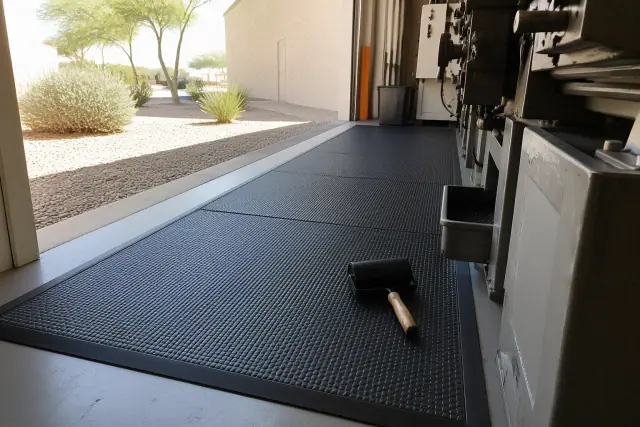
Anti-fatigue rubber surfaces add cushioning in standing work or training zones where comfort underfoot matters. Thickness and placement are matched to traffic, equipment, and the surrounding floor.
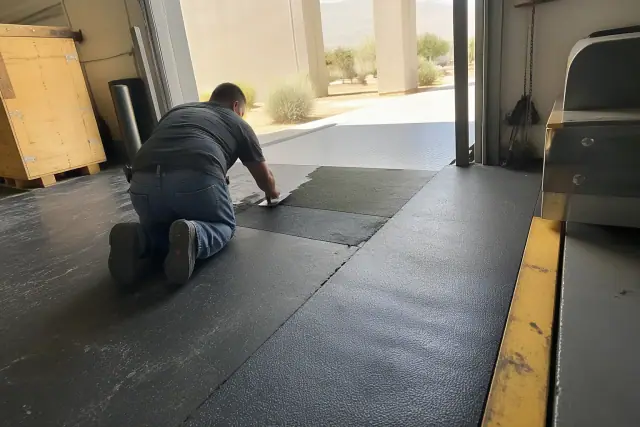
We repair lifting seams, curling corners, worn lifting zones, and other localized damage when the remaining floor is still sound. Broad failures can be removed and replaced after the slab is inspected for trapped moisture or damage.
The right surface depends on impact, room use, slab conditions, permanence, and budget. We compare those factors before choosing rolls, interlocking tiles, mats, or lighter-duty foam.
Dropped dumbbells, Olympic plates, squat racks, sled work, and cardio equipment place different demands on a floor. Heavier impact calls for denser, thicker rubber in the zones that absorb repeated drops.
Moderate strength and cardio use can rely on thinner rubber than dedicated lifting zones, which need more impact protection. Yoga or Pilates rooms can sometimes use lighter foam when heavy equipment is not part of the plan.
Rolled rubber minimizes seams across large rooms, interlocking tiles simplify sectional replacement, and mats concentrate protection under specific equipment. Room dimensions and whether the layout must move determine the better format.
Sun through garage windows, extreme slab heat, and monsoon humidity can stress edges and adhesives. Slab-on-grade rooms may need moisture testing and a vapor barrier before rubber goes down.
Tenants and homeowners who need the garage back for parking may prefer adhesive-free interlocking tiles. Dedicated strength rooms usually benefit from secure rolls or heavier rubber that stays aligned.
Square footage, material thickness, finish, subfloor repairs, trim, and installation labor all affect the quote. A site visit makes those variables visible before a fixed material and labor estimate is prepared.
Local heat, airborne grit, moisture, and repeated weight impact tend to expose an underspecified floor at its weakest point. Early signs such as curling edges, open seams, soft spots, or concentrated wear should be evaluated before they damage more of the surface or the slab.
Request a Flooring AssessmentLow-grade foam and PVC can soften as garage temperatures rise, leaving corners curled and joints uneven after repeated desert heat cycles.
Rolled rubber can pull apart where the slab was not prepared correctly, moisture interfered with adhesion, or edges were not secured for the room conditions.
Moisture wicking through concrete can collect below an impermeable floor, affecting adhesion and hiding subfloor problems. Testing helps determine whether a barrier or additional preparation is needed.
Sand and caliche tracked in from yards and washes act like grit on softer foam. Routine cleaning helps, but material selection matters in entrances and high-traffic paths.
Repeated barbell drops and equipment loads can wear one area thin while the rest of the room remains usable. Modular tiles or a localized patch may prevent a full-floor replacement.
Dropped weights can send vibration into shared walls, neighboring units, or rooms above a garage. Thicker rubber or a foam underlayment can reduce impact sound where the layout allows.
Our recommendations are based on property conditions, training demands, and the way the room will be cleaned and used. The goal is a floor whose material, thickness, seams, transitions, and edge trim all fit the actual space.
Our crews work in new-build three-car garages, detached workout structures, custom homes, studios, and commercial fitness facilities across varied Peoria neighborhoods.
We check slab condition and flatness, and use calcium chloride or relative humidity readings when moisture testing is needed. That information guides crack repair, preparation, and barrier decisions.
We follow manufacturer specifications and reference ASTM slip-resistance and impact-attenuation standards where athletic or commercial applications call for them. VOC content and indoor air quality are also considered for enclosed rooms.
From the first measurement through the final walkthrough, the process keeps the subfloor, material, thickness, layout, and schedule connected. Residential and commercial projects follow the same core checks even when their scale differs.
We measure the room and map racks, platforms, cardio equipment, turf lanes, doors, and transitions so the layout reflects actual training and traffic.
The crew checks slab flatness, cracks, existing damage, and moisture. Calcium chloride or relative humidity testing is used when conditions warrant a reading.
We compare rolls, interlocking tiles, mats, and foam against the training load, room permanence, moisture conditions, and comfort needs.
The written quote identifies the selected material, thickness, and labor. Commercial scheduling can also be organized around off-peak hours or phased sections.
The slab is cleaned and corrected as needed before barriers, rolls, or tiles are placed, trimmed, and secured. Pattern lines, seams, transitions, and edge trim are checked as installation progresses.
We remove packaging and offcuts, then walk the floor to review seams, transitions, pattern lines, and edge trim. If anything settles or shifts in the first weeks, we return to address it directly.
Case Study 1: Home gyms: A fitted rolled-rubber layout can reduce seams around racks and plates, while a moisture barrier and edge trim help the surface suit a slab-on-grade garage.
Case Study 2: Commercial facilities: Phased installation, doorway transitions, wall base trim, and drainage planning can keep multi-room fitness build-outs coordinated with owners, property managers, and general contractors.
Case Study 3: Repairs and replacements: A localized lifting seam, curled tile, or worn drop zone can often be isolated, while broad failure calls for tear-out and a closer subfloor inspection before the new surface is placed.
Tell us about your room, equipment, existing slab, and preferred schedule. Phoenix Rubber Flooring will measure the space and prepare a written quote covering the recommended material, thickness, and labor.
Compare costs, thicknesses, formats, installation timing, repairs, and local service coverage before planning your floor. The answers below follow the project details and recommendations provided for Peoria.
Call About Your ProjectCommercial gym and weight-room projects commonly range from roughly $45,000 to $220,000, depending heavily on square footage, thickness, and finish quality. Rubber material for home gyms often runs $2 to $12 per square foot, while foam tile options run $1 to $4 per square foot. A 10x10 home gym floor commonly totals around $125 to $1,500 depending on thickness and product grade, and a site visit is used to prepare an exact material-and-labor quote.
8mm rubber is recommended for most moderate strength and cardio spaces. Olympic lifting or CrossFit-style dropped lifts often call for 3/4-inch to a full inch, while yoga or Pilates rooms can use 3/8-inch to 1/2-inch foam when there is no heavy equipment. The final choice should follow the equipment and training style.
Common names include weight-room flooring, athletic flooring, gym matting, and resilient gym flooring. The three primary formats are rolled rubber, interlocking rubber tiles, and rubber mats. Rolls reduce seams, while tiles suit modular layouts and sectional repairs.
Rubber flooring in tile or rolled form is a strong fit for home gyms because it absorbs impact, resists water, and stands up to weights. Foam tiles are a lighter-duty option for yoga, Pilates, mobility, or bodyweight training. Peoria garage installations should also account for slab heat and monsoon moisture.
Rolled rubber creates fewer seams and a uniform surface for serious strength rooms or larger weight areas. Interlocking tiles install without adhesive and make individual sections easier to lift or replace. Room size, permanence, and equipment layout determine which format is more practical.
Most residential garage and home gym installations finish in a single day. Larger commercial fitness-center projects may take two to five days depending on square footage. Subfloor repairs, moisture work, room access, and phased scheduling can affect the final timeline.
Moisture testing is appropriate when slab conditions indicate that vapor may affect the flooring or adhesive. A calcium chloride test or relative humidity reading can inform subfloor preparation and whether a moisture barrier is needed. The slab is also checked for flatness, cracks, and existing damage.
Localized lifting seams, curled tile corners, or worn sections can often be repaired without removing material that still performs well. A broad failure may require tear-out and replacement, especially when the original product was underspecified or moisture was trapped against the slab. Matching tile or roll material can help a partial repair blend with the existing floor.
Interlocking rubber or foam tiles can work well when permanent glue-down installation is not allowed. They can be lifted when the garage must return to parking use or when a tenant moves. Heavy lifting still requires a material and thickness suited to the equipment load.
Commercial work can cover weight rooms, cardio floors, turf lanes, studios, and multi-room fitness centers. Installation planning may include doorway transitions, wall base trim, drainage considerations, and phased work around operating hours. Material is selected for continuous traffic, equipment movement, dropped weights, and the facility cleaning routine.
CrossFit and Olympic-lifting zones need heavy-duty rubber that can absorb repeated drops, sled work, and high-traffic group classes. Rolled rubber is commonly used in drop zones, with additional impact protection where platforms receive the heaviest use. Adjacent cardio or mobility areas may not need the same build-up.
Routine removal of sand and caliche keeps grit from grinding into the surface before mopping. Commercial material should be selected around the cleaning products and any wash-down protocol used by the facility. Care should follow the specifications for the installed rubber or foam product.
Service in Peoria includes Arrowhead, Fletcher Heights, Vistancia, areas near Old Town Peoria, the Lake Pleasant Parkway corridor, P83, and the higher-desert edge. Nearby residential and commercial coverage includes Glendale, Surprise, Sun City, Sun City West, and El Mirage. Larger commercial crews also travel across Maricopa County to Phoenix, Goodyear, and Avondale.
Manufacturer specifications and ASTM slip-resistance or impact-attenuation standards are referenced where the application calls for them. When a commercial installation requires permitting or inspection, coordination may involve the City of Peoria Building Safety Division. The requirements depend on the facility and project scope.
Be ready to show the room dimensions, equipment layout, lifting style, and any areas where the slab is cracked, uneven, or exposed to moisture. A site visit confirms measurements and helps compare rolls, tiles, mats, thicknesses, barriers, and trim. The written quote then identifies material, thickness, and labor before installation begins.