Proudly serving Phoenix, Mesa, Chandler, Scottsdale, Gilbert, Tempe & surrounding areasCall or Text 24/7: +1 (480) 916-7433

Gym and Home Gym Rubber Flooring Installation in Phoenix, AZ for CrossFit and Weight Rooms

Phoenix Rubber Flooring installs, repairs, replaces, and upgrades rubber flooring for home gyms, garage gyms, and commercial fitness facilities in Phoenix. We work with high-density recycled rubber, virgin rubber rolls, and modular interlocking tiles. Each surface is selected for the space's training style, equipment load, and subfloor condition. Projects range from spare-bedroom workout rooms to multi-zone commercial facilities.

Phoenix concrete slabs can reach temperatures well past 140 degrees, while monsoon humidity can drive moisture migration beneath the floor. Heavy racks, dropped weights, and cardio equipment add concentrated loads that generic flooring may not handle. We account for slab expansion, moisture readings, and equipment placement before recommending a material or installation method. Commercial work follows applicable ASTM F2772 performance criteria and, where required, ASTM E648 flame-spread standards.

Call for a site assessment so we can measure the space, test the slab, confirm equipment loads, and prepare a written scope before quoting the project. Phoenix Rubber Flooring is licensed through the Arizona Registrar of Contractors for residential and commercial flooring work.

Phoenix Rubber Flooring installs gym and home gym rubber flooring across Phoenix and the surrounding metro area, including Scottsdale, Tempe, Mesa, Glendale, and Chandler.

★ ★ ★ ★ ★4.9/5 Average Rating · 20+ Years of Experience · Thousands of Customers Helped · Licensed & Insured · Residential & Commercial

Gym and Home Gym Rubber Flooring Benefits

What Is Gym and Home Gym Rubber Flooring?

Rubber gym flooring is a resilient surface designed to absorb impact, support exercise equipment, and protect the subfloor below. High-density rolls, modular tiles, and mats can be matched to cardio areas, free-weight zones, lifting platforms, group rooms, and compact home gyms.

Installation may use floating interlocking tiles, fully adhered rolled rubber, or a hybrid system anchored around the perimeter. The right method depends on whether the room is temporary or permanent, the loads it will carry, and whether the slab needs moisture control or leveling.

Phoenix has more than 1.6 million residents across 517.9 square miles, within a metro area of 5.19 million people, so projects range widely in size and setting. We apply the same three-part standard to each one: proper subfloor preparation, material selection for the actual use and load, and clean, gap-free seaming.

Benefits of Rubber Gym Flooring

A properly selected rubber surface helps the room perform better while addressing the impact, moisture, noise, and maintenance concerns that come with active training spaces.

  • Shock absorption beneath free weights and cardio equipment
  • Protection for concrete slabs under racks and lifting platforms
  • Slip-resistant surfaces that can be repaired when worn or gouged
  • Layered acoustic options for upper-level gyms and condos
  • Moisture-control options for slab-on-grade rooms
  • Modular tiles that allow targeted replacement and reconfiguration
  • Different densities and surfaces for distinct training zones
  • Long service life when material density matches the daily load
Installation, Repair & Upgrades

Gym Rubber Flooring Services

From a spare-room home gym to a full commercial build-out, our services cover initial planning, installation, repairs, replacement, performance upgrades, and the materials needed for a durable finished floor.

Home Gym Flooring Installation

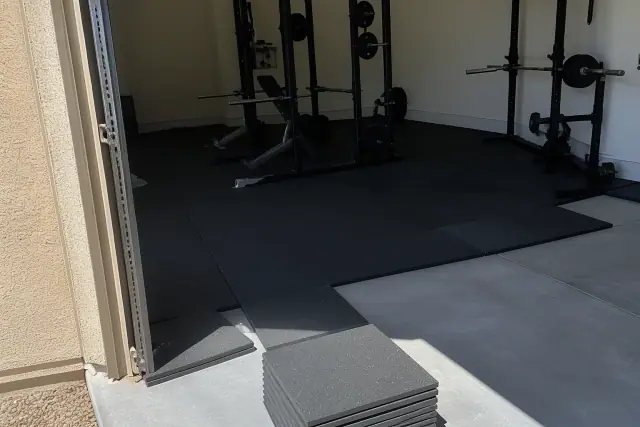
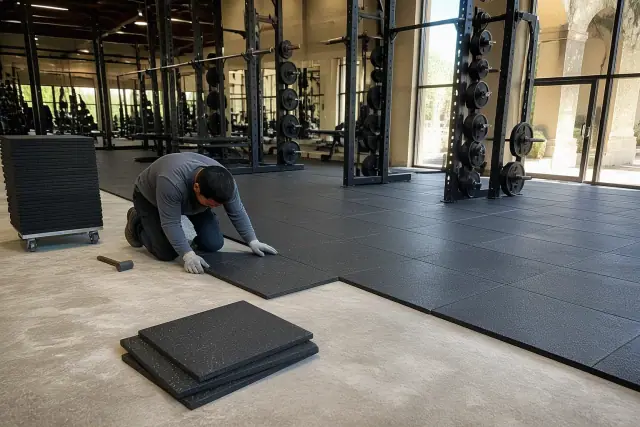
Technician installing black rubber gym flooring over a concrete slab in a Phoenix, AZ home gym.

We measure the room, map racks and platform zones, and account for door swing and ceiling height before ordering material. Layouts for Arcadia, Ahwatukee, and North Phoenix homes are planned around the actual room rather than a generic template.

Request Estimate

Commercial Gym Flooring Installation

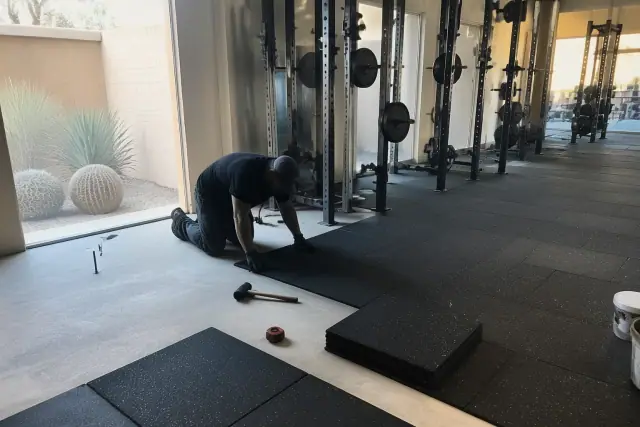
Technician installing rubber gym tiles on a concrete floor at a construction site in Phoenix, AZ.

Commercial facilities can combine heavy-duty rubber in free-weight areas, impact-resistant mats in cardio zones, and modular flooring in group rooms. Whether the build-out is compact or reaches 10,000 square feet, we coordinate transitions around equipment anchors, electrical floor boxes, and drainage points.

Request Estimate

Rubber Flooring Replacement

Technician installing heavy-duty rubber gym flooring on a concrete slab in Phoenix, AZ.

We remove failed rolls, degraded tiles, and old adhesive with mechanical scrapers, then inspect the exposed concrete for pitting, cracks, and moisture damage. High and low areas are corrected before the slab is retested and the replacement floor is installed, and removed rubber is routed to recycling processors where possible.

Request Estimate

Rubber Gym Flooring Repairs

Technician repairing rubber gym flooring with aligned tiles at a fitness center in Phoenix, AZ.

Repair work can address curling seams, lifted edges, cracked tiles, gouged mats, and wear from equipment movement. We re-adhere or re-weld seams, replace individual sections with matching color and thickness, and resurface localized damage without tearing out an otherwise sound floor.

Request Estimate

Gym Flooring Performance Upgrades

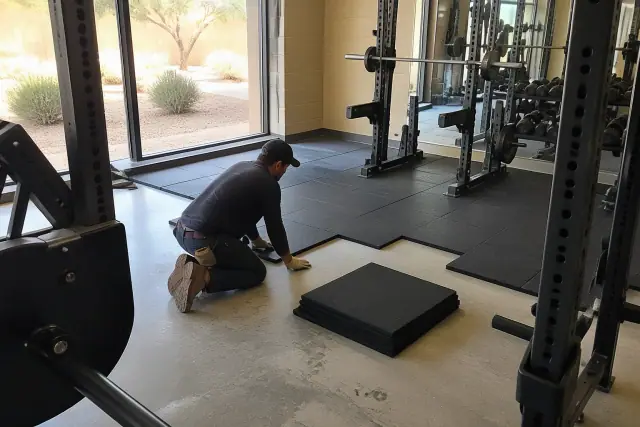
Technician installing rubber gym flooring in a Phoenix, AZ fitness center free weight zone.

Upgrades can add higher-density rubber beneath heavy-use areas, shock-absorbing underlayment for joint comfort, or layered acoustic construction for upper-level rooms. Platform zones and turf-sled lanes can receive more impact-resistant material to protect the slab and extend service life.

Request Estimate

Flooring Supplies and Project Planning

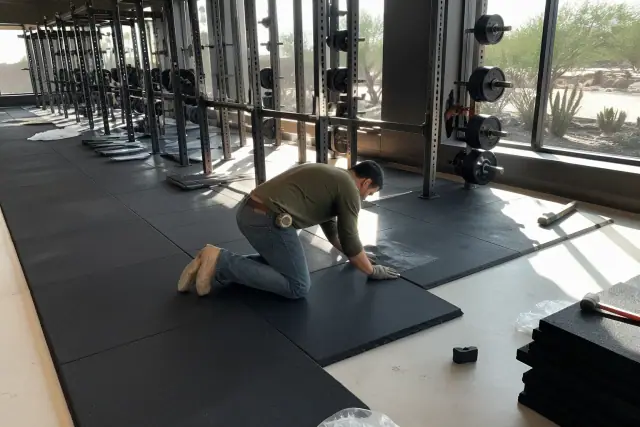
Technician installing rubber gym flooring in a weight room with desert views in Phoenix, AZ.

We supply rubber rolls, interlocking tiles, high-heat adhesives, vapor-barrier underlayment, and transition materials for gym projects. Planning starts with measured square footage, slab condition, equipment loads, and a written scope that separates material and labor.

Request Estimate
Materials & Installation Methods

Types of Gym Rubber Flooring Options

Material form, density, thickness, attachment method, and underlayment all affect how a gym floor responds to weight, impact, heat, moisture, and sound. We compare those variables against the room and training plan instead of treating every rubber product as interchangeable.

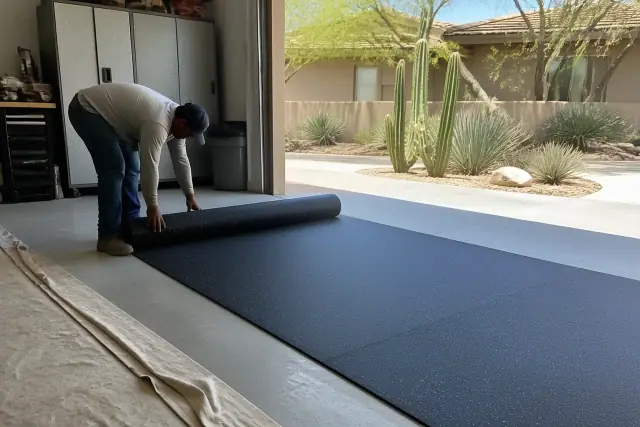
Worker installing rolled rubber flooring in a Phoenix, AZ garage workshop with desert landscaping visible outside.

Rolled Rubber Flooring

Rolled rubber creates a stable surface with fewer seams and works well in permanent rooms and multi-zone facilities. Both recycled and virgin rubber options are available, with density and attachment selected for the expected use.

  • Available in 1/4-inch, 3/8-inch, and 1/2-inch thicknesses
  • Glue-down installation for permanent training areas
  • Fewer seams across larger rooms
  • Recycled and virgin rubber material options
  • Clean transitions between cardio, lifting, and class zones
Request Estimate
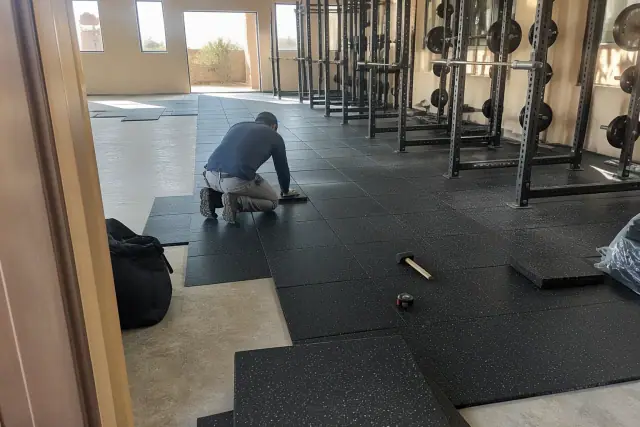
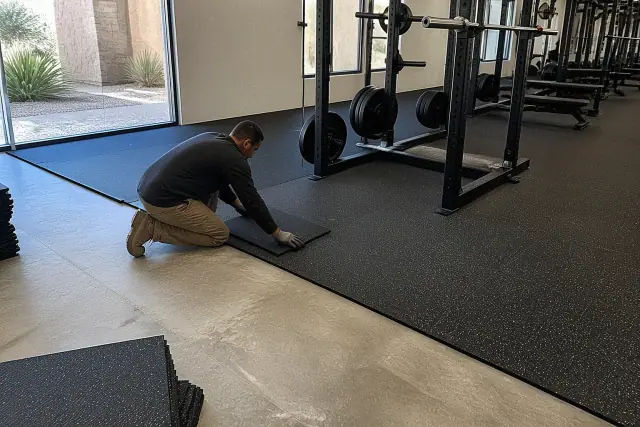
Technician installing heavy-duty rubber floor tiles in a Phoenix, AZ fitness center with squat racks.

Interlocking Rubber Tiles

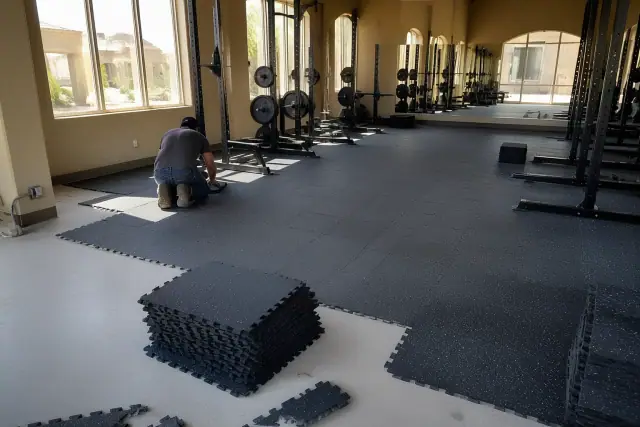
Interlocking tiles form a floating, modular surface that can be reconfigured or repaired one piece at a time. They are a practical fit for rental properties, garages, studios, spare rooms, and other spaces where permanent adhesive is not preferred.

  • Floating installation without full-spread adhesive
  • Individual tile replacement when a section is damaged
  • Multiple thickness and color choices
  • Flexible layouts for changing equipment plans
  • Suitable for garages, studios, and multipurpose rooms
Request Estimate
Technician installing heavy-duty rubber gym flooring on a concrete slab in Phoenix, AZ.

High-Density Rubber Mats

High-density mats concentrate protection beneath racks, platforms, cardio machines, and other high-load locations. Density is evaluated alongside thickness because a denser mat can outperform a thicker, softer product under repeated barbell impact.

  • Impact resistance for dropped plates and dumbbells
  • Support beneath free-weight racks and lifting platforms
  • Durable coverage for cross-training zones
  • Equipment isolation in focused high-load areas
  • Density and thickness matched to the training load
Request Estimate
Technician installing rubber gym flooring in a Phoenix, AZ fitness center near a window with desert views.

Acoustic and Shock-Absorbent Layers

Foam or rubber underlayment beneath the wear surface can improve impact comfort and reduce structure-borne noise. Layered construction is especially useful for second-story home gyms, condo units, and spaces used for high-repetition training.

  • Added cushioning beneath the rubber wear surface
  • Reduced impact-noise transmission between floors
  • Improved anti-fatigue performance for standing zones
  • Additional joint comfort during repeated movement
  • Layer thickness selected for the room and equipment
Request Estimate
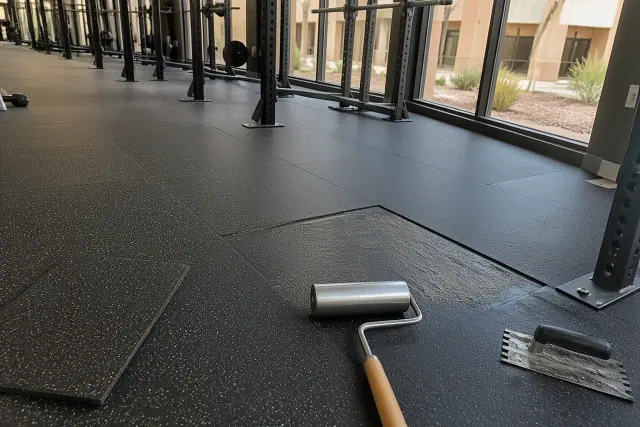
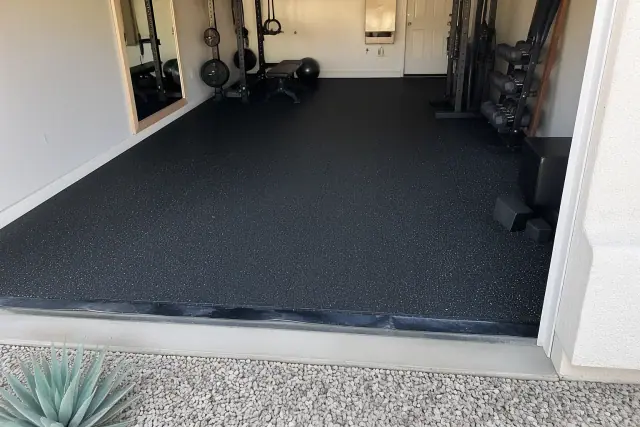
Rubber flooring installation in a Phoenix, AZ home garage with visible moisture barrier and desert landscaping outside.

Moisture-Resistant Installation Materials

Concrete rooms with vapor concerns may need moisture-tolerant adhesive, a vapor barrier, or a perimeter-anchored hybrid assembly. These components are selected only after testing confirms the slab condition.

  • Moisture testing before material is installed
  • Vapor-barrier underlayment for elevated readings
  • High-heat adhesive formulated for slab temperature swings
  • Bond performance considered in a 120-degree garage
  • Floating or hybrid layouts when full adhesion is unsuitable
Request Estimate
Finding Your Right Fit

Choosing the Right Gym Flooring Approach

The right approach depends on training style, equipment weight, room level, slab moisture, acoustic needs, and whether the installation should be permanent or removable. A site-specific plan connects those conditions to material density, thickness, attachment method, and subfloor preparation.

Load and Layout Planning

We map equipment, platforms, doors, transitions, and training zones before selecting or ordering material. This keeps higher-impact products where they are needed and avoids unnecessary buildup elsewhere.

Moisture and Slab Testing

Moisture readings and a close slab inspection identify vapor concerns, high spots, low spots, cracks, and old adhesive before they are hidden beneath new rubber. Preparation is then matched to the conditions found on site.

Licensed Residential and Commercial Work

Our Arizona Registrar of Contractors licensing covers residential and commercial flooring scopes. Commercial planning also accounts for City of Phoenix and Maricopa County requirements, including permit filing when a project requires it.

What Sets Us Apart

Why Choose Phoenix Rubber Flooring for Gym Flooring Installation?

Every project begins with the room and slab rather than a generic product recommendation. We document preparation needs, material choices, installation details, and pricing in a written scope so the finished surface is built around the actual training load and property conditions.

Request Site Assessment

Summer Heat and Curling Seams

Phoenix summer heat can expand rubber and stress adhesive, leading to lifted edges or curling seams. Re-adhering or re-welding the affected area restores a flat surface and removes the trip hazard.

Moisture Beneath the Floor

Slab vapor, leaks, or monsoon flooding can trap moisture below rubber and weaken the bond. Affected sections should be lifted so the concrete can dry and be retested before reinstallation.

Cracked Tiles and Gouged Mats

Dropped dumbbells and dragged equipment can crack, gouge, or wear localized sections. Matching tiles or mat pieces can often be replaced without disturbing the surrounding floor.

Uneven or Damaged Concrete

Pitting, cracks, high spots, and low spots can telegraph through rubber or prevent consistent adhesive contact. Grinding, patching, leveling, and proper curing create a sound base for the new surface.

Noise From Upper-Level Gyms

Single-layer rubber may not provide enough acoustic control for second-floor home gyms and condo units. A layered surface and underlayment can reduce impact-noise transmission compared with rubber alone.

Flooring Undersized for Heavy Loads

Material that is too soft or light for loaded racks and repeated drops can compress, tear, or fail early. Matching density and thickness to the equipment load protects both the rubber and the slab below.

How It Works

Our Gym Flooring Process

The process moves from site conditions to a defined material and installation plan, then finishes with preparation, clean installation, and a usable space.

01.

On-Site Walkthrough

We inspect the room, measure square footage, review equipment loads, and note doors, anchors, floor boxes, drains, and transitions that affect the layout.

02.

Slab and Moisture Testing

The concrete is checked for moisture vapor, cracks, pitting, old adhesive, and uneven areas so hidden subfloor issues are included in the plan.

03.

Material and Zone Planning

We match rolls, tiles, mats, underlayment, and attachment methods to the room's cardio, free-weight, platform, and group-training zones.

04.

Written Scope and Quote

The written scope identifies material, labor, preparation, transitions, and any moisture-control work before installation begins.

05.

Subfloor Preparation and Installation

We remove failed material when needed, grind or level the slab, allow patches to cure, and install the selected flooring with tight seams and properly finished edges.

06.

Cleanup and Final Review

Packaging is removed, seams are vacuumed, and the finished surface is reviewed for clean transitions and a gap-free fit before the space is handed back.

Start With a Walkthrough

Schedule a Gym Flooring Assessment

Tell us how you train, what equipment the room must support, and whether heat, moisture, or noise is a concern. We will walk the space, test the slab, and prepare a project-specific estimate.

Gym Flooring Help

Gym and Home Gym Rubber Flooring FAQs

These answers cover material selection, thickness, cost, installation, repairs, moisture, sound control, and long-term use for Phoenix gym spaces.

Call About Gym Flooring

For most home gyms, a high-density rubber tile or roll provides the right balance of impact protection and durability. Interlocking tiles offer flexibility in smaller or changeable rooms, while glued rolled rubber suits permanent platform areas. Density should be matched to the training load rather than judged by thickness alone.

New rubber can have a noticeable odor, especially when it contains recycled material, although ventilation usually reduces it over several weeks. Rubber is heavier and costs more upfront than foam, dark surfaces can show dust or chalk, and lighter colors may discolor with sustained direct UV exposure.

A clean, level, moisture-tested concrete slab often needs no layer beneath the rubber. Elevated moisture readings may call for a vapor barrier, while upper-floor rooms may benefit from foam or rubber underlayment for additional shock absorption and sound control.

General fitness, cardio equipment, and light dumbbell work typically use 3/8-inch rubber. Serious strength training and Olympic lifting often call for 1/2-inch to 3/4-inch material, while heavily loaded platform zones may need 3/4-inch to 1-inch high-density rubber. Density and actual equipment load should be evaluated with thickness.

Rubber rolls and sheet materials generally cost between $1.65 and $7.50 per square foot depending on density and thickness. Installed home-gym projects typically range from $4 to $9 per square foot, while commercial pricing varies with square footage, subfloor condition, load requirements, and preparation. A walkthrough is needed for a project-specific written quote.

Yes. Phoenix Rubber Flooring installs and services home gyms, garage gyms, commercial fitness facilities, and multi-tenant gym build-outs across the Phoenix metro area. The same subfloor testing and material-selection standards apply regardless of project size.

Quality rubber gym flooring typically lasts 10 to 20 years with proper installation and normal use, with commercial-grade high-density products often reaching the longer end of that range. Failure within a few years can point to poor subfloor preparation, moisture problems, or material that was undersized for the daily load.

Most home-gym installations covering 200 to 500 square feet can be completed in a single day when the slab is ready. After packaging is removed and seams are vacuumed, the room can often be used that same afternoon.

Often, yes. A cracked tile or gouged mat section can be removed and replaced with a matching color and thickness without disturbing the surrounding floor. Localized wear may also be filled and resurfaced with a color-matched rubber compound.

The affected section should be lifted so the slab can dry and be tested. Reinstallation should wait until moisture readings return to a range suitable for adhesive bonding, and the cause of the leak, flooding, or vapor issue should be addressed.

Interlocking tiles work well when a removable or reconfigurable surface is preferred, while glued rolled rubber suits a permanent training area. The choice should account for slab moisture, summer temperature swings, equipment loads, and the amount of dropped-weight activity.

Commercial athletic flooring may need to meet ASTM F2772 performance criteria and, where occupancy requirements apply, ASTM E648 flame-spread criteria. Projects that require permits are filed through the City of Phoenix Planning and Development Department, with local building requirements considered during planning.

Yes, a layered assembly can reduce impact-noise transmission compared with a single rubber layer. Foam or rubber underlayment beneath the wear surface is selected according to the room, structure, and equipment rather than added as a one-size-fits-all layer.