Four Flooring Formats
Mats protect focused zones, tiles create a modular floor, rolls cover broad areas with minimal seams, and pavers support the heaviest traffic.
Phoenix Rubber Flooring explains that rubber garage flooring comes in four main formats-mats, tiles, rolls, and pavers-with material and thickness choices for different uses. In Phoenix garages, the right choice depends on slab condition, parking, workshop or gym use, and exposure to triple-digit heat and monsoon moisture.
Mats protect focused zones, tiles create a modular floor, rolls cover broad areas with minimal seams, and pavers support the heaviest traffic.
Vulcanized rubber emphasizes density and durability, virgin rubber offers consistent color and a cleaner odor profile, and recycled rubber prioritizes affordability. Natural rubber adds elasticity, while synthetic compounds can target oil resistance or UV stability.
Parking and storage areas often use 3mm to 5mm rolled rubber, while 8mm is common for a general home gym. Heavy lifting calls for at least 1/2 inch, and 3/4-inch tiles or pavers suit heavy equipment and workshop zones.
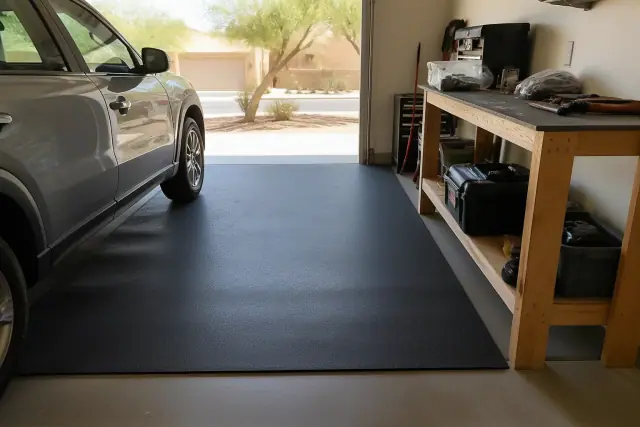
How a solid mat, typically 4 × 6 feet or larger, protects a focused parking, workshop, or equipment zone. This image helps make its resistance to jacks and dropped weights easy to understand.
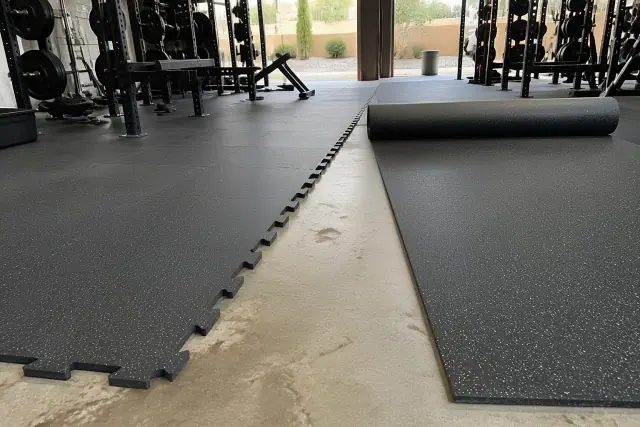
Compare 1/2- to 3/4-inch replaceable tiles with 3mm- to 8mm-thick rolls covering a two- or three-car garage. Emphasize the tiles' visible joints and the roll's minimal seams.
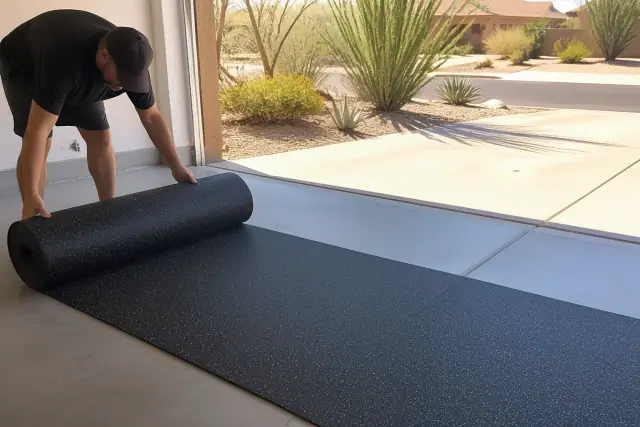
Thicker paver-style units beneath a heavy vehicle or forklift in a commercial garage setting. Their interlocking build should look more substantial than standard tiles.
Check for cracks, uneven pours, oil residue, and moisture vapor before choosing a format. Rubber can trap moisture against an unsealed slab when preparation and ventilation are overlooked.
Garage slabs can exceed 120 degrees in July and August, so heat and UV stability matter in west- and south-facing spaces. Slip resistance and runoff control also matter during monsoon season.
Interlocking tiles are the most practical do-it-yourself option. Rolls and large mats benefit from careful dry-fitting, seam control, and trimming around garage-door tracks; most residential garage installations are completed in a single day.
Recycled rubber is estimated at roughly $2.00 to $4.99 per square foot installed; product-only recycled rolls and tiles typically run $0.99 to $2.99, while premium vulcanized or virgin rubber can run $3.00 to $4.99 or more before labor. Thinner recycled rolls may last around 5 to 10 years, while heavy-duty mats and commercial-grade rubber can last 10 to 15 years or more with proper care.
| Format | Best Fit | What to Know |
|---|---|---|
| Mats | Parking pads, workstations, and equipment zones | Usually 4 × 6 feet or larger and resistant to tearing under vehicle jacks and dropped weights. |
| Tiles | Modular or do-it-yourself garage floors | Most are 1/2 to 3/4 inch thick; interlocking pieces can be replaced individually. |
| Rolls | Two- and three-car garages | Typically 3mm to 8mm thick with fewer seams for dust and fine sand to enter. |
| Pavers | Auto shops, fleet garages, and heavy-use areas | Thicker units handle forklift and heavy-vehicle traffic better than standard tiles. |
Mats are movable protection for parking pads, workstations, and gym equipment, while tiles create a modular surface that can be lifted or replaced piece by piece. Rolls are better for broad coverage where fewer seams help control dust and fine sand. Pavers are the thickest, most traffic-focused option for auto shops, fleet garages, forklifts, and heavy vehicles.
Vulcanized rubber is cured under heat and pressure for density, compression resistance, and chemical durability. Virgin rubber generally has more consistent color and a cleaner odor profile, recycled rubber uses reclaimed tire material, natural rubber emphasizes elasticity and shock absorption, and synthetic compounds can be engineered for oil resistance or longer UV stability. PVC vinyl is lighter and may cost less upfront, but it does not provide the same cushioning or heat tolerance on an unshaded slab. The right material follows the garage's use and exposure rather than a product label.
Is rubber good for a garage? It provides cushioning, slip resistance, and protection from oil, coolant, brake-fluid drips, and dropped equipment when the format matches the use. Can mold grow underneath? It is uncommon in Phoenix's arid conditions but possible when flooring traps existing slab moisture, so moisture testing and edge ventilation matter. Maintenance usually means regular sweeping and mopping with a mild degreaser, while an initial odor from some lower-grade recycled products typically fades within a few weeks.
Share how you use the garage, the slab's condition, and the heat, sun, or moisture exposure it receives. A local estimate can compare format, material, thickness, preparation, and installation without overspending on performance the space does not need.