What Installation Usually Involves
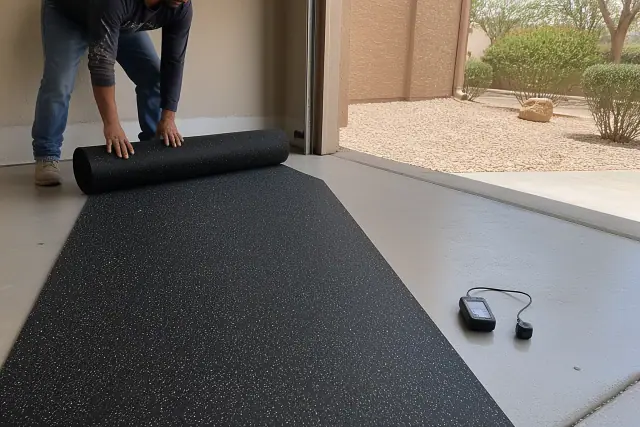
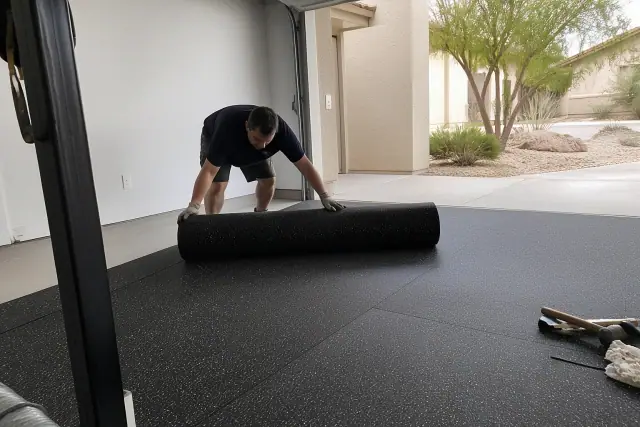
Installation starts with the substrate rather than the finish material. A straightedge, utility knife with hooked blades, moisture meter, notched trowel, seam roller, and 100-pound floor roller cover most jobs. After the slab or wood base is cleaned, tested, repaired, and laid out, perimeter pieces are cut and edges are butted tight without overlap. Tiles interlock, rolls and sheets are set into adhesive, and seams may use double-faced tape, seam adhesive, or a heat-welded strip according to the product.
Factors That Change the Method
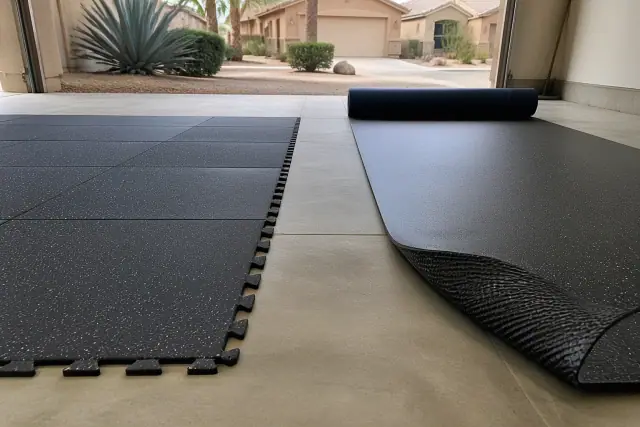
The subfloor, traffic, room use, heat exposure, and flooring format all affect the installation method. Phoenix's caliche soil and summer monsoon humidity swings can raise concerns about vapor below slab-on-grade concrete, while plywood requires checks for deflection and gaps. Interlocking tiles are easier to replace individually, glue-down rolls reduce seam count across large commercial rooms, and loose mats suit spaces where the floor may need to be lifted for cleaning. Most rubber flooring supplies its own cushioning and sound control, but elevated slab moisture may call for a vapor barrier and uneven wood may need a separate underlayment.
Common Follow-Up Questions
Most rubber flooring does not need separate underlayment because the material already cushions and dampens sound; exceptions include slabs with elevated moisture readings and wood bases with gaps or unevenness. Properly installed rubber flooring can last 20 to 30 years in residential settings, and some commercial-grade rolls carry manufacturer warranties of 10 or more years, although actual life depends on preparation, adhesive choice, sunlight, traffic, and care. Glue-down rolls and sheets are professional-level work because seam alignment, adhesive open time, and roller weight must be managed, while interlocking tiles are the more approachable do-it-yourself format. From preparation through placement, the whole process typically takes one to three days depending on square footage and whether the setting is residential or commercial.